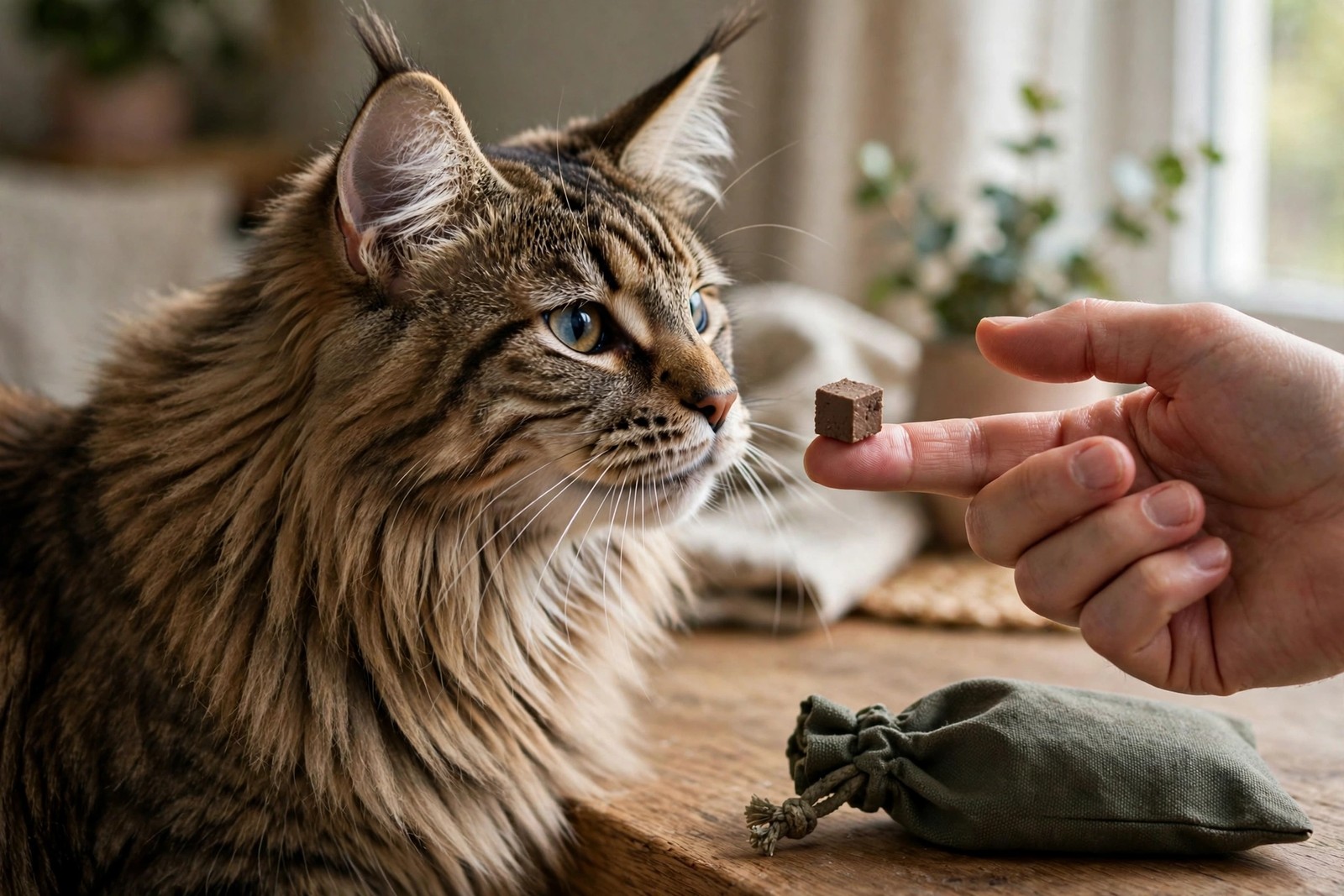
A small cube of plain cooked liver, offered rarely, is a legitimate treat that most cats love intensely. Liver also carries the clearest portion warning of any common cat treat, because the nutrient that makes it rich is the same one that harms in accumulation, and the damage from excess builds quietly over months rather than announcing itself after one meal.
The Vitamin A Problem, Explained Plainly
Liver stores vitamin A, and it stores a great deal of it. Cats need vitamin A and use the animal-source form directly, which is why a little liver is genuinely nutritious. The difficulty is that this vitamin is fat-soluble, so surplus is stored in the body rather than passed out, and a cat fed liver frequently can drift into vitamin A toxicity. Over time that excess is associated with bony growths and stiffening around the joints and spine, pain, reluctance to move or jump, and a coat and appetite that decline alongside. Older advice to feed liver regularly, especially to fussy cats, predates this understanding and should not be followed.
The practical translation is strict: a cube about the size of your thumbnail, cooked through and plain, offered occasionally rather than on a schedule, and never as a meal, a daily topper, or a food a picky cat is allowed to demand instead of complete food. A cat already eating a complete diet is receiving balanced vitamin A in every meal, so liver is always an addition on top of sufficiency, never a correction of a gap.
Cooking and Serving It Safely
Simmer, bake, or steam liver plainly until cooked through, with no onion, garlic, gravy, stock, or seasoning, since gravies and pan juices from a family meal usually carry exactly those additions. Chicken liver is milder and smaller; beef liver is stronger and richer, and either follows the same portion rule. Chop the cooked cube smaller for kittens or small cats, or skip liver for kittens altogether, because their complete food is tightly balanced for growth and needs no rich interference.
Skip raw liver. Cooking removes surface bacteria concerns and firms the texture so portions can be cut exactly, which matters with a food where the difference between treat and excess is measured in cubes. Freeze or refrigerate cooked liver promptly and treat leftovers as a short-lived food, discarding what sits in the bowl after the meal.
The Fussy-Cat Trap
Liver's intensity creates a behavioural risk alongside the nutritional one. A cat allowed liver whenever meals are refused learns that refusal produces liver, and owners can find themselves cooking it nightly for a cat who has trained them thoroughly. Use liver as a rare high-value reward for genuine achievements, carrier practice, nail care, a completed grooming session, and the lesson stays healthy in both senses.
If your cat has eaten a lot of liver once, a single generous episode is unlikely to cause the chronic harm described above, but tell your vet at the next visit and return to strict rarity. Visible tracking is what protects a food like this in a busy household. Record every liver serving, date and amount, in KinsLe Care Teams beside the treat duties, so the whole household can see the running total and rarity stays real rather than remembered differently by each feeder.