
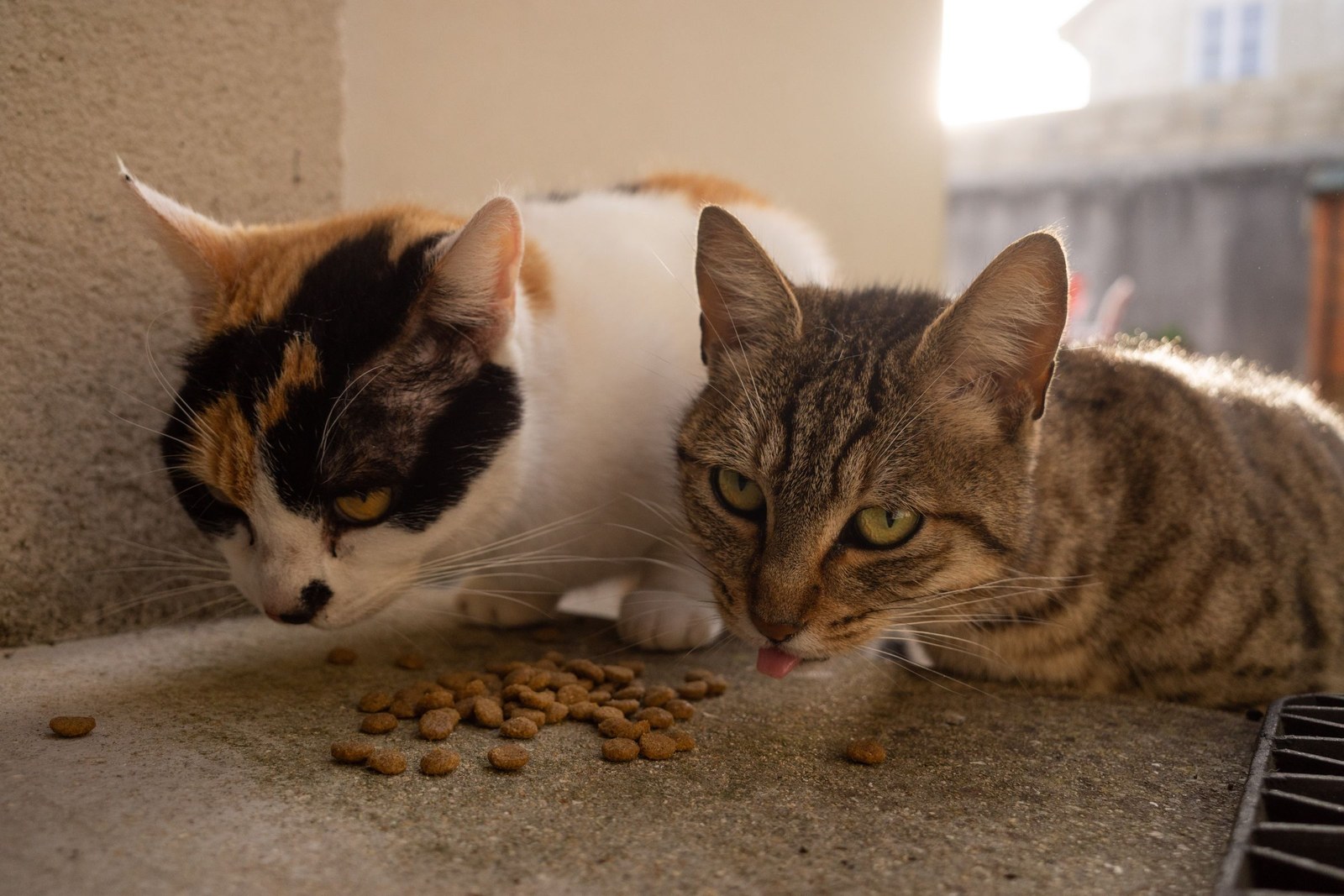
Yes, free feeding can make a cat overweight — and it does so quietly. Food sitting out all day invites bored nibbling every time your cat passes the bowl, portions are almost never truly measured, and in a multi-cat home nobody can tell how much each cat actually ate. Not every free-fed cat gains weight, but it is one of the most common feeding patterns behind gradual, hard-to-explain gain.
How all-day food adds up
Cats do not need to gorge to gain. A small handful of extra kibble a day, eaten in casual mouthfuls between naps, can add up to meaningful weight over months — especially for indoor, neutered, and older cats whose activity and metabolism are lower. Owners often fill the bowl when it looks low rather than measuring a daily amount, so the true total is unknown and slowly grows.
Boredom and habit play a role too. A bowl that is always available becomes entertainment in a quiet house. Some cats also eat competitively when another pet is nearby, taking in more than they would at a calm, separate meal. And because the bowl is never empty, owners get no clear feedback — there is no finished meal to notice, and no refused meal to warn them.
The reverse problem hides as well: a shy cat in a free-feeding home may be consistently under-eating while a bolder cat gains, and neither change is obvious until a vet weighs them.
Signs free feeding is not working for your cat
Weigh your cat monthly and feel her ribs. You should be able to feel ribs with light pressure; if you have to press firmly, or she has lost her waist from above and the side, intake is likely too high. Other clues: the daily amount you put out keeps increasing, treats are given on top by several people, or your vet notes upward weight at every visit.
If you want to keep free feeding for now, cap it honestly: measure the full day's appropriate amount each morning, put out only that, and when it is gone, it is gone until tomorrow. That single change turns free feeding into a measured system and reveals how much she really eats.
Switching to meals is usually the turning point
Many owners find that moving to two measured, scheduled meals is when weight finally stabilizes. It lets you adjust portions in small, accurate steps, count treats deliberately, and notice appetite changes quickly. Transition over about a week — offer meals at set times and remove the all-day bowl between them — and feed cats separately if one steals. Expect some protest meowing at first; routine settles it.
Do not crash-diet a cat. Portion reductions should be modest, and overweight cats in particular should never be left to go hungry for long stretches — a cat who stops eating entirely for a day or more needs veterinary advice promptly. Your vet can set a sensible target weight and pace for your individual cat.
Help during the transition
Reminders make a new routine stick. KinsLe's Kimmy, the built-in AI assistant, can send mealtime nudges during the transition from free feeding to scheduled meals, helping everyone in the house feed at the right times and not cave to between-meal begging with an extra scoop. Pair that consistency with play before meals to burn energy and satisfy hunting instincts. Owners puzzling over separate meals for a food-stealing housemate can put those questions to the Kimmy assistant inside KinsLe, where replies are built from KinsLe Answers entries.