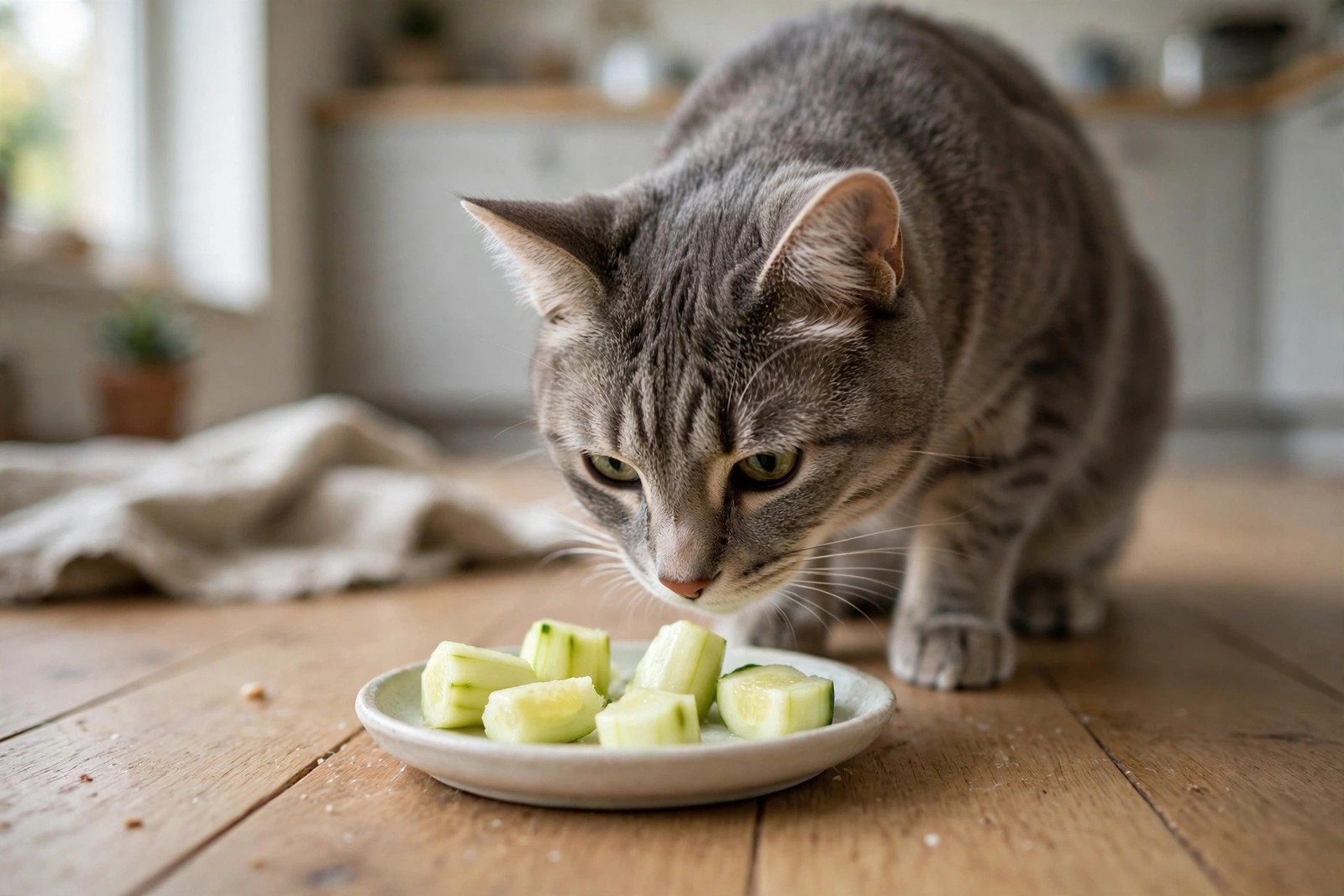
Yes, cucumber is safe for a cat to eat in small amounts, and the preparation is quick. Wash the cucumber, peel off the skin, scoop out the seeds, and cut the flesh into small pieces before you offer any. Served that way, cucumber is a light, watery nibble that some cats genuinely enjoy crunching, especially on a warm day. It is a curiosity treat, not a food group, and it earns its place only in small quantities beside the complete food your cat actually lives on.
Why Peel It, Seed It, and Cut It Small
Each step of the preparation has a reason. Washing removes whatever the skin picked up on its way to your kitchen. Peeling matters because the skin can be bitter, can carry a waxy coating, and is the part most likely to bother a cat's stomach. The seeds and the soft center are the wateriest, seediest part of the vegetable, and scooping them out leaves firmer flesh that is easier to cut cleanly and gentler to eat. Cutting small matters most of all: a cat does not chew the way you do, and a big slippery chunk is both a poor treat and an unnecessary risk, while pea-sized pieces can be crunched, tasted, and left behind just as easily.
Serve a few pieces, not a pile. Two or three small pieces are a fair first offering, and even a cat that loves cucumber should only ever get a little at a time. It fills space in the day without feeding the cat, so large amounts would crowd out food that carries real nutrition. Offer it plain, always: no salt, no dressing, no pickling. Pickled cucumber is a different food entirely, loaded with salt and vinegar, and it does not belong in a cat's bowl.
The Cat Gets a Vote
Reactions divide sharply, and both are normal. Some cats are drawn to the smell and the cool crunch and will ask for a piece whenever a cucumber is sliced. Others investigate once, decide it is not food as far as they are concerned, and never touch it again. Let the second cat be. Cucumber offers a cat nothing it needs, so there is no reason to coax, hide it in food, or keep offering a treat the cat has already declined politely.
Offer pieces by hand or in a small dish, calmly, and let the cat approach. Never sneak a whole cucumber up behind a resting cat for a laugh; startling a cat with an object it finds alarming is unkind, and a frightened cat remembers the room, the person, and the smell together. If your cat does enjoy it, keep cucumber as an occasional small treat and note the response, because a new food that causes a loose stool or a skipped meal is a food to retire from that cat's list.
A Household Note Keeps It Small
Treats drift upward when several people offer them independently. In KinsLe's Care Teams, the treat plan can name Rosa as the person who prepares cucumber the household way (washed, peeled, seeds scooped out, cut small) and offers the few pieces, and Ben as the person who records whether the cat ate them, ignored them, or had any stomach upset afterward. That record stops duplicate treats and turns one cat's preference into shared knowledge. With the Care Teams list in KinsLe, Rosa can note the washed, peeled pieces she offered at lunch while Ben records whether the cat ate them or walked away.