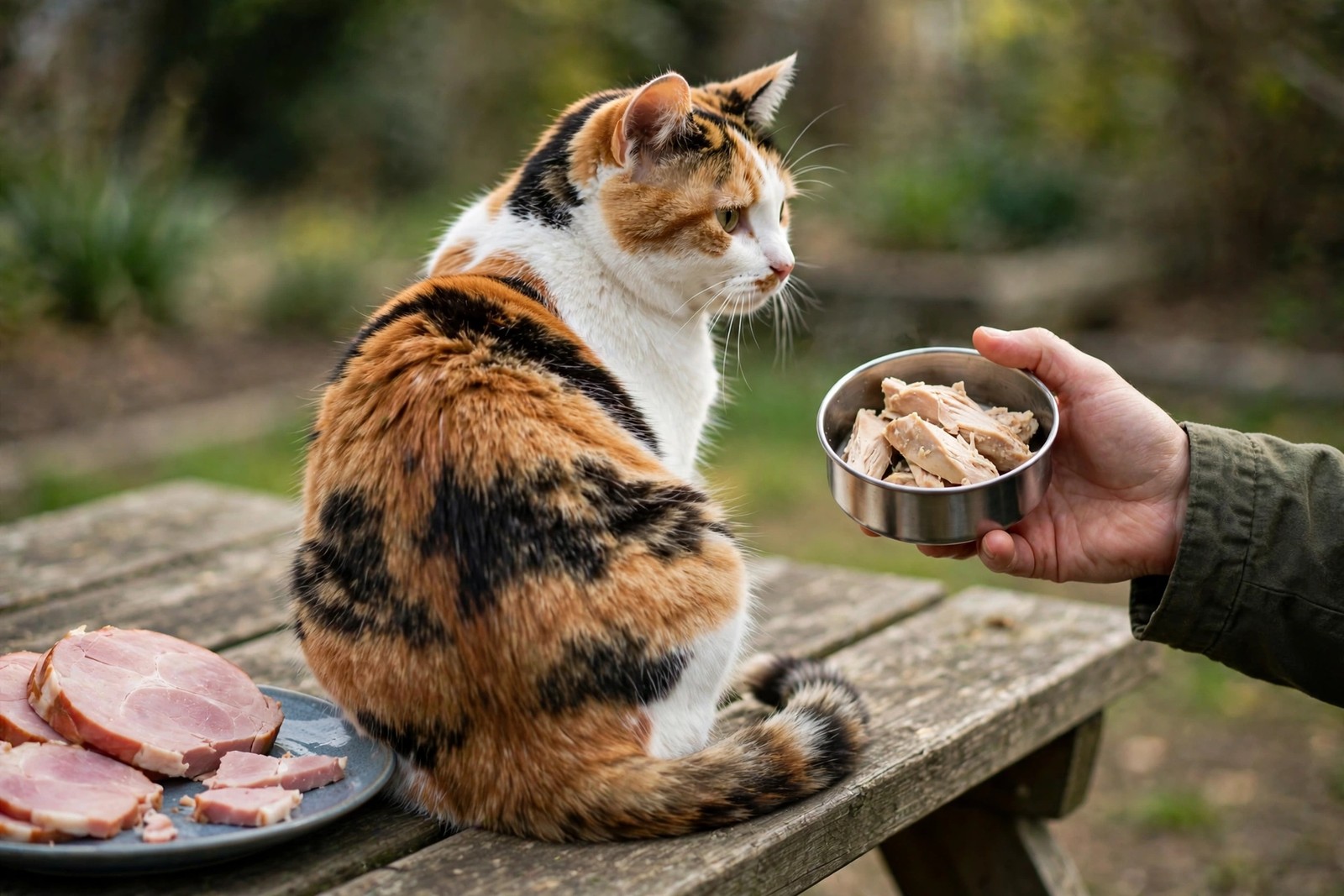
Ham is not a good treat for cats. It is salty, fatty and often seasoned, and small bodies feel salt loads quickly. Cats will happily eat it — cured meat smells powerful and tastes rich — but a cat's enthusiasm is a measure of smell, not suitability. Plain cooked turkey or chicken delivers the meaty reward owners actually want to give, without ham's drawbacks.
The Salt Problem, in Cat-Sized Terms
Ham is cured, which means salt is not an ingredient sprinkled on top but part of how the meat is made. A slice that tastes pleasantly savoury to you represents a much larger sodium hit relative to a cat's body weight and daily intake. A cat who eats a generous amount of ham may drink and urinate noticeably more afterwards, and repeated salty extras quietly work against the interests of cats whose kidneys or heart already need care — exactly the cats whose owners most need a clear rule. If your cat has a kidney, heart or blood-pressure condition your veterinarian is monitoring, treat ham as fully off the menu and ask at the next visit before offering any cured meat at all.
Glazes, Deli Slices and the Bone
The form matters. Honey and sugar glazes add sweetness a cat cannot taste and calories it does not need. Smoked and spiced hams can carry garlic or onion flavourings in the cure or coating, ingredients cats should not eat. Deli ham is thin, convenient and the most likely to be slipped to a begging cat — and it is among the saltiest forms of all. It should not become the household's default sandwich tax.
Never offer the ham bone. Cooked bones become brittle and can splinter, and a rich bone also invites a cat to gnaw off fatty scraps and gristle in quantities that upset the stomach. If a cat does get hold of a bone, take it away calmly and contact your veterinarian for advice if you later see drooling, retching, constipation or a painful belly — those signs deserve prompt attention rather than watchful waiting at home.
If a Scrap Has Already Gone Down
One small plain scrap stolen or given before you knew is not an emergency for a healthy cat. Provide fresh water, skip any further treats that day, and watch for vomiting, diarrhoea or unusual thirst. Persistent signs, or any amount eaten by a small kitten or a cat with known kidney or heart disease, are worth a prompt call to your veterinarian, who can judge the amount against your cat's history.
Swap the habit rather than just banning it: keep a small container of plain cooked chicken or turkey pieces for treat moments, refrigerated and replaced regularly, so the person who wants to share has something suitable to reach for.
Writing the Exception Out of the Routine
Ham reaches cats through leftovers and packed lunches, which means several people need the same answer. In KinsLe, Care Teams lets you list ham among the off-menu foods inside the cat's feeding duties, so a sitter, partner or teenager making sandwiches sees the rule before the scraps do.