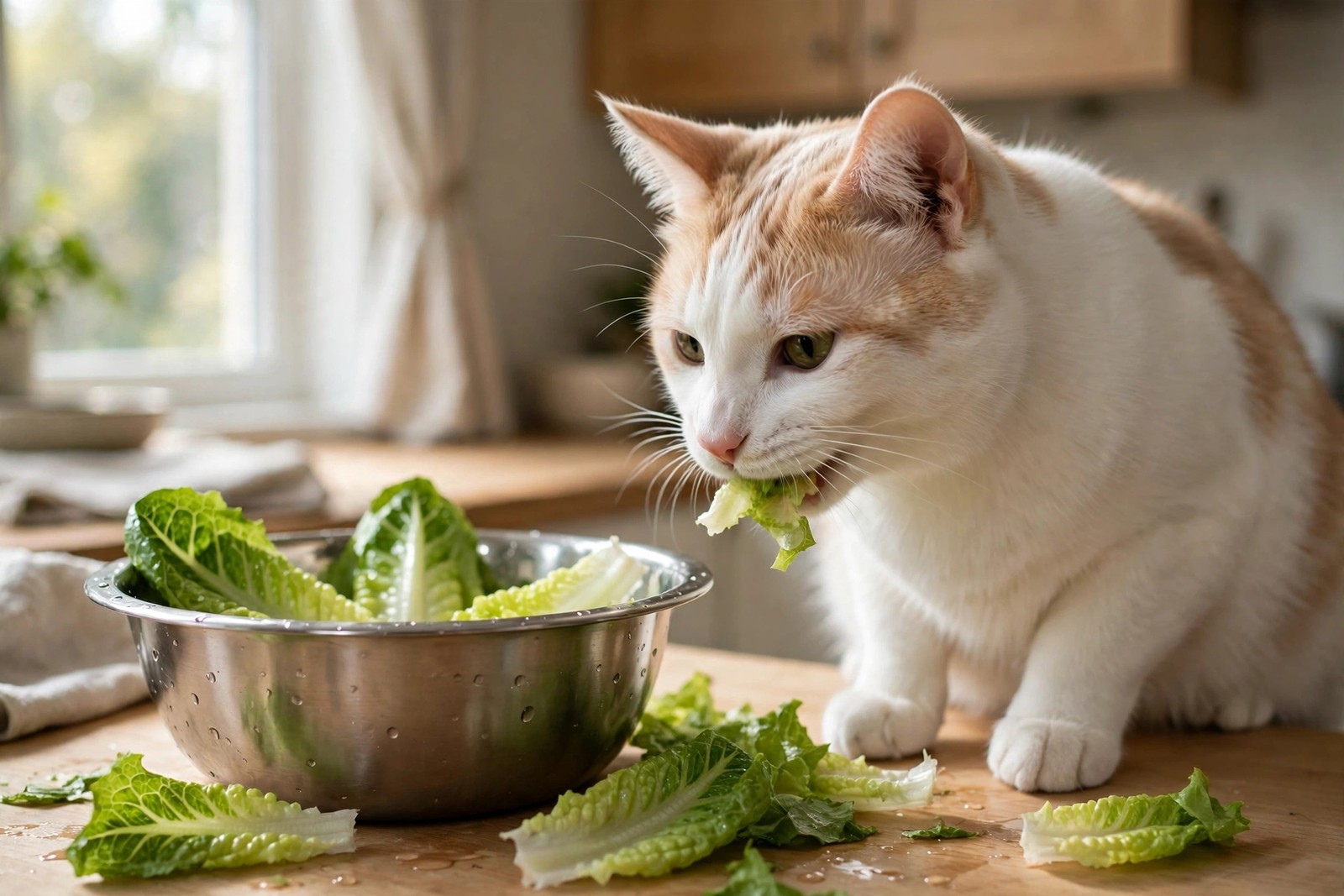
Yes — cats can eat lettuce safely in small amounts, and some cats actively enjoy nibbling leafy greens. Wash the leaves well and offer a small torn piece of plain lettuce, with no dressings, oils or salad mixes. Expect it to be a nibble rather than a meal: greens add water and fibre but none of the nutrients a carnivore must have from meat. It is a harmless green extra, nothing more — and that modest verdict is exactly why it can be offered relaxedly, in the right form.
Not All Leaves in the Bag Are Equal
Soft butterhead, romaine and ordinary green leaf lettuce are all reasonable nibbles. Iceberg is the least interesting choice, being mostly water with very little fibre, but it is not unsafe in a small piece. Darker leaves carry slightly more substance, yet the differences are trivial at cat portion sizes — one torn piece, roughly the size of a large postage stamp to a playing card depending on the cat, is the scale to think in. Tear or cut the piece rather than offering a whole leaf: a long floppy leaf can be dragged around, played with and partly swallowed in a stringy strip, while a small piece is chewed and finished.
Wash leaves even from a bag that looks clean, and wash garden lettuce especially carefully. Outdoor leaves can carry soil, slug trails and garden treatments you would not want a cat eating, and cats who nibble houseplants or garden greens should have those plants checked as safe before any leaf becomes a habit.
The Dressing Is the Danger, Not the Leaf
Plain lettuce is safe; a dressed salad is not automatically so. Ranch, Caesar and vinaigrette dressings bring oils, salt, garlic and onion flavourings, and a mixed salad can contain onion, chives or garlic croutons — the onion family is genuinely harmful to cats and is the reason scavenged salad should be taken seriously where a nibble of plain leaf should not. If your cat steals lettuce from a dressed salad, check what else was in the bowl and call your veterinarian for advice if onion or garlic ingredients were eaten in any real quantity.
Serve lettuce on its own or tucked beside the normal meal, never as a strategy to fill up a cat who is off its food. A cat refusing meals needs attention to the refusal itself, not greenery to disguise it.
Why Some Cats Actively Seek Greens
Owners often notice cats chewing lettuce, grass or herbs with real concentration. A little plant fibre may simply feel good to move through the gut, and the texture and moisture are interesting to an animal whose wild diet included the stomach contents of prey. An occasional green nibble is normal behaviour for many cats. What is not normal is frantic plant eating followed by repeated vomiting, or a sudden new obsession with chewing greenery in a cat who never bothered before — mention that change to your veterinarian rather than supplying ever more leaves.
Too much lettuce at once can loosen the stool through sheer water and fibre. If that happens, greens come off the extras list for a while and the normal diet reasserts itself.
A Small Rule Everyone Can Follow
Greens are where well-meaning feeders improvise — a leaf here, a handful there, sometimes straight from a dressed bowl. In KinsLe, Care Teams lets you spell out the plain, washed, small-piece rule inside the cat's feeding duties, so the nibble your cat enjoys stays the safe version whoever serves it.