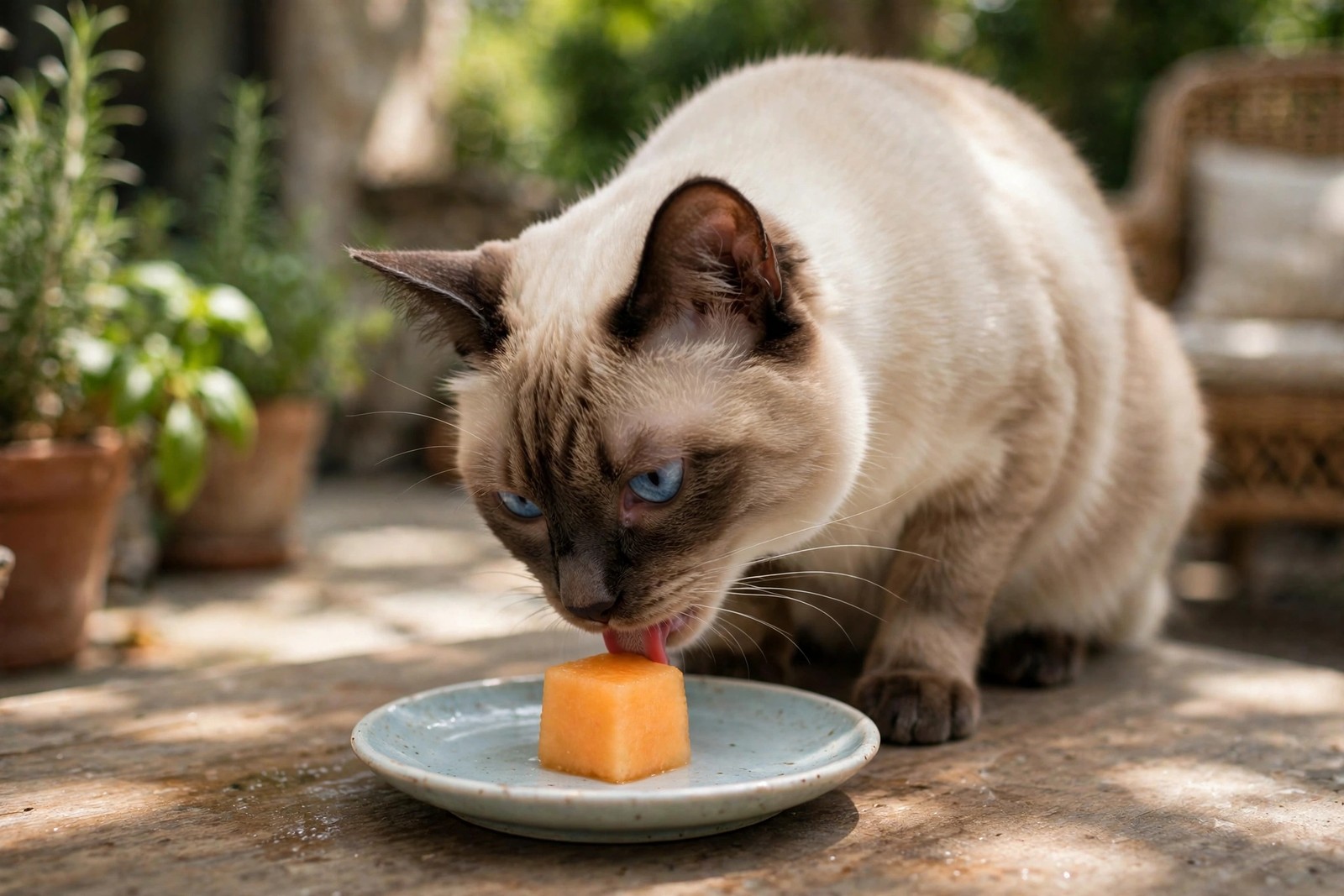
Yes — cats can eat melon in small amounts, and many enjoy cantaloupe in particular. Offer a small cube of ripe flesh with every seed removed and no rind, washed first. Melon is mostly water and natural sugar, so it is a hydrating novelty treat rather than nutrition. A cube or two occasionally is plenty, and a cat's real diet must stay meat-based and complete.
Why Cantaloupe, of All Fruits
Cantaloupe has a particular pull for many cats that other melons do not match. Its scent includes compounds that overlap with smells found in meat, which may explain why a cat indifferent to every other fruit will cross the room for cantaloupe. Watermelon and honeydew are usually met with a sniff and a walk-away, though the serving rules are identical if your cat is interested: flesh only, in a small cube, seeds out. What a cat cannot appreciate is the sweetness — without sweet taste receptors, your cat is there for aroma and cool moisture, which is useful to know before offering ever larger pieces to chase a reaction that is not coming.
Seeds and Rind: The Two Parts to Remove
Seeds should come out for two practical reasons: they are a poor fit for a small digestive tract in quantity, and a cube studded with seeds encourages gulping rather than chewing. Scoop the seed cavity clean and check the cube before it goes down. Rind is the more important exclusion. It is tough, hard to digest and exactly the part a determined cat will worry at if a wedge is put down whole. A cat who chews rind can end up vomiting pieces back, and a swallowed chunk risks troubling the gut further along. Serve a rind-free cube on a dish, not a wedge to gnaw.
Wash the outside of the melon before you cut it. A knife passes through the rind and can carry surface dirt or bacteria into the flesh, for your portion and the cat's alike. Cut the cat's cube from the fresh interior, and do not save a cat portion at room temperature through a long afternoon picnic — refrigerate leftovers and discard melon that has sat out.
Sugar, Weight and the Cats Who Should Skip It
Melon is gentle but it is still a sugary food in a species built for meat. For an overweight cat, a cat whose veterinarian is managing diabetes, or a cat on a strict weight plan, melon is a skip rather than a negotiation — the plus is tiny and the plan matters more. For a healthy cat, one or two thumbnail-sized cubes, once in a while, is the right scale. Too much at once predictably loosens the stool, and repeated loose stool after melon means melon joins the no list for that cat.
Melon also never substitutes for water. It can be a pleasant extra moisture source on a hot day, but the water bowl, refreshed and in its usual place, is what hydration depends on.
Keeping a Summer Novelty in Its Place
Melon appears at barbecues and picnics, where generous hands multiply. In KinsLe, Care Teams lets you record the melon cube as a single assigned treat for the day, marked complete with a timestamp, so your cat gets the summer taste once, not once per guest.