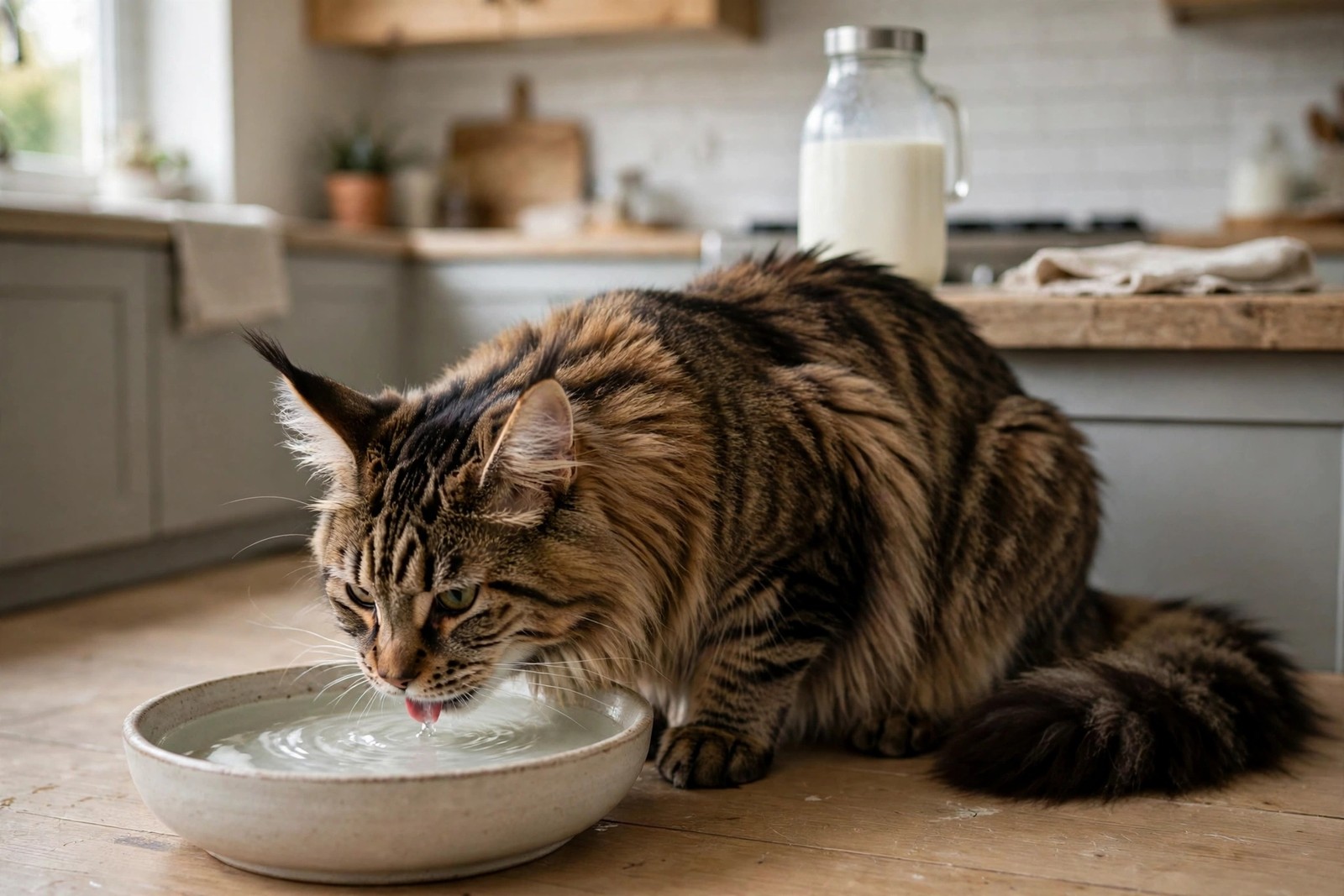
Despite the classic picture, most adult cats should not drink milk. After kittenhood most cats lose much of the enzyme that digests lactose, so milk commonly causes stomach upset and diarrhoea. Fresh water is what an adult cat actually needs. If you want a milky treat, a small amount of milk made for cats, formulated to be lactose-free, is the version designed for the job.
What Changes Between Kittenhood and Adulthood
A nursing kitten runs on milk, and its gut is equipped for it, producing plenty of lactase, the enzyme that splits lactose. That production is meant to be temporary. As weaning replaces milk with meat-based food, lactase output falls away in most cats, often substantially. The adult cat who laps a saucer of cow's milk is therefore drinking a food its digestion has retired from. Undigested lactose draws water into the bowel and feeds gas-producing fermentation, which is why the typical results — wind, a gurgling belly, urgency and loose stool — tend to arrive within the same day rather than mysteriously later.
A minority of cats retain enough enzyme to cope with a little milk, and owners of those cats sometimes insist milk is fine. Individual tolerance does not change the general rule, and even a tolerant cat gains nothing from milk that its food does not already provide better.
Whole, Skimmed and Plant-Based: None Solves It
Skimming changes the fat, not the lactose, so skimmed and semi-skimmed milk upset the same stomachs. Goat's milk contains slightly less lactose but still enough to trouble many cats. Plant-based drinks — oat, almond, soya and similar — remove lactose but bring their own sweeteners, oils and flavourings, and offer a cat nothing of value; they are human drinks solving a human problem. The only version built for this situation is lactose-free milk made for cats, and even that is an occasional small treat, not a daily drink and never a kitten's food. A kitten who needs milk needs its mother or a proper kitten replacer and veterinary support, not cow's milk from the fridge.
If the Saucer Has Already Been Drunk
Take the rest away, put down fresh water, and watch the litter tray and the cat's comfort over the next several hours. A healthy adult who has one mild, brief episode of loose stool and stays bright and hungry usually needs nothing more. Call your veterinarian if diarrhoea continues into the next day, vomiting joins it, the cat goes off food, or the drinker was a kitten, a senior or a cat with an existing digestive or kidney condition — those cats have less margin for fluid loss and deserve advice early.
Milk also hides in other offerings: milky tea shared from a mug, cereal milk left in the bowl, creamy soups. The rule is simpler applied to all of them at once than argued case by case.
Replacing a Ritual, Not Just Removing It
The saucer persists because it is a ritual between cat and person as much as a food. In KinsLe, Care Teams helps you swap in a new shared routine — fresh water checked and a permitted treat given as a named duty, timestamped when done — so the cat keeps the attention and loses only the lactose.