
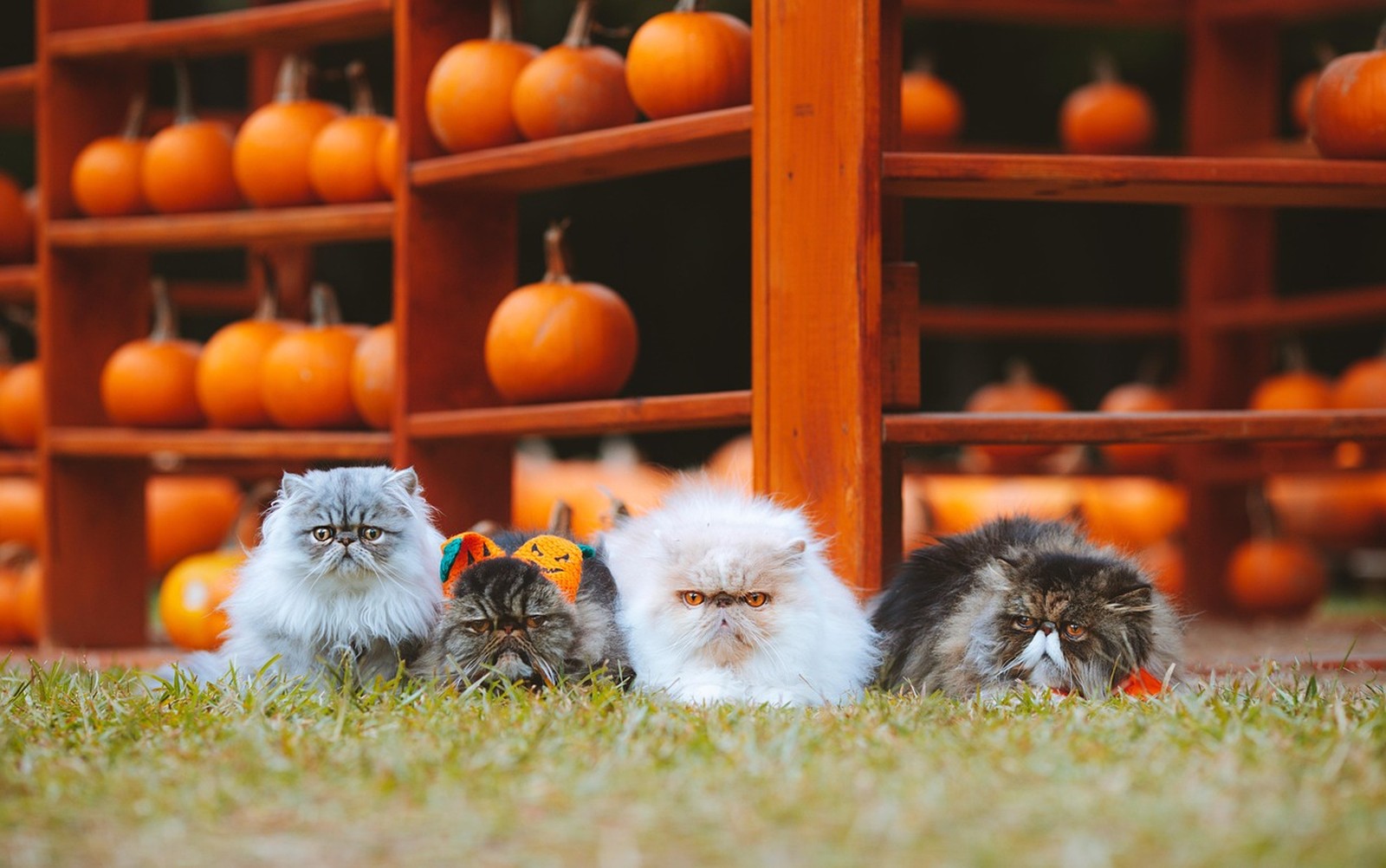
Cats can eat plain pumpkin — cooked or canned pure pumpkin, never pie filling — and a teaspoon mixed into food is a well-known gentle source of fibre that many owners use for hairballs and digestion. Pumpkin earns its good reputation in cat care, but the reputation belongs to a specific form, in small amounts, for a clear purpose. Get the form wrong and you are feeding dessert, not fibre.
Purée Yes, Pie Filling Never
Plain canned pumpkin should list pumpkin and nothing else. Pie filling is a different product in a nearly identical tin: it arrives sweetened and spiced for baking, and those spices and sugars have no place in a cat's bowl. Fresh pumpkin works too — bake or steam plain flesh until soft, with no oil, salt or seasoning, then mash it. Remove seeds and the stringy centre before cooking or before serving. Seeds should not be fed as a snack: they are a choking-sized extra with no role in a cat's diet, and raw pumpkin straight from a carved decoration, sitting at room temperature for days, is not food for anyone.
Pumpkin flesh brings mostly water and soluble fibre, with very little fat or sugar of its own in plain form. That composition is the whole story: it is a gentle functional extra, not a nutrient source the cat depends on.
How One Fibre Can Help at Both Ends
Owners are often confused that fibre is suggested both when stools are too firm and when they are a little loose. Soluble fibre absorbs water and forms a soft gel as it moves through the gut, which can make firm stools easier to pass and give loose stools more body at the same time — it nudges consistency toward the middle rather than pushing one way. The same gentle bulking can help swallowed hair travel through with the food instead of gathering and returning as a hairball, which is why pumpkin appears in so many hairball conversations.
That middle-nudging role has limits. A cat who is straining unproductively, has not passed stool for an unusually long stretch, vomits repeatedly, or brings up hairballs very frequently despite fibre has a problem to discuss with a veterinarian, not a serving size to increase at home. Keep pumpkin in the mild, occasional category it belongs in, and let persistent patterns be examined properly.
Serving, Storing and Watching the Result
A teaspoon of purée stirred through the usual wet food is a sensible starting amount for an average adult cat, offered once a day for a short stretch or a few times a week as part of the routine, rather than heaped by the spoonful. Introduce it on a normal day, not alongside two other new foods, so the litter tray's verdict is readable: you are watching for stools that stay formed and regular, comfortable passing, and no new gas or disinterest in food. If stools loosen, halve the amount or stop; fibre overshoot announces itself clearly.
An opened tin keeps in the fridge for a few days. Freeze the rest in an ice cube tray and defrost a cube at a time — a practical way to have a teaspoon ready without opening a fresh tin for every serving, and to avoid feeding pumpkin that has sat open too long.
Recording Cause and Effect Across Carers
Pumpkin is usually given for a reason, and reasons need follow-through from everyone feeding the cat. In KinsLe, Care Teams lets you schedule the pumpkin serving as a specific duty, timestamped each time it is mixed in, so the household can connect what was given with how the litter tray looked the next day.