
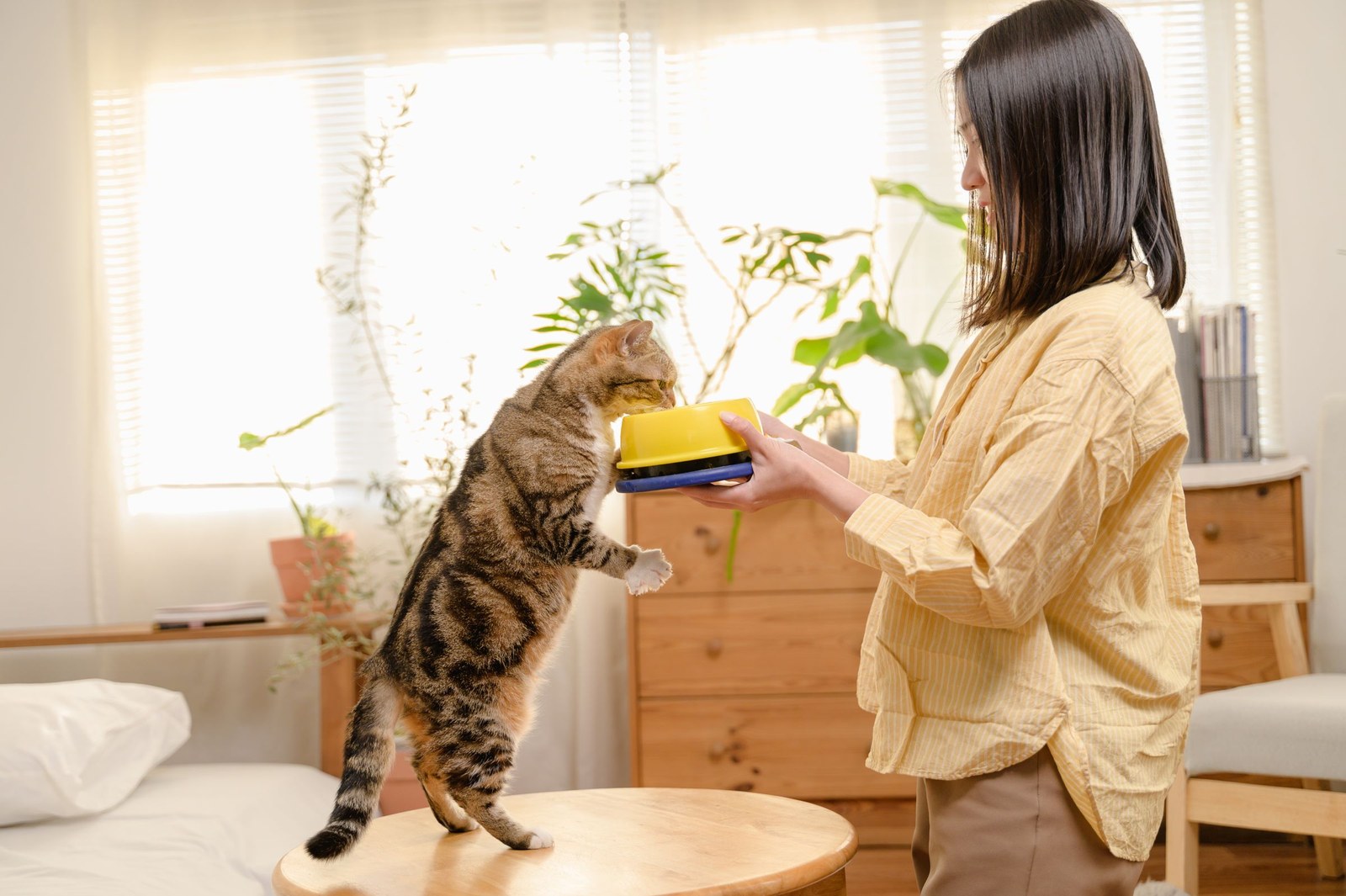
The right portion for your cat is the amount that keeps them at a healthy body condition — ribs you can feel easily under a thin layer of fat, a visible waist, and steady energy — not simply whatever the bag suggests. The feeding guide on the food is a starting point for an average cat, and most pet cats are not average in activity, age, or body size.
Start With the Bag, Then Adjust to Your Cat
Begin with the guide for your cat's current weight or, if your veterinarian advises it, their ideal weight. Feed that amount consistently for two to three weeks, split into two meals, and weigh your cat. If they're gaining, reduce slightly. If they're losing when they shouldn't be, increase slightly. Small changes — around ten percent at a time — are easier to judge than big swings.
Learn the Rib and Waist Check
Numbers help, but hands tell you more between weigh-ins. Run your palms lightly along your cat's sides. You should feel ribs with gentle pressure, similar to feeling the backs of your fingers — not sharp like knuckles, and not impossible to find like pressing your palm.
Look from above: there should be a slight narrowing behind the ribs. From the side, the belly should tuck up a little rather than hang in a straight, heavy line. A soft pouch of loose skin low on the belly — the primordial pouch — is normal for many cats and is not, by itself, a sign you're overfeeding.
Do this check monthly and note it. Body condition drifts slowly, and catching a trend early means a tiny portion tweak instead of a full diet later.
Match Portions to Life Stage and Routine
Kittens need frequent, calorie-dense meals for growth and should not be portion-restricted like adults. Adults in their middle years are the classic weight-gainers, especially after activity drops but portions stay kitten-era generous. Senior cats can go either way: some lose muscle and appetite, others gain because they move less. Any sudden appetite change in an older cat deserves a veterinary conversation, not just a smaller scoop.
Also think in total daily food, not per-meal guesses. If you feed wet and dry food together, add both together to reach the daily total — a common mistake is giving a full portion of each. Wet food is mostly water, so cats often need a larger volume of it than dry food to reach the same calories; the label's calorie count per can or cup is the reliable comparison.
When to Ask Your Vet to Fine-Tune It
Your veterinarian can calculate a daily calorie target based on weight, body condition, and health — especially useful if your cat has kidney concerns, diabetes risk, a history of urinary issues, or is on medication. Bring the actual food packaging or a photo of its calorie information to the appointment; 'a cup of the supermarket brand' isn't enough for accurate maths.
Let Kinny Nudge You to Recheck
Because routines drift, KinsLe's built-in AI assistant Kinny can give you reminders and nudges to recheck portions as your cat's routine, age, or activity changes. A prompt to weigh your cat and redo the rib check after a quiet winter, for example, catches gradual gain before it becomes a diet. Used alongside your vet's target, those small check-ins keep portions honest without daily fuss. Kinny on KinsLe can answer follow-up questions you ask about portion tweaks after monthly rib checks, drawing its answers from the KinsLe Answers library.