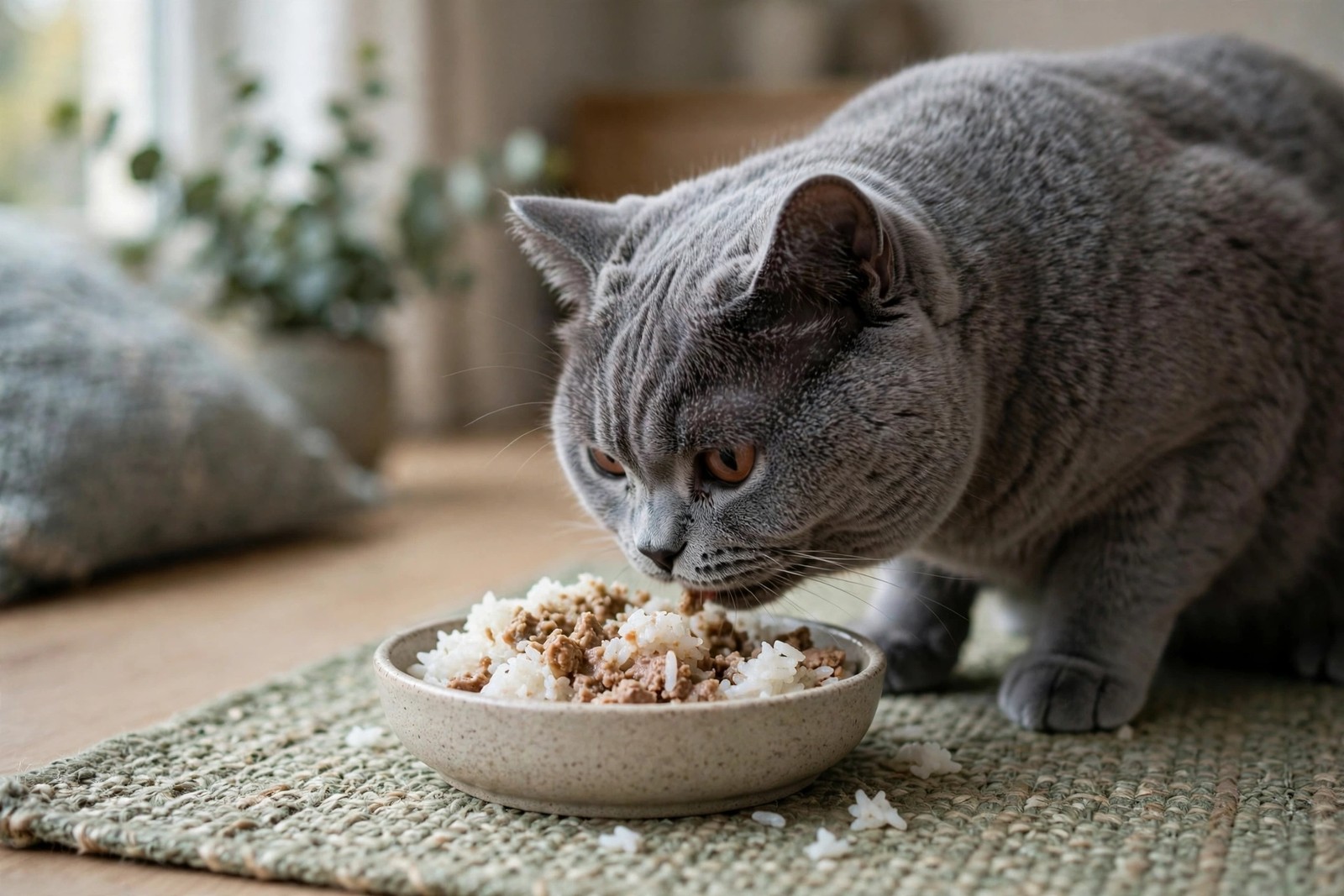
Cats can eat a small amount of plain cooked rice safely, and it is sometimes mixed into a bland meal briefly on a veterinarian's advice. Rice should stay a bit-part, since a cat's diet must be built on meat protein. Those two halves belong together: rice is not dangerous, and rice is not dinner. Understanding why it appears in bland meals at all helps owners use it briefly and well instead of letting it drift into a habit.
What Rice Does in a Bland Meal
Well-cooked rice is bland, soft and easy to digest, which is why it turns up in gentle feeding after a stomach upset: it gives a delicate gut something undemanding to work on while appetite and stool settle. In that setting it is normally the supporting ingredient beside a plain protein such as the cat's usual food in reduced amount or a simple cooked meat your veterinarian has suggested. The rice is the cushion, not the cure. If vomiting or diarrhoea is continuing, worsening, or paired with lethargy, loss of appetite or signs of pain, the answer is a veterinary examination, not a second and third day of rice in the hope it settles.
White, Brown and Everything Rice Comes With
For a bland, short-term purpose, plain white rice cooked until properly soft is the usual choice. Brown rice carries more fibre in its outer layer and is harder for a cat to break down, which works against the very gentleness you are cooking it for. Uncooked rice should never be offered: it is hard, indigestible and swells with moisture. And rice as it arrives on a human plate is often no longer plain at all. Fried rice brings oil, soy sauce, egg and frequently onion or garlic; pilafs and flavoured rice bring stock, salt and spices; rice puddings bring milk and sugar. Those dishes stay human food. Cook the cat's small portion separately in water, with nothing added, and serve it lukewarm.
For a healthy cat with no digestive issue running, rice has even less of a role: a spoonful mixed through the normal food as an occasional extra is harmless for most cats, but there is no nutritional reason to seek it out, and treats built on meat will always suit the animal in front of you better.
Why Long-Term Rice Feeding Leaves Gaps
A cat's metabolism is committed to protein in a way a dog's or a person's is not. It runs its energy systems on amino acids continuously and needs nutrients that only a proper meat-based diet supplies in balance, including taurine and preformed vitamin A. Rice supplies none of these. A bowl that slowly becomes half rice is quietly diluting all of them, which is why bland feeding is measured in days under guidance, and why a cat who will only eat rice mixtures after an upset needs a veterinary conversation about the underlying appetite problem rather than a larger saucepan.
Kittens, whose growth demands are concentrated, should not be put on rice mixtures at home at all without veterinary direction — their margin for a diluted diet is the smallest of any cat's.
Ending the Bland Period on Schedule
Bland meals fail at the finish line: no one remembers which day normal food was supposed to return. In KinsLe, Care Teams lets you enter the rice meals as short dated duties, each timestamped as served, so the household can see the bland period ending and full portions of normal food resuming together.