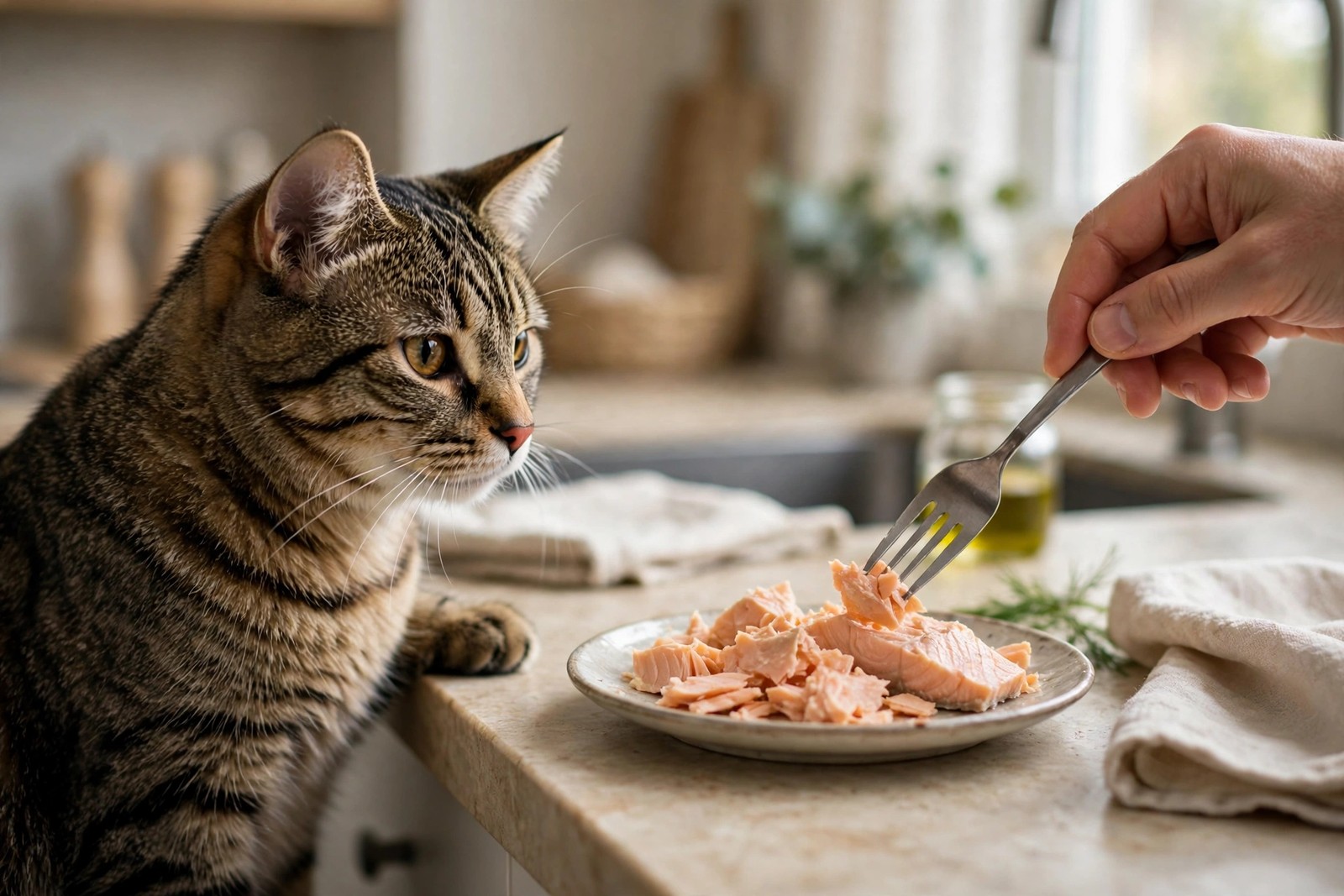
Yes, cats can eat salmon when it is cooked plain, served boneless, and kept as an occasional extra rather than a meal. A small flaked portion of your own cooked salmon is very different from raw fish, smoked slices, or a tin opened for the pantry, and each version needs its own decision.
Why Raw Salmon Is Off the Table
Raw fish can carry bacteria and parasites that cooking destroys, so raw salmon, sushi scraps, and trimmings from a fillet you are preparing should never reach the bowl. Raw fish also contains thiaminase, an enzyme that breaks down thiamine, an essential B vitamin. A single lick is not the worry; a cat fed raw fish regularly can gradually lose thiamine, and deficiency can affect appetite, balance, and the nervous system. Smoked salmon is not a safer shortcut either: it is typically salty, sometimes seasoned, and still not cooked in the way a plain baked or steamed fillet is.
Bones, Skin, and Seasoning
Cooked salmon needs a careful bone check. Salmon pin bones are thin, easy to miss, and can lodge in the mouth or throat, while larger cooked bones can splinter. Flake the fish slowly with clean fingers or a fork, pressing each piece so a hidden bone announces itself before your cat has to. Take the skin off as well. Skin holds a lot of fat, is often salted during cooking, and adds richness a small stomach does not need. Serve the fish exactly as plain as it sounds: no garlic, onion, lemon butter, soy-based glazes, spice rubs, or sauce scraped from your plate, because a shared dinner and a safe cat treat are prepared two different ways.
How Much, and How Often
Think of salmon as a garnish, not a course. A tablespoon or so of flaked fish, offered once a week or every couple of weeks, is plenty for most cats, and less suits a small cat or one watching its weight. Salmon does not supply the full balance of nutrients a complete cat food is built to provide, including the proportions an obligate carnivore relies on, so daily salmon can quietly crowd out the food that actually keeps your cat nourished while adding calories. Cats prone to an upset stomach, or with a history of pancreatitis or food sensitivities, should get an even smaller first taste, followed by a full day of watching the litter tray for soft stools, vomiting, or unusual itching before it is ever offered again.
Canned Salmon Needs Extra Care
Plain canned salmon raises questions fresh fillets do not. Many tins are packed with added salt, and the soft, crushable bones people sometimes mash in are not the same as carefully removing every bone yourself. Flavoured varieties, salmon in sauces, and salmon salad mixed with onion, celery seasonings, or mayonnaise do not belong in a cat bowl at all. If canned is all you have, choose the plainest option, rinse a small piece, check it as carefully as fresh fish, and treat it as a rare exception rather than a standing plan.
When to Skip It and Call the Vet
Skip salmon entirely for a cat whose veterinarian has put them on a strict elimination or prescription diet, because even a plain treat can undo weeks of diagnostic work. Call your vet promptly if, after eating fish, your cat retches repeatedly, drools, paws at the mouth, vomits more than once, or seems uncomfortable swallowing, since those signs can point to a bone or a reaction rather than a passing dislike. KinsLe's Care Teams helps households stay precise here, because the person who served the salmon can record the amount and time as a completed feeding duty, giving the next person clear information instead of a guess.