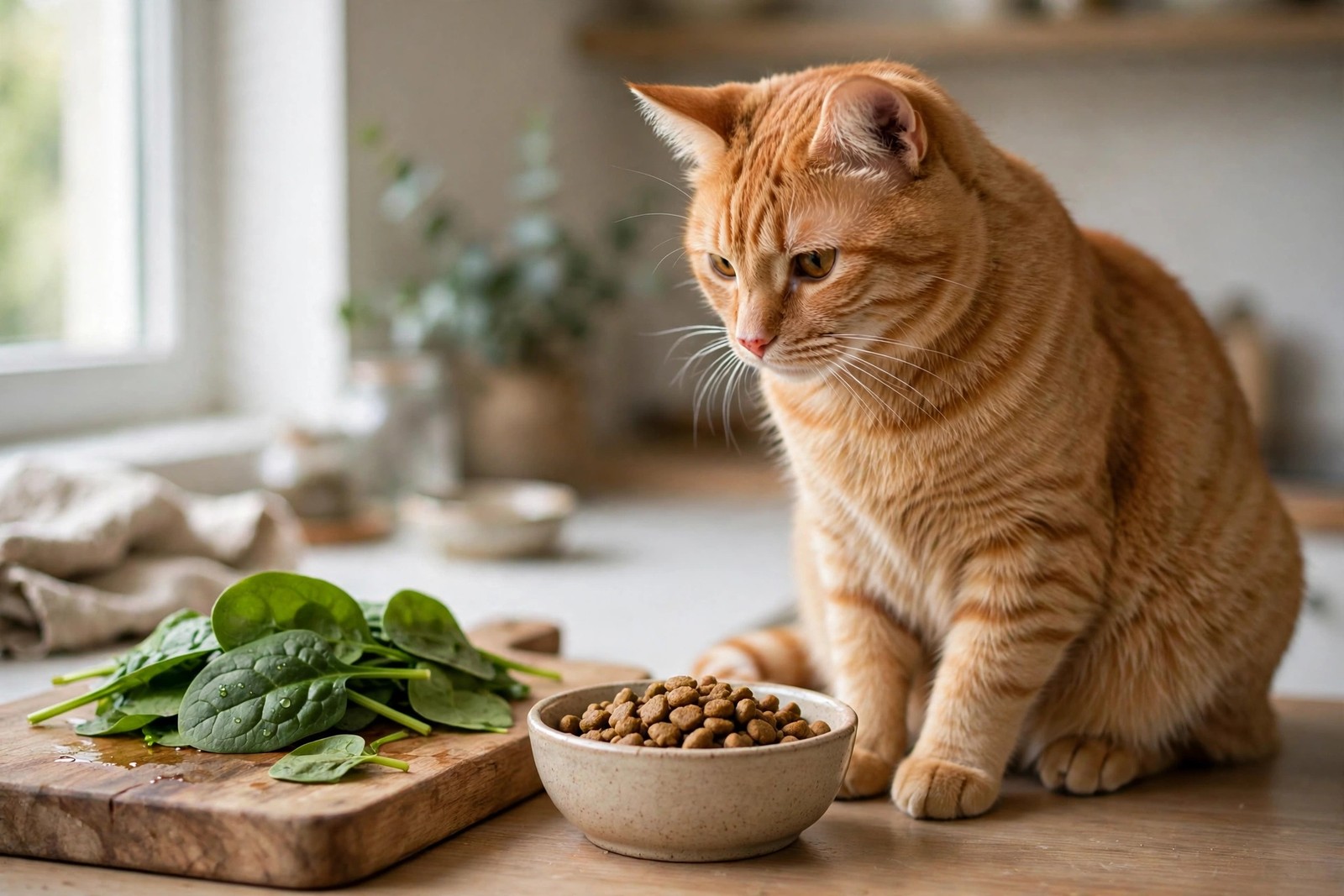
A healthy cat can eat a small amount of plain steamed spinach occasionally, but spinach is the rare vegetable where the exception deserves as much attention as the permission. For one group of cats it is a harmless teaspoon of greens; for another, it is exactly the food to keep out of the kitchen rotation.
The Oxalate Exception
Spinach is naturally high in calcium oxalates. In a cat with a history of calcium oxalate bladder stones, urinary crystals, blockages, or kidney disease, those compounds work against the very diet and treatment plan designed to protect the urinary tract. That cat should not be given spinach in any amount, cooked or raw, mixed into food or offered as a nibble, and the rule should be written down wherever feeding instructions live so a well-meaning visitor does not undo it. Male cats deserve extra vigilance around urinary health generally, because their narrower urinary tract makes a blockage more likely, and a cat who strains in the litter tray, cries, visits repeatedly with little result, or cannot pass urine needs a veterinarian the same day, urgently, whether spinach was involved or not.
Why a Healthy Cat Might Get a Little
Cats are obligate carnivores and gain nothing essential from spinach that a complete cat food does not already provide in a form built for them. The honest reasons owners offer it are modest ones: a small source of fibre that some cats enjoy, a low-calorie nibble for a cat who begs while vegetables are being prepared, and occasionally a food a veterinarian suggests as one gentle fibre option for a particular cat. Keep expectations in that range. Spinach is not a supplement programme, a hairball cure, or a way to make an unbalanced diet balanced, and a cat who turns away from it has lost nothing at all.
Preparing It Properly
Wash the leaves thoroughly, then steam or cook them plain until soft, with no butter, oil, salt, garlic, onion, or seasoning of any kind. Raw spinach is tougher for a cat to digest and easier to over-serve, while cooked leaves collapse into a portion you can actually judge. Chop it very finely and mix a teaspoon or less through the regular meal rather than presenting a small pile, which invites a cat to eat the lot in one unfamiliar mouthful. Offer it no more than occasionally, and start with half a teaspoon for a first try, then watch the litter tray and appetite over the next day for loose stools or vomiting before deciding spinach suits this cat at all.
When Fibre Curiosity Becomes a Health Question
Owners sometimes reach for spinach because a cat is constipated, producing hairballs, or eating grass and houseplants. Those are three different problems wearing similar clothes. A cat straining to pass stool, vomiting repeatedly, losing appetite, or chewing plants it never used to touch needs a veterinary conversation, not a vegetable experiment, because appetite and litter changes in cats can signal pain, obstruction, thyroid or kidney trouble, and other conditions an article cannot sort out. Tell the vet exactly what the cat ate, how much, and when, since that detail turns a guess into a useful history.
Making the Rule Stick at Home
The spinach rule is cat-specific in a multi-cat home: one healthy cat may get a teaspoon while the cat with a urinary history gets none, and meals served side by side make mistakes easy. Feed separately if a swap is likely, and put the restriction in writing rather than relying on memory. KinsLe's Care Teams makes that separation practical, because each cat's feeding duty can carry its own instruction, so the person serving dinner sees the no-spinach warning attached to the right cat before the bowl goes down.