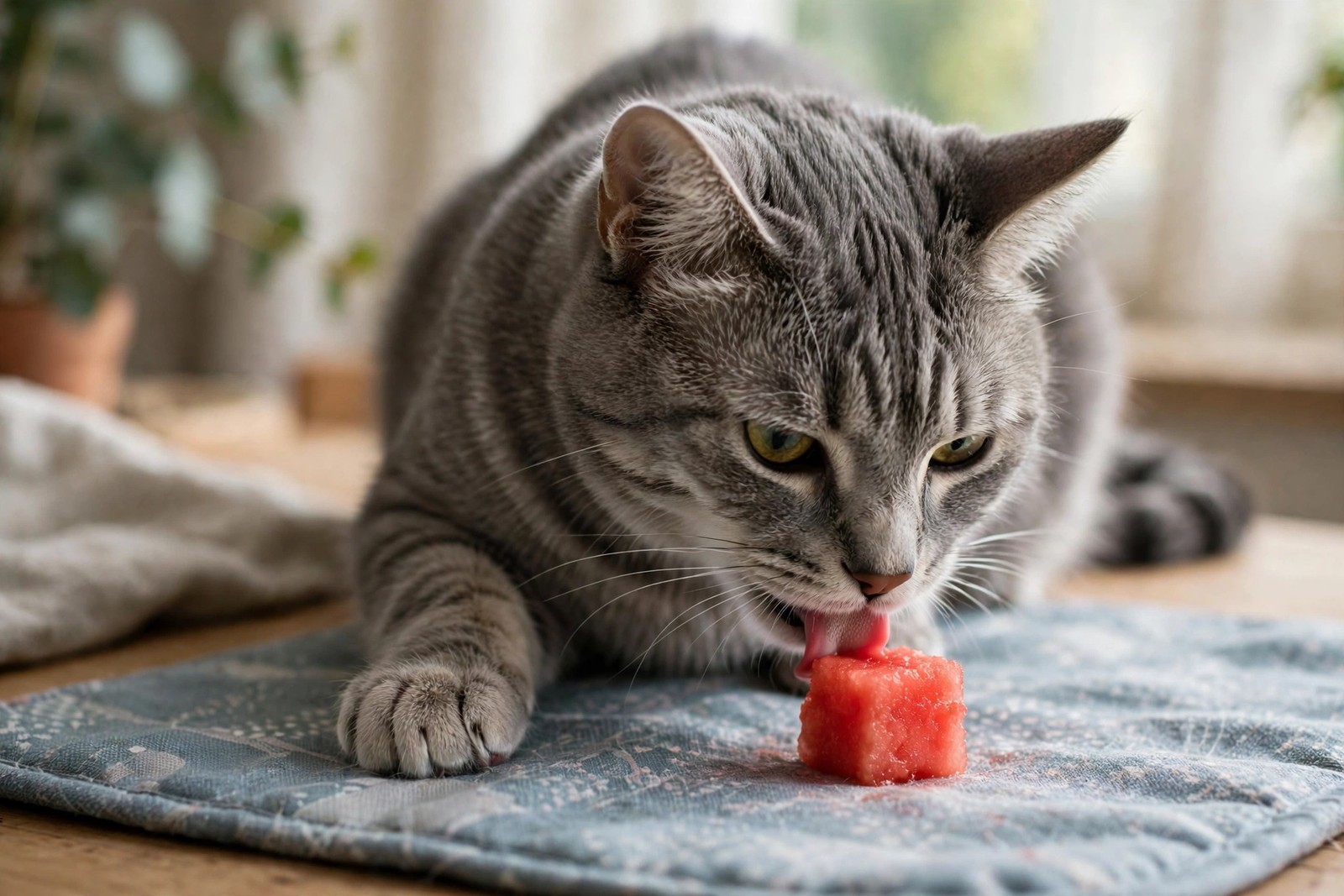
Yes, a cat can eat a small cube of watermelon flesh when every seed is removed and all rind is cut away. The permission is narrow on purpose: the soft red centre and the rest of the fruit behave very differently in a cat, and serving watermelon well is mostly an exercise in trimming.
Seeds and Rind Are the Problem
Pick out every seed, including the small pale ones, or start with a seedless variety and check the flesh anyway. Seeds are not part of a cat's diet, can be a choking nuisance for a kitten, and in quantity can irritate or obstruct a small digestive tract. The rind is worse. It is tough, fibrous, and genuinely hard for a cat to digest, so a cat who chews a rind wedge left on the floor may vomit, develop diarrhoea, or, with a larger swallowed piece, face a blockage that needs veterinary care. Wash the outside of the melon before cutting, since the knife passes through the rind into the flesh, cut the red centre well clear of the white and green layers, and clear rinds into a lidded bin straight away rather than leaving them on a low table or compost caddy a cat can raid.
Hydration, Honestly Described
Watermelon is mostly water, which makes it a refreshing cube on a hot day and a mildly interesting way for a reluctant drinker to take in a little fluid while they chew. It should never be presented as a hydration strategy. Cats are built to get much of their moisture from food, and a cat who seems to drink far more than usual, far less, or who stops eating in hot weather needs attention to shade, cool resting places, fresh water in more than one spot, and, if the change persists, a veterinarian. A cat panting, drooling, or lying flat and unresponsive in heat is an emergency, not a fruit moment. Let watermelon be a treat that happens to be juicy, and do the real heat care separately and properly.
How Much to Serve
One or two cubes about the size of your thumbnail is a full portion for most cats, offered occasionally rather than daily. Cut pieces small enough to chew comfortably, serve them cool or at room temperature, and avoid rock-hard frozen chunks that can hurt teeth or be gulped. Some cats lick the juice and leave the flesh, some crunch a cube happily, and many walk away, because cats cannot taste the sweetness that sells the fruit to people. A first serving can loosen stools thanks to the water and fibre together, so watch the litter tray that day and do not introduce watermelon alongside another new food.
Sugar and the Cats Who Should Skip It
Natural sugar is still sugar. A diabetic cat needs a steady, veterinarian-guided diet with no casual sweet extras, so watermelon should be left off unless that vet agrees otherwise. The same restraint suits an overweight cat whose daily food is already measured, since fruit treats delivered outside the plan are how careful diets quietly drift. Cats with a history of digestive trouble do not need the experiment either. None of these cats is missing out; the treat is a novelty for the cat, not a nutritional need, and novelty is easy to replace with play, a fresh box, or a grooming session for a cat who enjoys one.
Serving It Without the Mess
Offer watermelon on a washable mat or shallow plate, remove uneaten pieces within the hour so fruit does not sit out attracting flies, and rinse sticky juice from a long-haired cat's chin and chest before it dries into the coat. KinsLe's Care Teams keeps the experiment tidy in a shared home, because the person who served the cubes can close the feeding duty with a short note on the reaction, giving everyone else a record instead of repeating the trial blindly.