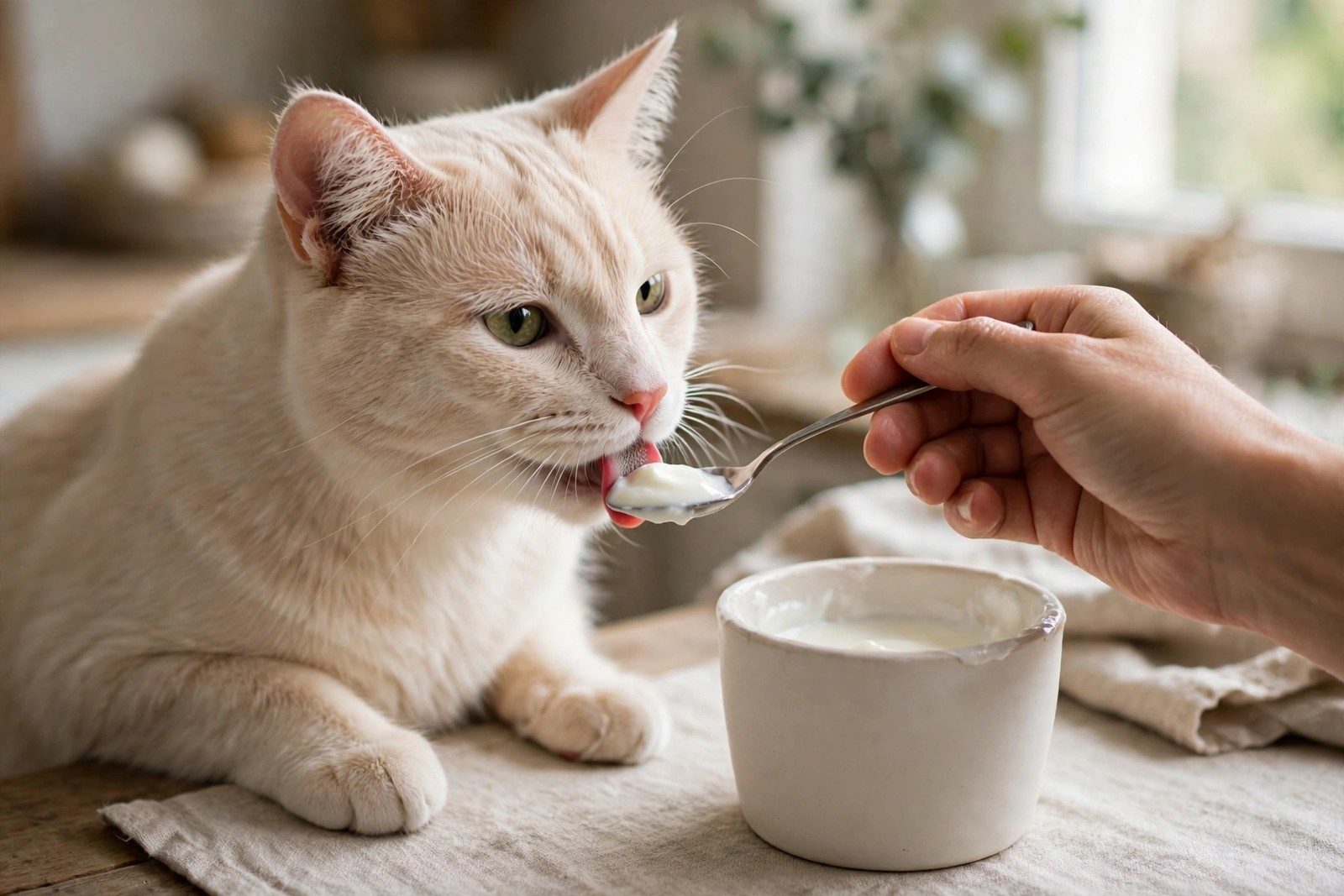
Some cats tolerate a teaspoon of plain, unsweetened yogurt, but many adult cats are lactose intolerant and dairy is never something a cat needs. Yogurt sits in a greyer area than milk, which is exactly why it deserves a careful answer rather than a cheerful one.
Lactose and the Adult Cat
Kittens produce lactase, the enzyme that digests milk sugar, because they need it. Most cats produce far less of it after weaning, so lactose that reaches the gut undigested draws in water and ferments, producing the familiar results: gas, gurgling, soft stools, or frank diarrhoea, sometimes with vomiting. Yogurt's live cultures consume some of the lactose during fermentation, which is why a spoon of yogurt may sit better than a saucer of milk, but lowered lactose is not no lactose, and strained, thicker yogurts still contain enough to trouble a sensitive cat. Individual variation is wide. One cat licks a spoon clean for years without incident while a housemate is unwell by evening, so another cat's tolerance tells you nothing reliable about yours.
Intolerance Is Not the Only Issue
A smaller number of cats react to milk protein itself rather than the sugar, and that reaction can look different: itchy skin, ear trouble, or vomiting that recurs whenever dairy appears. If every dairy experiment ends badly in any of these patterns, remove dairy entirely and mention the history at the next veterinary visit, because repeated reactions are useful diagnostic information. What yogurt should never be asked to do is treat a digestive problem. A cat with diarrhoea needs the cause found, especially if there is blood, lethargy, appetite loss, or symptoms lasting beyond a day, and adding a food that itself loosens stools only muddies the picture for the veterinarian trying to help.
Reading the Pot Before the Spoon
Only plain yogurt belongs in this conversation, with a short ingredient list and no added sugar. Flavoured, fruit, and dessert yogurts bring sugar and additives a cat does not need, and any product sweetened with xylitol, also listed as birch sugar, must never be given, since xylitol is dangerous for pets and has no place near a cat bowl. Check sweetened low-fat products especially carefully, because sugar removed from a recipe is often replaced by a sweetener. Full-fat versus low-fat matters less than plain versus sweetened at teaspoon scale, though a cat on a weight plan has no room for either as a habit. If the pot is meant for people and flavoured, the decision is already made.
The Teaspoon Test
Offer one level teaspoon, ideally as a small lick from a spoon or a thin smear on top of the normal meal, then wait a full day before judging. Watch the litter tray, listen for a gurgly stomach, and note appetite at the next meal. A clean result earns yogurt a place as a rare extra, perhaps a teaspoon once a week, useful sometimes for disguising the smell of a food transition or as a lickable distraction during gentle handling. A messy result closes the question for that cat, permanently and without disappointment, because the nutritional case for yogurt is empty: a complete cat food already supplies the protein and calcium in balanced form, and no cat is deficient in yogurt.
Keeping One Test From Becoming Three
Dairy experiments multiply in busy homes, where one person's careful teaspoon is followed by another person's generous dollop at dinner. Agree the result once and write it down where feeding happens. KinsLe's Care Teams is built for exactly that record, letting the person who ran the test complete the duty with the outcome attached, so the whole household treats the teaspoon verdict as settled fact rather than an invitation to try again.