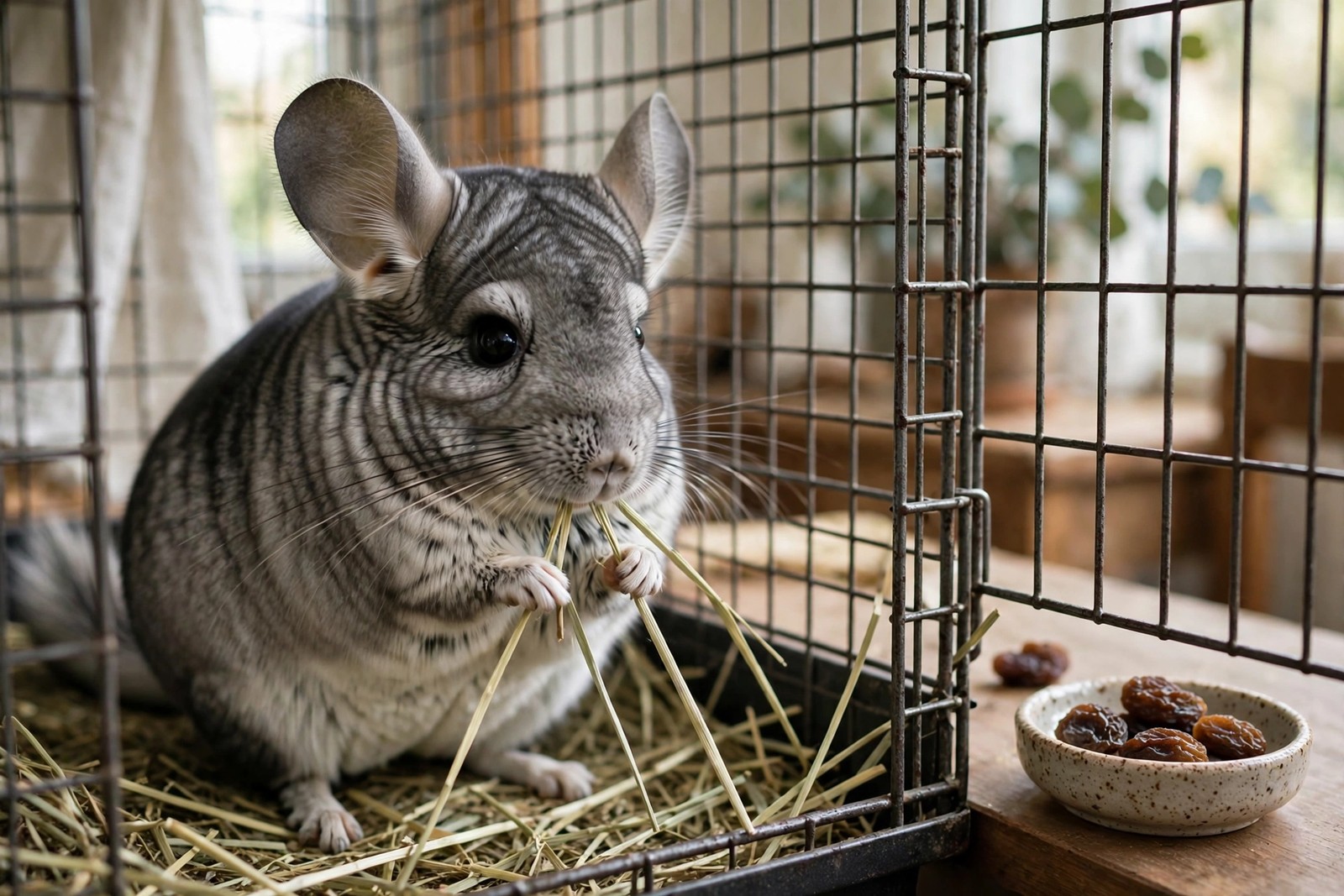
Dried fruit is best kept away from chinchillas altogether, or limited to a truly rare piece no bigger than a raisin if your veterinarian has no objection. The fruit itself is not the villain. What drying does to it is, because a small dense piece delivers the sugar of a much larger serving of fresh fruit in a form a chinchilla is poorly built to handle.
A Gut Built for Fibre, Not Sugar
Chinchillas evolved on sparse, dry, fibrous mountain vegetation, and their digestive system reflects that menu: hay moving steadily through the gut, supported by plain pellets, with very little richness anywhere. Sugar disrupts that system. It feeds the wrong gut bacteria, ferments, and can produce gas, soft droppings, bloating, and in serious cases a gut that slows or stops, which is an emergency in a small herbivore. Chinchillas also cannot vomit, so a food mistake has to travel the whole way through. Regular sugary treats add quieter harms alongside the dramatic ones, including weight gain in an animal whose exercise is limited by cage and playtime, and strain on a body simply not designed to process sweet food as a routine.
Teeth That Never Stop Growing
A chinchilla's teeth grow continuously, and chewing long-strand hay is the main force keeping them worn and aligned. Sticky dried fruits such as raisin, apricot, fig, and date cling to the molars at the back of the mouth where you cannot easily see, holding sugar against the teeth and gums. Dental trouble in chinchillas often announces itself late, through drooling, dropping food, eating less hay, wet fur under the chin, or weight loss, by which point a veterinarian needs to examine teeth that may already have overgrown or formed painful points. Every treat that replaces chewing time with sticky sweetness works in the wrong direction twice: sugar where it should not be, and less hay worn down that day.
Where Dried Fruit Hides
The obvious raisin is easy to refuse. The harder work is the dried fruit that arrives disguised as chinchilla food. Many mixed foods and treat products include banana chips, dried papaya, sweetened cranberries, colourful fruit pieces, and honey-stuck seed sticks, all marketed with a small pet on the packet. Read ingredient lists and choose a plain pellet and hay-based diet instead of a colourful mix, which also stops selective feeding, where the chinchilla picks out the sweet pieces and leaves the nutritious ones. Check anything a child or visitor might offer, too, including trail mix and breakfast cereals with fruit pieces, and keep treat-giving to a list agreed by the household rather than whatever is open in the kitchen.
Safer Ways to Be Generous
A chinchilla who expects a treat can be pleased without sugar. Offer a small piece of a plain hay-based treat, a fresh chew stick from a safe wood, a pinch of plain dried herbs or a single dried rose hip as an occasional extra, or simply a new cardboard tube or willow ball to dismantle, since novelty and activity are treats in their own currency. Reserve one of the daily pellets to hand-feed if your chinchilla loves the ritual; the interaction is usually the reward they were asking for. Fresh vegetables belong in modest, vet-consistent amounts too, introduced slowly, but the everyday generosity that keeps a chinchilla healthy is unlimited good hay, refreshed often and eaten with enthusiasm.
If Your Chinchilla Eats Dried Fruit
One stolen raisin calls for watching, not panic. Note the time and rough amount, check droppings and appetite over the next day, and make sure hay and water are fresh and tempting. Call a veterinarian the same day if droppings shrink or stop, the belly looks swollen, the chinchilla sits hunched and quiet, grinds its teeth, or refuses hay, because gut slowdown in this species deteriorates quickly and early treatment changes outcomes. KinsLe's Care Teams helps prevent the repeat performance, letting you attach a firm no-dried-fruit instruction to feeding duties so every sitter and family member protects the same sensitive gut.