
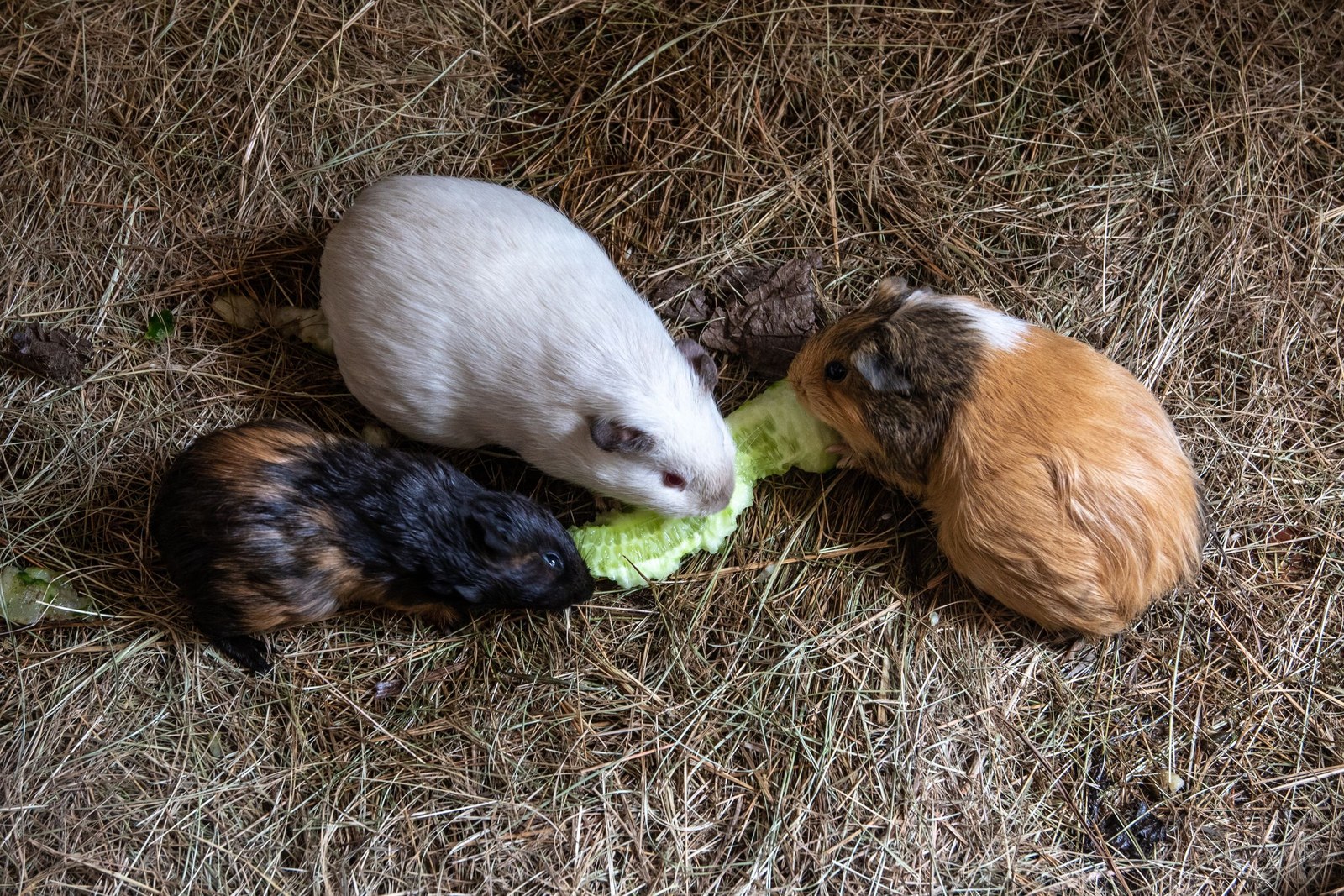
Guinea pigs need vitamin C in their diet because their bodies cannot produce it. Like people, they lack the working final step that most other mammals use to make the vitamin internally, so every bit of it has to arrive in food, every day. That single biological fact shapes the whole feeding routine: vitamin C is not an optional extra for a guinea pig, a treat-day bonus, or something to think about only when a pig looks unwell. It is a daily requirement built into what a healthy plate looks like.
What Vitamin C Does in a Guinea Pig
Vitamin C is essential for making collagen, the protein that gives structure to skin, gums, cartilage, and the connective tissue around joints. Steady intake supports normal wound healing, healthy blood vessels, and immune function, the everyday systems that keep a small prey animal resilient. Guinea pigs do not store generous reserves to draw on during a lean week, so the supply works on a short cycle: regular intake in, steady use out. That is why the pattern that protects a guinea pig is unglamorous consistency, a reliable source on the menu daily, rather than occasional large servings after a gap. A pig fed well on Monday and forgotten until Friday is not covered by Monday's good intentions.
What a Shortfall Can Look Like
When intake stays too low for a sustained period, a guinea pig can develop scurvy, the deficiency condition that follows from missing vitamin C. Possible signs include a rough coat, sore or stiff joints and a reluctance to move, slow healing of minor scrapes, general weakness, reduced appetite, gum and teeth trouble, and wheeking in discomfort when handled or moving. Treat every one of those signs as a possibility a vet investigates, not a home diagnosis, because each one overlaps with other conditions that need different care. A guinea pig showing them should see a veterinarian promptly, both because scurvy becomes harder to reverse the longer it runs and because a pig eating poorly for any reason can decline quickly. The owner's job is noticing and booking the visit; sorting the cause belongs to the vet.
Reliable Daily Sources
Build the supply from two dependable parts. The first is guinea pig pellets made with stabilized vitamin C, formulated for guinea pigs rather than for rabbits or a generic small-pet mix, bought in modest bags and stored cool and dry so the vitamin survives until the bag is finished. The second is fresh vegetables rich in vitamin C, with bell pepper the standout example and leafy greens such as romaine, kale, and parsley contributing alongside it. Offer vegetables fresh daily, introduce new ones gradually so a cautious pig learns to accept them, and rotate colors and types across the week for variety. Vitamin C added to drinking water is a poor main strategy, since the vitamin fades quickly in the bottle and a changed taste can put a pig off drinking altogether. Hay remains the constant background of the diet for teeth and digestion, but hay alone does not supply enough vitamin C, which is why the pellets and the fresh vegetables carry that specific job. Treats and fruit belong as occasional extras, not as the vitamin strategy, because a pig who fills up on sweet extras may leave the foods that actually protect it. When a new vegetable raises a question at home, KinsLe offers a quick check, since Kimmy answers follow-up diet questions using material from the KinsLe Answers library.