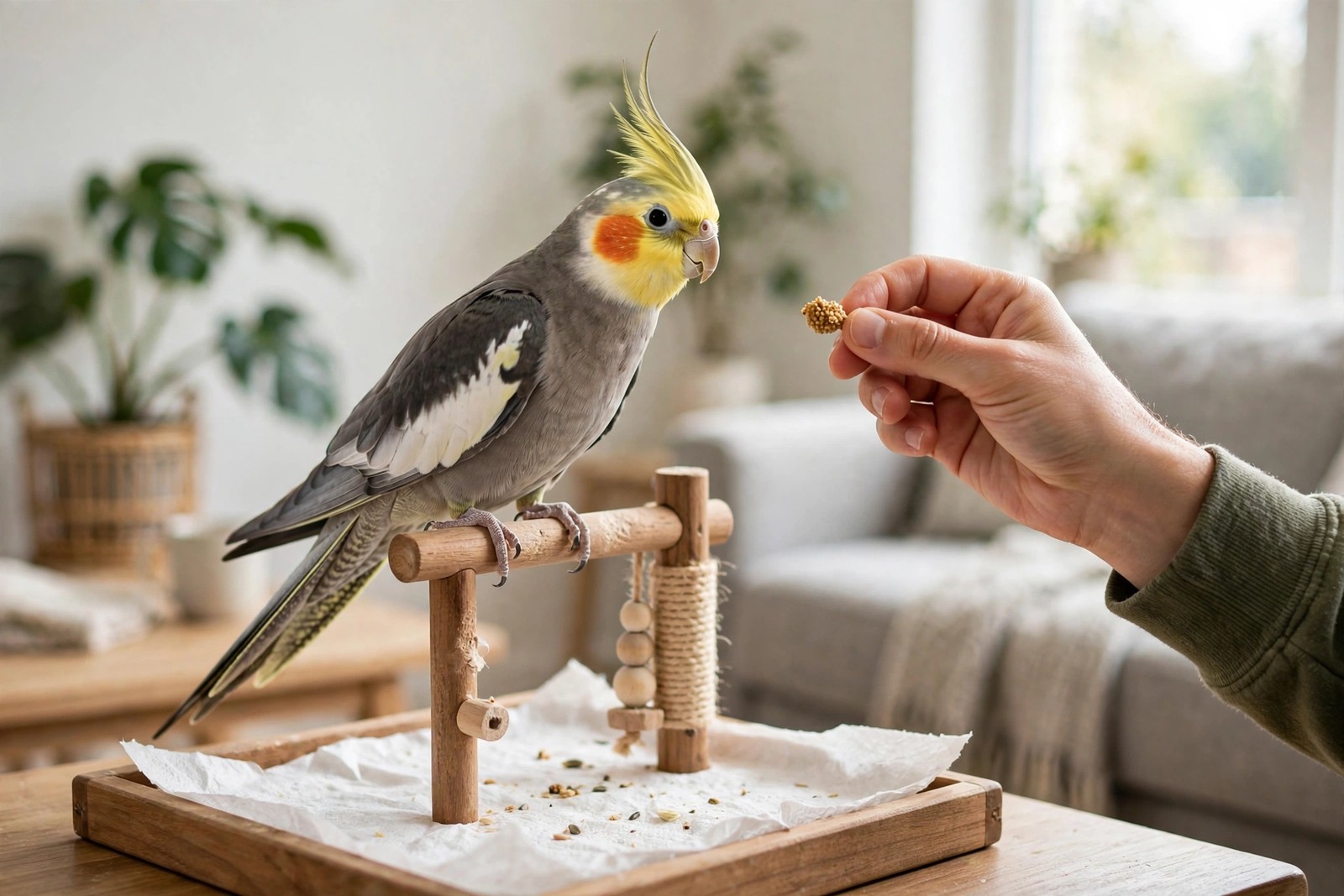
Yes, within limits: a cockatiel cannot hold on like a dog, but it can learn to go on cue at a chosen perch or play stand when you take it there often enough. Potty training a cockatiel is really owner training with a clock attached. You supply the timing and the place; the bird supplies a very learnable association between that place, your cue word, and praise.
What a Cockatiel Can and Cannot Do
A small bird's digestion runs fast, and a cockatiel typically needs to go every fifteen to twenty minutes while awake and active. Training does not stretch that interval, and a bird should never be taught, expected, or praised for holding on, because straining to wait is unnatural and can do harm. What training can do is aim a frequent, predictable event at a washable target: a play stand lined with paper, a particular perch, or the cage itself. Many trained cockatiels also begin to signal, shuffling or stepping up eagerly when they feel the urge, because they have learned that moving to the spot earns attention and a reward. The overnight exception is natural, too: most cockatiels hold through sleep and produce one famously large morning dropping, so start the day with a trip to the stand before any shoulder time.
The Method, Step by Step
Choose one spot and one short cue phrase, such as go potty, and keep both unchanged. Watch for your bird's personal pre-dropping signals, which most owners learn within days: a slight squat, a small step backwards, tail lifting or wagging, and a moment of restless shuffling. Pick the bird up calmly, place it on the stand, say the cue once, and wait without looming. The moment it goes, praise warmly and offer a tiny favourite treat or a scratch if that is what your bird values, then return to play so the stand means a brief pause, not the end of fun. Between successes, take the bird back to the spot every fifteen to twenty minutes, and always after waking, after eating, and before the bird settles on a shoulder, a lap, or the sofa.
Timing the First Weeks
Expect the habit to form over a few weeks of consistent timing, with accidents clustering exactly where your schedule slipped: a long phone call, a film, a visitor the bird was busy impressing. Treat every miss as information about the interval, not disobedience. If accidents happen at twelve minutes, set the trips at ten for a while. Never scold, tap the beak, or rush a bird mid-accident to the stand in frustration, because fear attaches to you and to handling, and it poisons the cooperation the whole method runs on. Keep a simple log for the first fortnight noting times of droppings during out-of-cage sessions; the pattern you find is your bird's real timetable, which is more useful than any general interval, including the one in this article.
Hygiene and Health While You Train
A perch over paper makes cleanup instant and keeps droppings away from food and water cups. Wash hands after handling droppings and before eating, as with all bird care. Training also sharpens your eye for droppings themselves, which is a real health benefit, since changes in colour, consistency, or volume are among the earliest signs something is wrong with a bird. A cockatiel producing far fewer droppings, straining, or showing watery or discoloured droppings beyond a brief response to a watery food needs a veterinarian, not a training adjustment. Young birds, unwell birds, and birds on certain diets go more often, so loosen your expectations whenever life changes.
Getting the Whole Household on Cue
The method collapses if one person uses the cue, another invents a different phrase, and a third lets the bird sit on the curtains for an hour. Agree the word, the spot, and the trip rhythm, and write them where the bird's supplies live. KinsLe's Care Teams makes that agreement stick, because training turns and stand trips can sit on the cockatiel's duty list, completed and timestamped by whoever took the bird, so the next person knows when the clock started.