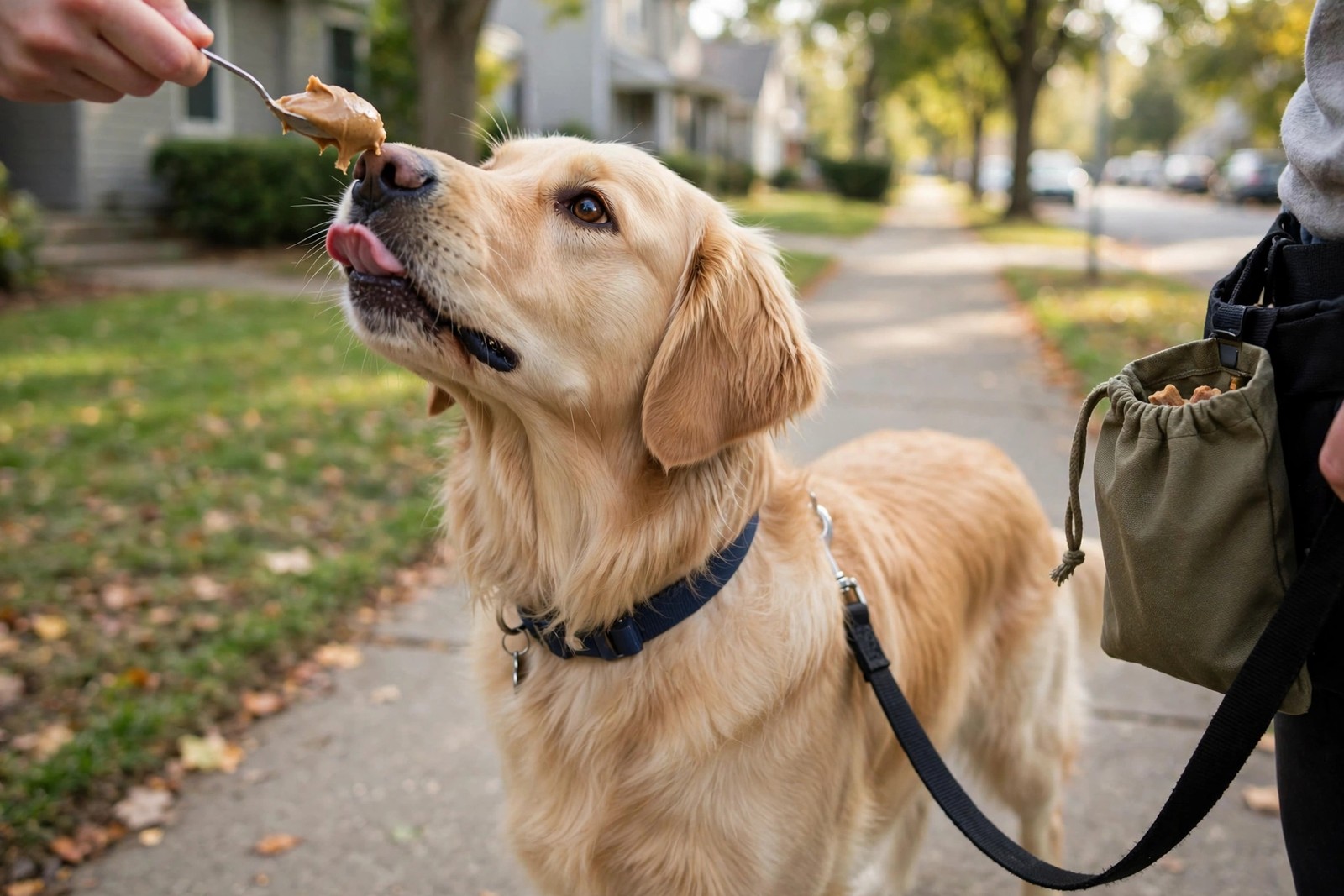
Plain almond butter sits in the caution zone. A lick of the unsweetened kind is not toxic to dogs, yet almonds are rich, hard to digest, and quick to upset a stomach, so the spread earns treat status only in the smallest amounts. The label decides everything: any nut butter sweetened with xylitol, also called birch sugar, is extremely dangerous and must never be offered, however small the smear.
The Basics First
Choose a jar with almonds and nothing else on the ingredients list — no xylitol, no added oils, no salt, no cocoa, no flavourings. Even then, treat almond butter as a garnish rather than a food group: a thin smear inside a food toy, given occasionally, is the sensible ceiling for a healthy adult dog. Its calories arrive fast, and a spoonful-sized habit quietly fattens a dog whose meals were already balanced. Dogs who are overweight, prone to stomach upsets, or under veterinary care for pancreas or digestive problems are better served by skipping nut butters entirely and asking the vet what extras fit their plan.
Introduce any new spread in a tiny amount on a calm day, then watch appetite, stool and energy over the next day or two. Soft stool, vomiting, or a dog who goes off his food after almond butter is the answer for that dog: take it off his menu, return to his normal food, and contact your veterinarian if sickness repeats, if he stops drinking, or if a small dog seems weak or uncomfortable.
A Workable Routine
A household routine for almond butter looks like this:
- Check the label every time, because recipes change between jars
- Pick plain and unsweetened, with no xylitol or birch sugar anywhere on it
- Smear a thin layer inside a food toy instead of serving spoonfuls
- Offer it occasionally, not as a daily training reward
- Note the amount given and any reaction the same day
- Store the jar closed and out of reach between uses
Tied to an ordinary moment — filling the evening food toy, say — that routine holds up in busy weeks without becoming a separate project.
Making It Part of Everyday Life
Consistency matters more than the treat itself. If one person offers almond butter freely while another keeps the jar shut, the dog's waistline and stomach keep the score, and nobody can tell which food caused a loose stool. Agree the household rule once — who may offer it, how much, and how often — and write reactions down where a sitter or your veterinarian can see them. That shared rule is easier to hold with KinsLe's Care Teams: feeding duties for each pet can be assigned to family members or helpers inside KinsLe, and a timestamp marks every finished task, so the almond-butter limit does not depend on memory.