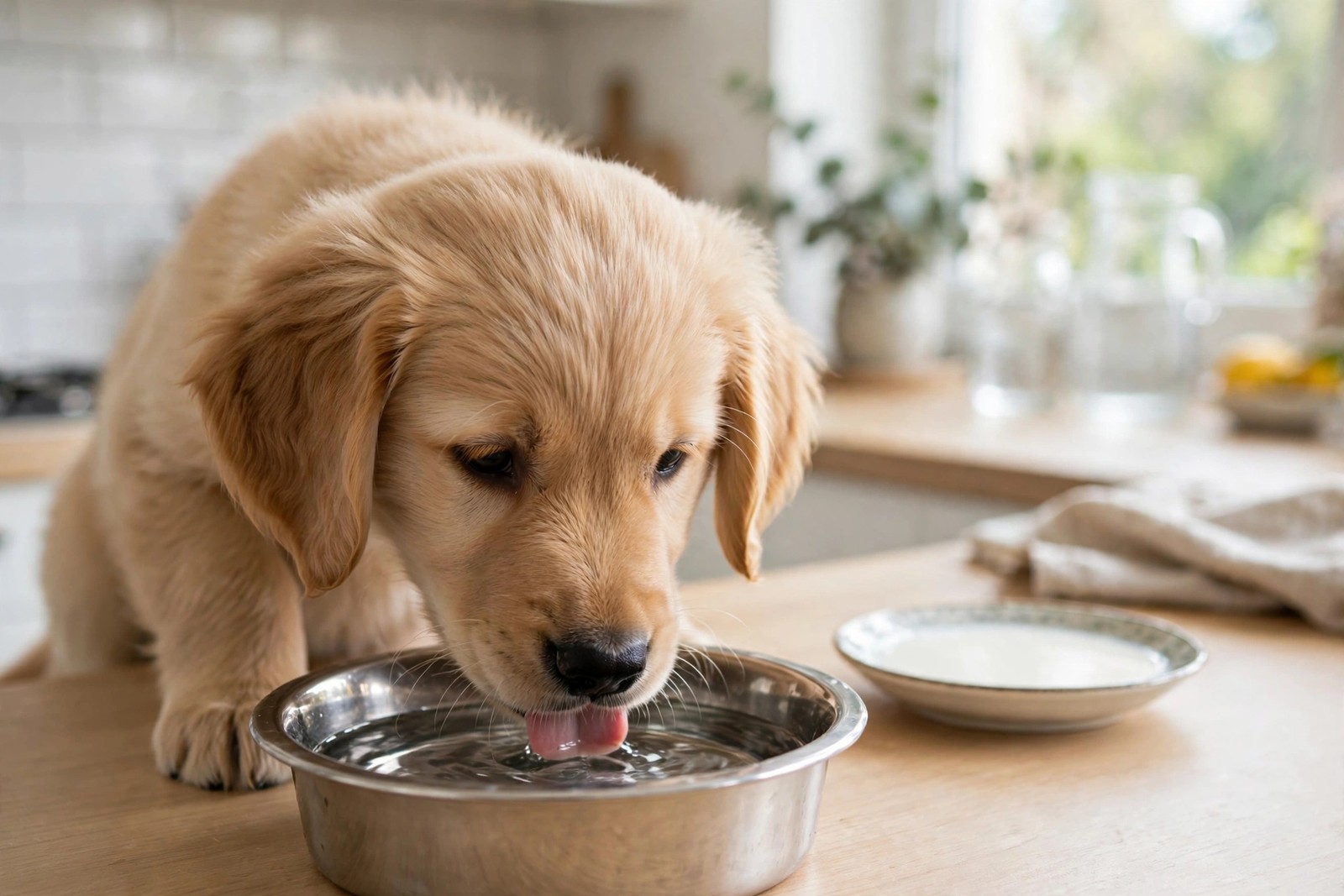
Milk is best kept to a rare tiny taste for dogs, and many do better skipping it altogether — which surprises owners raised on images of saucers of milk as an act of kindness. The biology changed underneath the picture: dogs are built to digest milk as puppies, then most lose much of that ability after weaning, and adult offerings run into an enzyme that is no longer there in quantity.
What lactose does in an adult dog
Milk sugar that cannot be broken down travels onward into the gut, where it ferments. The familiar result arrives within hours: gurgling, wind, bloating, and loose stool, sometimes with a dog asking urgently to go out at an inconvenient hour. Tolerance is individual — a dog who has always stolen cereal milk without drama may handle a splash indefinitely — but there is no nutritional prize for finding out, because milk's protein and calcium are already covered properly by a complete dog food, while its fat and calories are very real. Goat's milk still contains lactose and is not a magic exception, and flavoured milks, milkshakes, and sweetened condensed products add sugar or worse on top of the original problem. The mug of milky tea a dog laps from a low table is the same story in miniature — a one-off is unlikely to matter for a healthy dog, but caffeine is another reason that particular drink should move out of tongue range permanently rather than becoming a shared morning ritual.
Puppies are a separate rule
None of this applies to a nursing puppy, whose mother's milk is the perfect and only intended food in the first weeks. The confusion starts when cow's milk gets offered as a substitute for an orphaned or rejected puppy: it is not one. Cow's milk has the wrong balance of protein, fat, and lactose for a puppy and commonly causes the very diarrhoea that dehydrates a tiny animal fastest. Puppies who cannot nurse need a proper commercial puppy milk replacer and prompt veterinary guidance — call your veterinarian the same day rather than improvising with the fridge. Weaned puppies eating solid food need water, not milk of any kind, as their drink.
Testing tolerance without the mess
If you want to know whether your adult dog tolerates dairy, trial a teaspoon, not a saucer, and judge the following twelve hours honestly: normal stool and a quiet stomach means an occasional lick is fine, while any looseness retires milk permanently for that dog. Dogs with pancreatitis history, weight problems, or sensitive digestion should not be trialled at all. Persistent diarrhoea, vomiting, or a dog who stops eating after a dairy binge deserves a veterinary call.
Make it official in KinsLe's Care Teams — water listed as the drink on every feeding duty, milk marked as not offered — and the timestamped routine keeps visiting relatives from helpfully filling the wrong saucer.