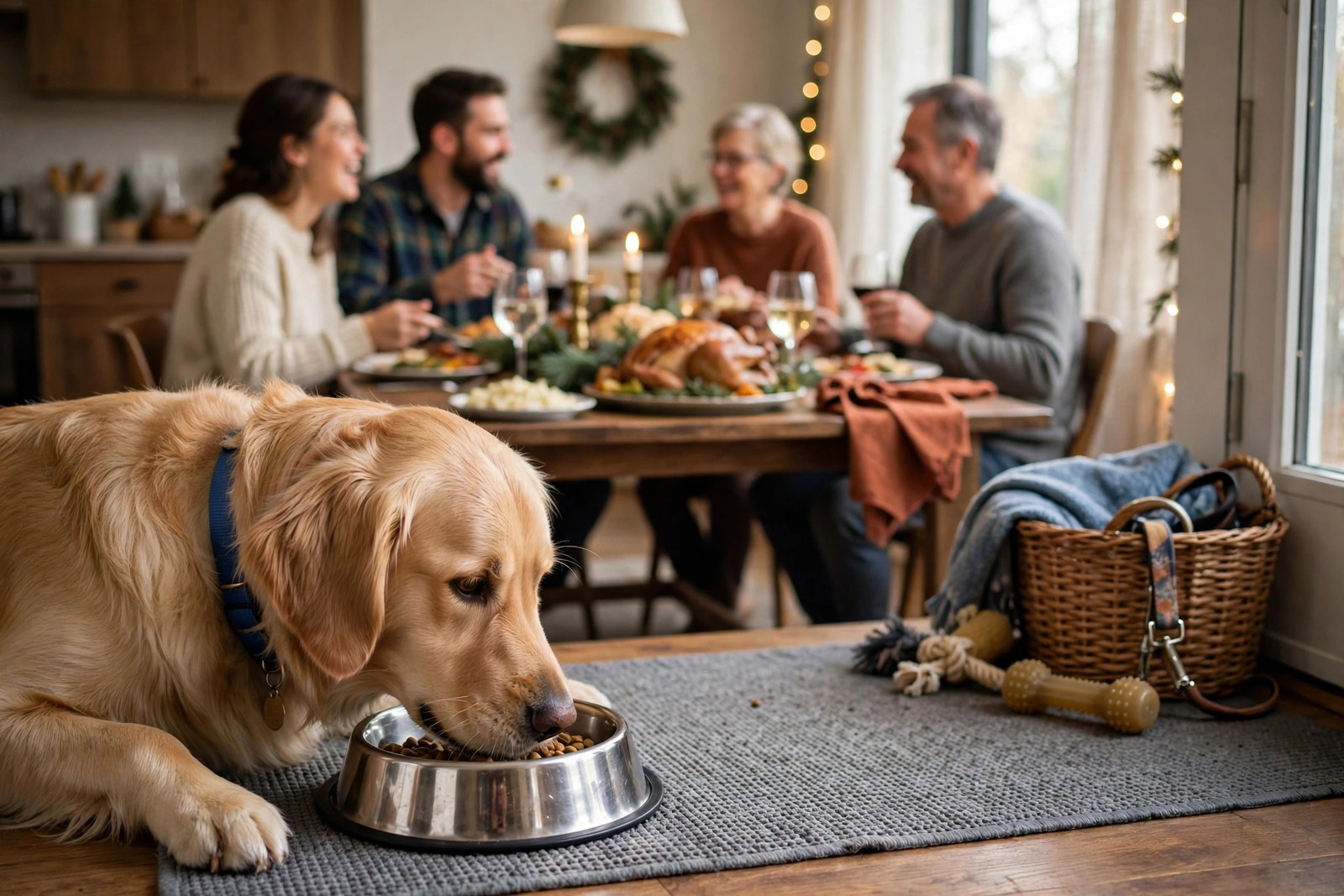
Holidays unsettle a dog's stomach through small disruptions that add up. Meals drift later, visitors slip tidbits under the table, rich leftovers appear in the bowl, and a dog who eats on schedule for fifty weeks can gain weight or develop loose stools in one festive week. The fix is structural rather than hopeful. Decide the plan before guests arrive, write it down, and give the plan a single owner.
Name One Feeder and Fix the Clock
Choose one person who feeds the dog for the entire visit. That person measures the usual food, serves it at the usual times, and marks each meal as done. Everyone else holds a simple role of offering nothing, however pleading the expression beside the sofa becomes. Dogs read opportunity quickly, and a household where nine people hold firm while one person relents teaches the dog to work the room harder.
Anchor meals to the clock instead of to household events. Dinner for guests may slide by two hours around a long lunch or a trip out, and the dog's dinner should stay put. A phone alarm for the feeder keeps the schedule honest when conversation and cooking pull attention elsewhere.
Put the Rules Where Guests Can See Them
A short note on the fridge does work that repeated verbal reminders cannot. Include the food name, the exact portion per meal, the feeding times, the daily treat allowance, and a short list of foods that stay off limits for the dog. Cooked bones, rich gravy, fatty trimmings, onions, and chocolate belong on that list during holiday cooking, when all of them sit within snatching distance.
Give willing guests a sanctioned way to interact. Fill a small pot each morning with a counted number of the dog's own treats, and let guests offer one treat for a sit or a paw. The dog still receives attention from visitors, the treat total stays capped, and children learn the approved route instead of inventing a forbidden one.
Feed Away From the Action
Serve the dog's meals in a quiet room away from the dining table and the kitchen traffic. A dog who eats beside a loaded table learns to patrol for drops, and dropped holiday food often includes exactly the rich or unsafe items the note excludes. After the meal, lift the bowl, refresh the water, and let the dog rest away from the busiest room if the household noise climbs.
Keep exercise roughly normal as well. A long morning walk before guests arrive burns energy, supports a calm afternoon, and preserves the appetite pattern the feeding schedule assumes. A dog who misses walks for three days and gains extra treats from five people faces a double disruption.
Plan for the Predictable Flashpoints
Think through the moments that usually break the routine and assign each one a response. The doorbell sends the dog into excitement just before dinner service, the cook hunts for somewhere to set a hot tray, and a toddler carries food at exact dog height. Gates, a stocked chew in a separate room, and a lead clipped on before doors open all cost little and prevent the scramble that ends with the dog eating something unintended.
If a guest does feed the dog an unplanned extra, treat the event as information rather than a crisis. Note what went in, skip the corresponding amount of treats that day, and restate the rule kindly. One small slip inside an otherwise steady week rarely matters, and a calm correction keeps guests cooperative for the remaining days.
A written plan only works when the household can see whether each meal actually happened, and KinsLe Care Teams gives that visibility by logging every assigned feeding with the name of the person who completed it.