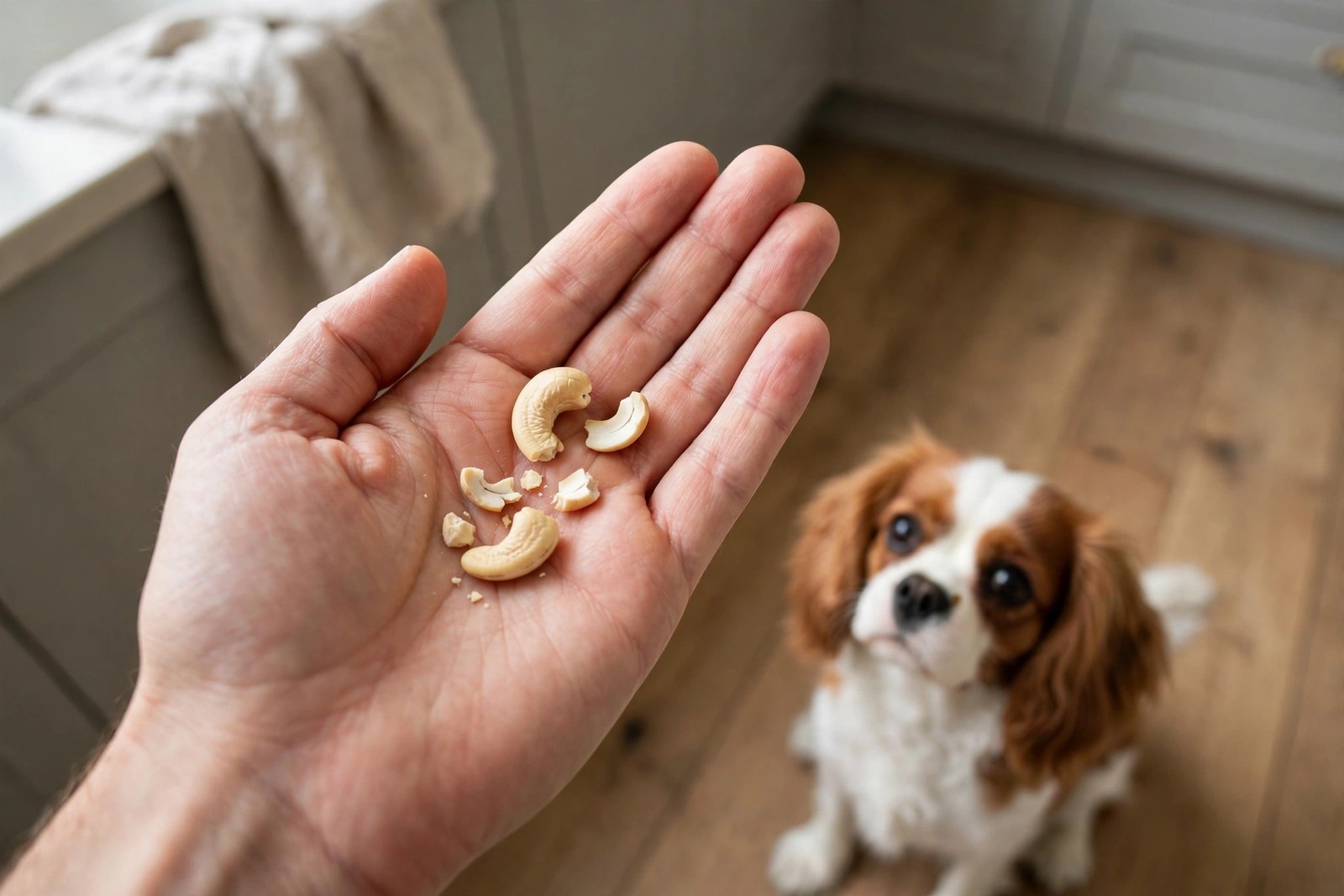
Yes, cashews are one of the nuts a dog can eat, in the strict form this question specifies: plain, unsalted, broken into small pieces, and given very occasionally. Cashews are not toxic to dogs, and their soft texture makes them easier to break up than harder nuts. What limits them is not poison but richness — a cashew packs a lot of fat and calories into a small, mild, easy-to-scoff package, and dogs are excellent at convincing people that one more is a trivial decision.
Why the Pieces and the Count Both Matter
Breaking a cashew does two jobs. It slows the dog down, because small pieces get chewed instead of being positioned and swallowed whole, and it makes the portion visible, because two broken cashews in a palm look like the treat they are rather than disappearing one at a time from a bowl. Count in whole cashews before you break them: one cashew for a small dog, one or two for a medium dog, and no more than a few for a large dog, on a rare occasion. Regular nut feeding is where the trouble accumulates — steady extra fat works against a dog's weight, and a sudden fatty binge is one of the patterns vets ask about when a dog presents with vomiting and belly pain that pancreatitis could explain. A dog with a history of pancreatitis or a vet-directed low-fat diet should not be offered cashews at all.
Plain Only: Salt, Flavourings and Shells
The dog-safe cashew is the unadorned one. Salted cashews deliver salt a dog does not need, honey-roasted and spiced versions add sugar, salt and flavourings, and wasabi or onion-and-garlic coatings move from unsuitable to unsafe. Buy or set aside plain unsalted cashews if nuts will be shared at all, and check that they are shelled, because cashew shells are never food for dogs. Serve the pieces from your hand or the dog's bowl rather than letting the dog eat from a shared snack bowl, where the count is lost within a minute. If the pieces are part of a trail mix, read the next section before anything is offered.
The Mixed-Nut Trap
A bowl of mixed nuts is not a bowl of cashews with extras; it is a different and riskier proposition, because macadamia nuts, which are toxic to dogs and can cause weakness, tremors and vomiting, are common in premium mixes and look unremarkable to a person picking through for cashews. Raisins, another frequent mix ingredient, are also toxic to dogs. The only safe way to share from a mix is not to: pick the dog's cashews from a separate supply of plain cashews whose contents you know completely. If a dog raids a nut bowl and you cannot say what was in it, call your vet for advice and watch the dog closely for the following hours rather than assuming the cashews were the whole story.
Keeping Rare Treats Rare
Cashews appear at gatherings, in lunchboxes and on low tables, which gives a dog repeated chances to collect them from different people in one evening. Tell guests the dog has had its nut allowance, or simpler, that the dog does not eat from human snacks at all, and enforce it kindly and consistently. A written note in the feeding plan ends the debate better than memory does. KinsLe's Care Teams lets you log the rare cashew treat as a completed duty with a timestamp, so everyone in the household can see that today's pieces have already been given and the bowl stays closed.