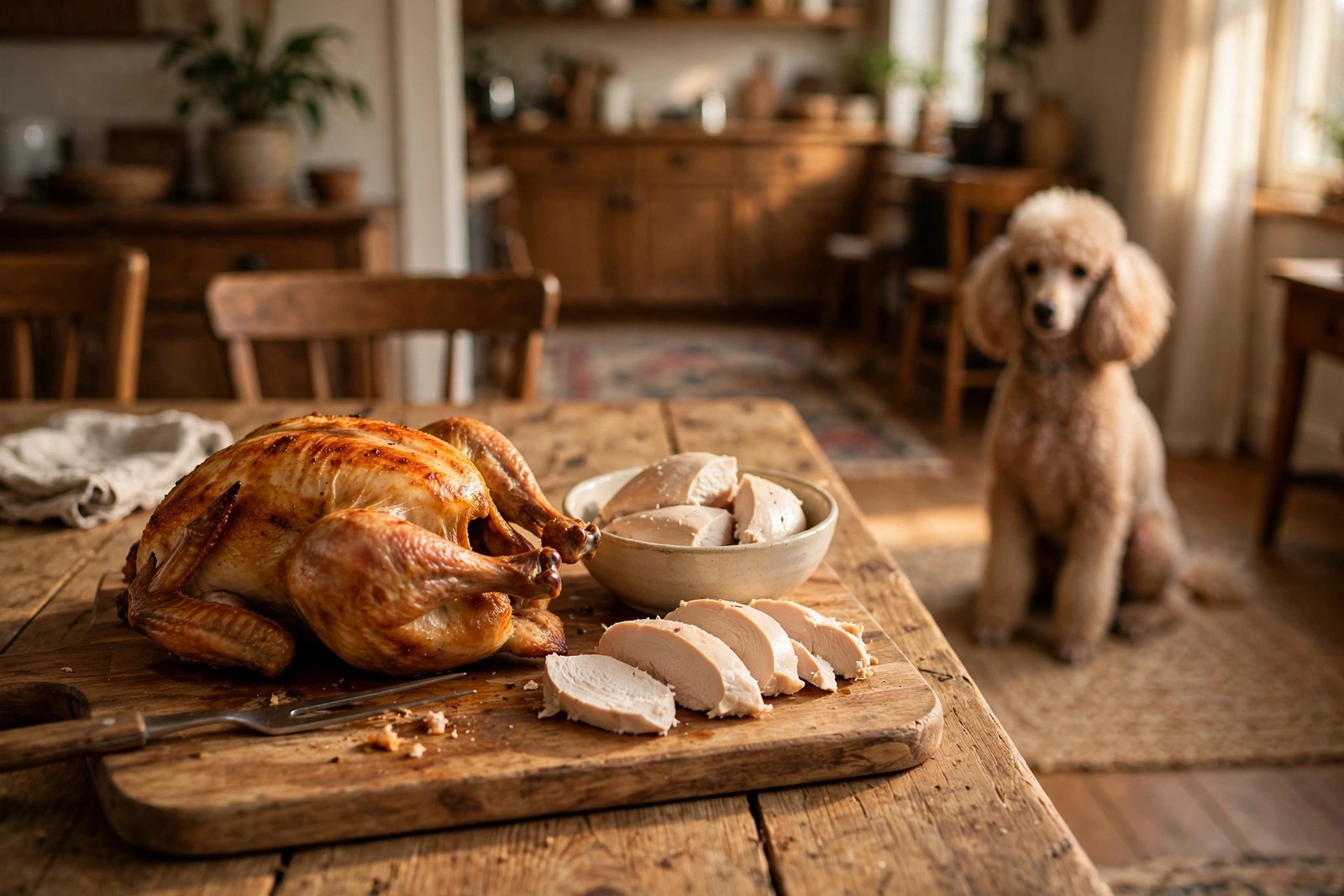
Only the plain meat, hand-picked by you, is shareable from a rotisserie chicken. Serve a few small pieces of skinless, boneless breast meat and treat everything else on the bird as off limits. Rotisserie chicken smells like an easy treat, and that convenience is the danger. The bird arrives seasoned, fatty under the skin and built around a cage of cooked bones, so the version the dog can have must be constructed deliberately rather than torn off casually.
The Three Traps on One Bird
Skin comes first. Rotisserie skin carries the seasoning, much of the salt and a heavy layer of fat, and a strip of it can trigger loose stool or worse in a dog prone to pancreatitis. Seasoning comes second. Many rubs and glazes include garlic and onion, both of which harm dogs, and the label on a hot shop bird does not always list every ingredient in the coating. Meat from under a heavy rub should be treated with the same caution as the skin. Bones come third and matter most. Cooked chicken bones turn brittle, and brittle bones splinter into sharp fragments that can injure the mouth, throat and gut. No cooked bone from the carcass should ever reach the dog, including the small rib and wishbone pieces owners sometimes overlook. That count of three traps is the whole reason the hand-picked rule exists.
Carving the Dog's Share Properly
Wash your hands, then carve the bird on a board with the dog out from under your feet. Lift a section of breast meat, remove every trace of skin and check the piece with your fingers for small bones and cartilage before cutting it into bite-sized pieces. Finger-checking matters, because rotisserie meat falls apart and hides fragments that a knife misses. Serve those few pieces in the dog's bowl or as training rewards, and stop there. Dark meat is fattier, so breast is the better share, and meat soaked in the juices at the bottom of the container should stay out of the bowl because those juices carry the seasoning and fat. If the bird was heavily rubbed or glazed, the safest answer is to skip sharing entirely and cook a plain chicken portion at home instead.
Training With Rotisserie Meat Without Building a Habit
The strong smell makes hand-picked rotisserie breast an effective high-value reward for recall practice or for a dog learning to ignore distractions. Use pea-sized pieces, keep the session short and return to ordinary rewards for the rest of the week, because a dog paid in roast chicken for every sit soon values plain rewards poorly. Save a small labelled portion from one bird for training rather than buying a bird for the dog, and freeze the pieces you cannot use within 3 days in a single layer. Thaw only the pieces a session needs, and discard any thawed meat left at the end of the day rather than returning it to the fridge for tomorrow.
Leftovers, Storage and the Bin Rule
Strip any meat you plan to keep as soon as the meal ends, refrigerate it in a sealed container and use it within 3 days. The carcass, skin and bones go straight into a lidded bin or an outside bin the dog cannot open, never into an open kitchen bin and never onto a low plate awaiting washing. Dogs raid cooling carcasses on counters more often than owners expect, so move the remains out of reach before you sit down. If your dog does steal a cooked bone or a large amount of skin, watch for gagging, drooling, vomiting, stomach pain or straining, and call your veterinarian promptly if any sign appears. Send the hand-picked breast rule and the lidded bin rule through KinsLe Messenger before the next rotisserie night, so the person carving and the person clearing both protect the dog without a debate at the table.