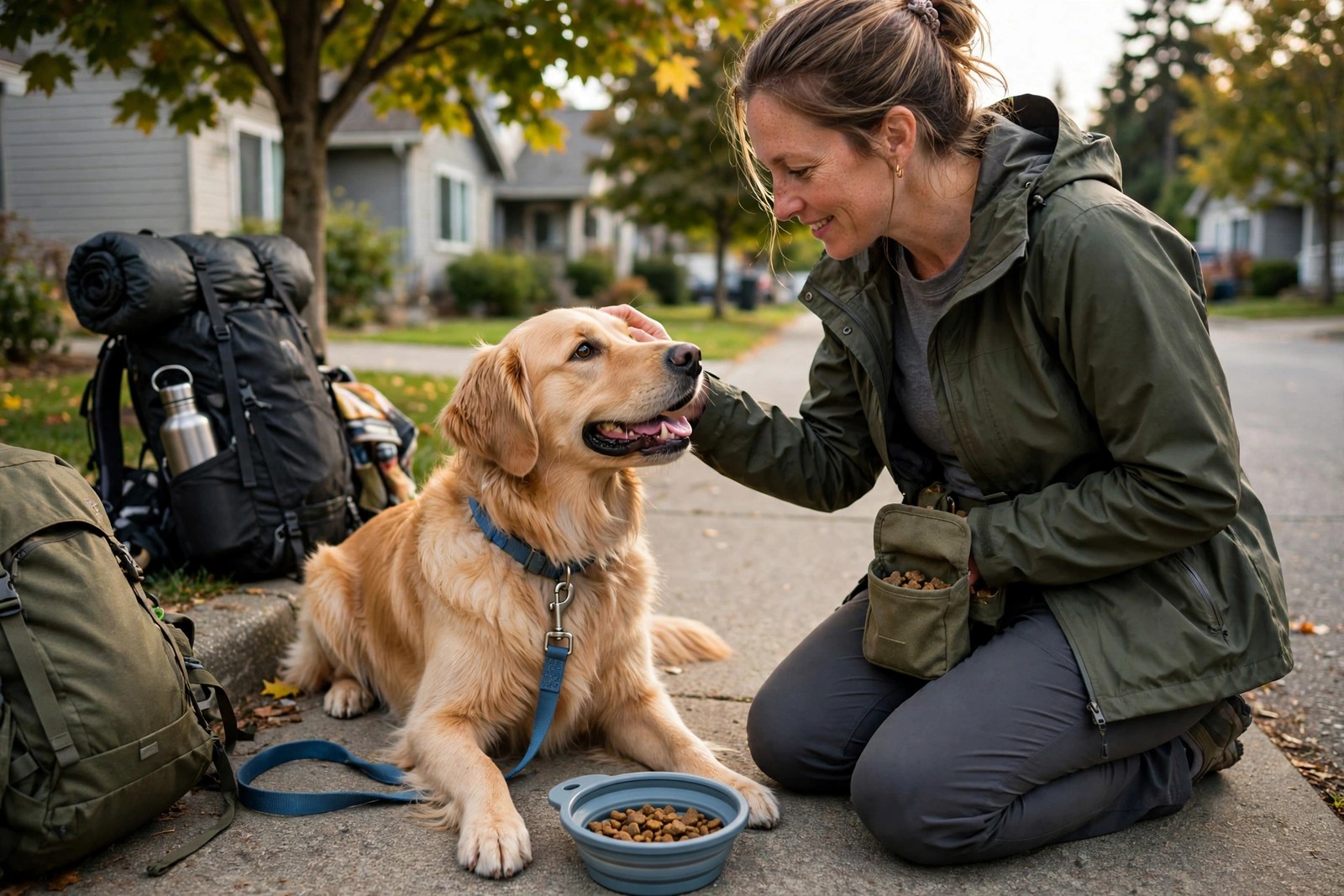
A camping trip changes a dog's scenery, smells and sleeping place, and food should not join the list of changes. The routine survives the trip when the food, the bowl, the meal times and the feeding person stay as familiar as the campsite allows. Pack the exact food he eats at home, serve each meal from his usual bowl at roughly the usual times, and guard the food supply against wildlife, weather and other dogs.
Packing: Daily Bags, a Spare Day and Sealed Storage
Pre-measure each day's food at home into separate sealed bags, one bag per day, and label each bag with the day and the meal split when your dog eats more than one meal. Add a spare day of food in a separate bag, since a delayed drive home or a wet bag should never force a sudden diet change at a campsite shop. Pack the usual bowl, a spare collapsible bowl for walks, treats measured from the normal allowance and any supplement or medication your dog already takes, packed with the same care as your own. Store all dog food inside a sealed hard container, kept in the vehicle or in the storage the campsite requires, never loose in the tent where smells invite wildlife and where a dog can self-serve overnight. Keep the container shut between meals even during the day, since campground neighbours include other dogs, birds and bold small animals that treat an open bag as an invitation. Bring more water than you expect your dog to need, in a dedicated container, and refill the supply at each reliable source rather than letting a dog drink from stagnant puddles or slow streams.
At the Campsite: Times, Water and the No-Scraps Rule
Feed at roughly the home times, in a calm corner of the pitch away from other campers and their dogs, and use the usual cue and the usual bowl so the meal itself feels ordinary. Offer water often across the day, after walks, after play and after travel, and watch intake on hot or active days when a distracted dog can under-drink. Skip campsite scraps and barbecue extras entirely, including cooked bones, fatty trimmings, corn cobs, skewers and seasoned meat from shared cooking, since a rich and unfamiliar meal can ruin a night and lead to a vet visit far from home. Tie mealtimes to the same order as home, such as a walk before breakfast or a toilet trip after dinner, and keep a lead on during meals when campsite rules require leads or when other dogs pass close. Wash the bowl after each meal rather than leaving residue to attract insects, and tip wash water away from the pitch and away from any water source, following the campsite's own rules for waste water.
Watching the First Days, and Handling a Problem
Expect appetite to dip slightly on the first day for some dogs, and watch stool, energy and water intake across the first day or two. A dog who eats a little less yet drinks, plays and toilets normally usually settles as the campsite becomes familiar, while a dog who refuses food alongside lethargy, repeated vomiting or diarrhoea needs a veterinarian, and knowing the location of a clinic near the site before you pitch the tent turns that decision into a drive rather than a search. Keep your own veterinarian's number in your phone alongside the local clinic, and carry a note of your dog's current food, portions and medications for any clinic that needs the history quickly. On the drive home, return to the exact home schedule at the next regular meal rather than adding a compensating meal. Unpack leftover daily bags back into home storage and note what the dog actually ate each day, which improves the packing for the next trip. In KinsLe, a Care Teams duty for the trip can list the daily bag, the meal times and the no-scraps rule for a travel companion, and each fed meal is recorded, so two people sharing campsite duties never feed the same dog twice.