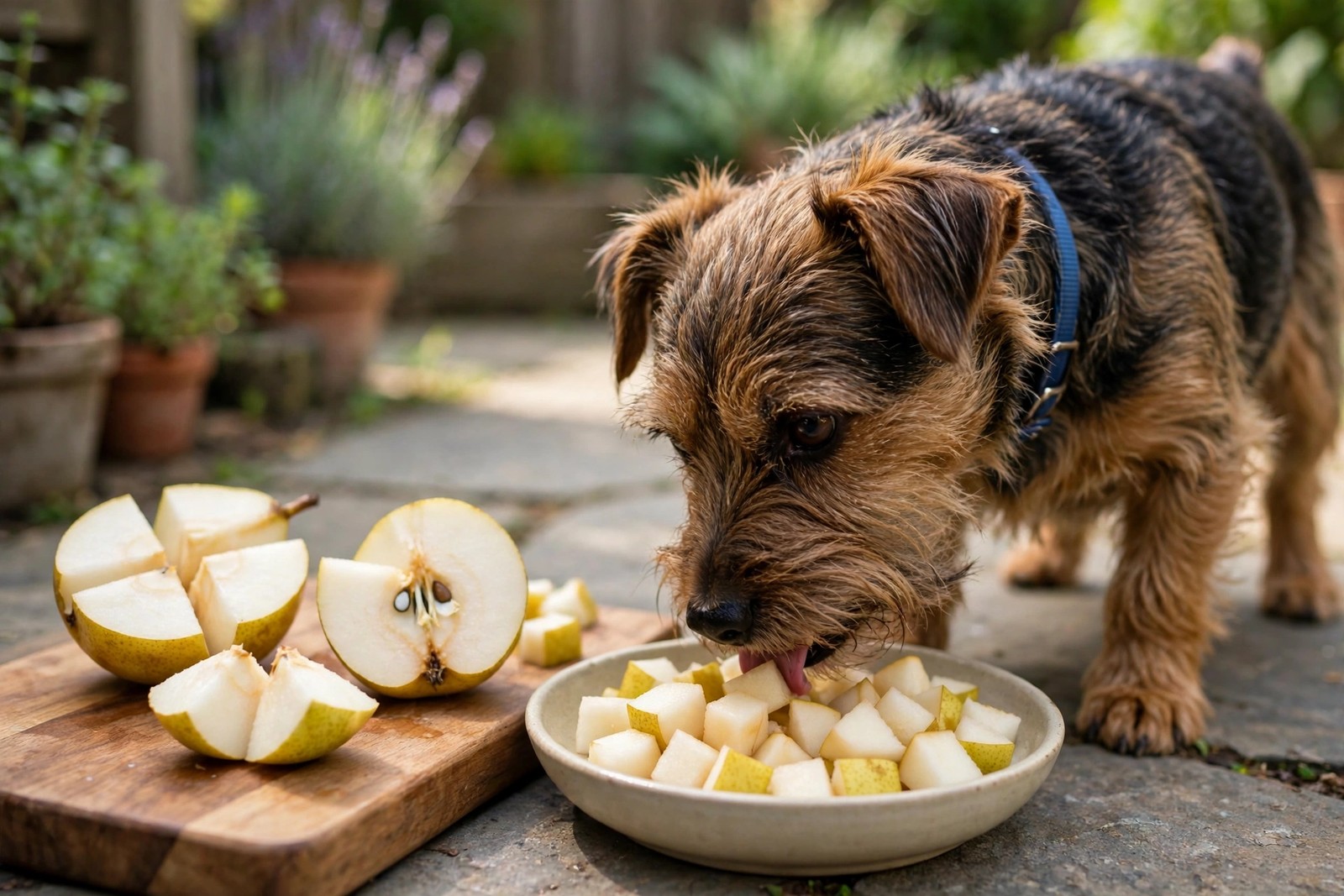
Yes, dogs can eat ripe pear flesh in small amounts, provided the core, stem and seeds are removed first. Pear flesh is gentle, watery and provides fibre and vitamin C, but the centre of the fruit is not for dogs. Pear seeds contain trace cyanide compounds, and while a single seed is unlikely to harm a large dog, there is no reason to feed them. The woody core and stem are also firm enough to stick in the throat of a dog who bites off more than expected.
Slicing a Pear So It Is Actually Safe
Wash the pear, cut it into quarters lengthways, then cut out the V of core and seeds from each quarter before slicing the flesh into small cubes. For a small dog, dice it fine; for a large dog, thumbnail-size pieces are plenty. Serve pear ripe and soft rather than hard and unripe, because unripe pear is firmer, more astringent and more likely to cause griping and gas. Remove any brown, bruised or wasp-damaged sections, and clear windfall pears from under garden trees, since fermenting fruit left on grass can upset stomachs and attract dogs to eat core and all.
Tinned pear is a different food from fresh pear. Pear canned in syrup coats the fruit in sugar water and should be skipped, and pear in juice is still sweeter than fresh. Dried pear concentrates sugar into a dense, sticky chew, so fresh slices are the sensible version of this treat.
Portions and Frequency
Offer two or three cubes to a small dog, a quarter of a pear cut up to a medium dog, and up to half a pear to a large dog, a couple of times a week at most. Feed pear as a standalone snack or training extra, not piled on top of a full meal, and keep all treats together to a small share of the day. Puppies can have a tiny soft cube once they are eating solids well, but introduce one new food at a time so any reaction is easy to trace.
Upset, Choking and When to Call
Too much pear usually shows up as loose stool, extra wind or a gurgling belly within a day. Cut fruit out, keep meals plain and normal, and let the stomach settle. Seek veterinary advice the same day if your dog is coughing or gagging after eating pear, drooling and unable to swallow, vomiting repeatedly, or passing no stool with a swollen belly, as those signs suggest something is stuck. Dogs who raid a pile of windfalls and eat several whole pears, cores included, are also worth a call, even before signs appear.
Prep is where pear safety is won or lost, and prep differs between helpers. KinsLe Care Teams lets you attach 'quarters only, core and seeds cut out, three cubes max' to the feeding task, so whoever slices the pear follows the same safe routine.