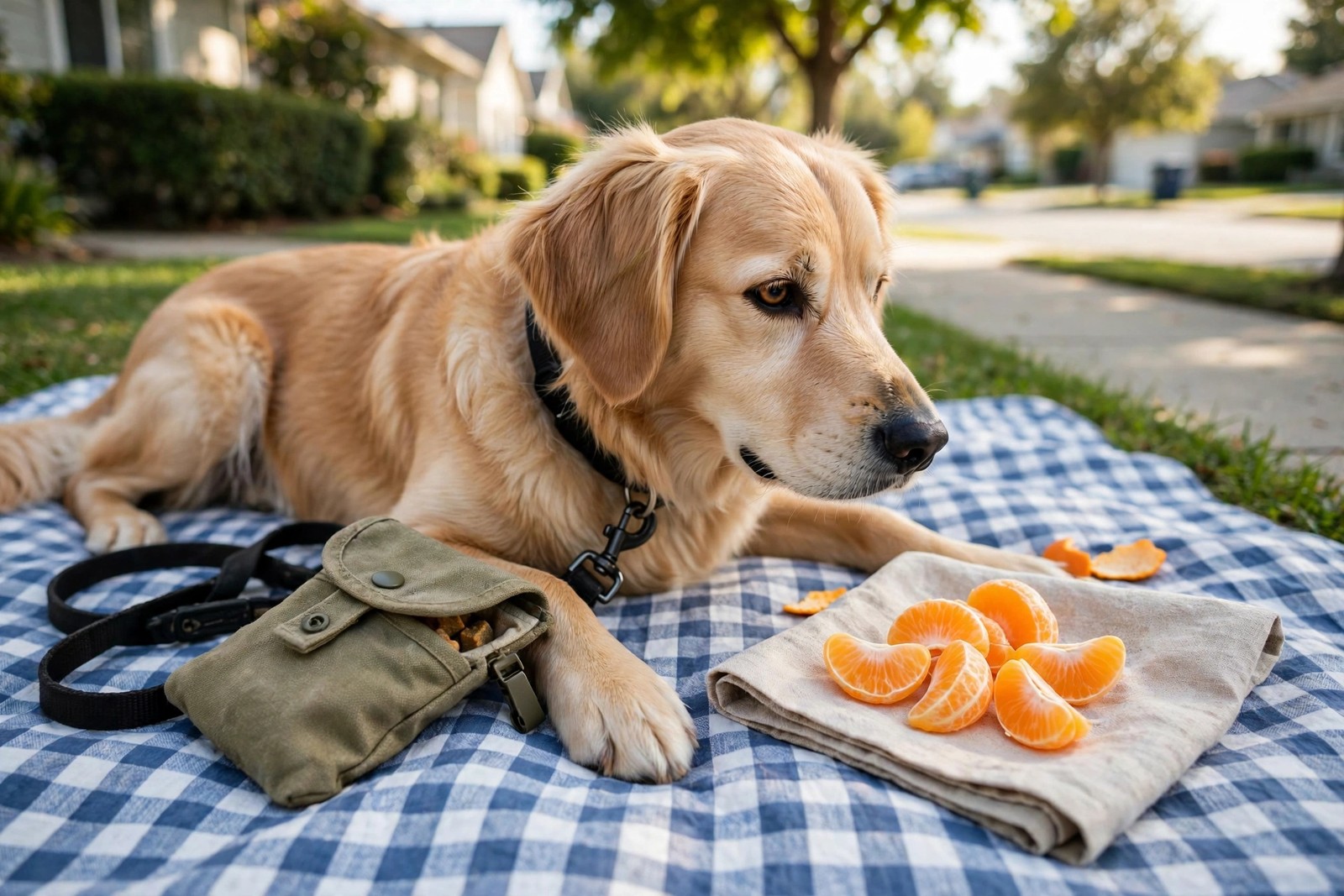
Yes, oranges can be shared with your dog, and a picnic where children eat theirs beside you is a natural place to offer a segment. The fruit needs three small jobs first. Remove the peel completely, pick out the seeds, and strip away as much of the white pith as you can. What remains is soft, sweet flesh that many dogs enjoy, served in a count you control.
Segment Counts by Size
Give one segment to a small dog. Give up to two segments to a medium or larger dog. Break a segment into two or three bite-sized pieces for a small dog or a fast eater, so each piece gets chewed rather than gulped. Keep orange an occasional treat, offered on the day rather than built into daily feeding. Orange flesh carries natural sugars and acid, and a modest count keeps both in proportion. A dog who has never eaten orange should start with half a segment while you watch for loose stools or a reduced appetite later that day.
Peel, Pith, and Seeds Stay Out
Peel is the part of the orange with real potential to cause trouble. Its tough structure resists digestion, its oils can irritate the stomach, and a swallowed slab of peel can obstruct a smaller dog. Pith is bitter and fibrous without adding anything your dog needs. Seeds should come out as a matter of routine, because they add a hard centre to a soft food and nobody wants a treat that needs chewing supervision. Collect peel into a bag or bin as you prepare segments, because a dog who cannot have the flesh count still fancies the peel pile on the grass.
Children, Picnics, and Honest Counts
The picnic in this scenario has a built-in portion risk. Each child offers a segment, each adult assumes the dog has had none, and the dog ends the afternoon having eaten half an orange. Acid and sugar in that quantity commonly produce vomiting or loose stools on the drive home. Solve the count socially before it starts. Announce that your dog gets a set number of segments from one named person, and let the children watch that small ceremony instead of running their own. Your dog still joins the picnic, and the stomach stays out of the story.
Dogs Who Should Skip Orange
Dogs with diabetes and dogs on a strict weight plan should pass on sugary fruit extras, or receive a single taste only with their vet's agreement. Dogs with sensitive stomachs may find any citrus too acidic even in a correct portion. A dog who turns away from the smell has also given you an answer, and there is no reason to persuade a reluctant dog toward a treat. Fresh water should always be within reach at a picnic, because sweet and acidic foods make dogs thirsty.
Juice and Dried Orange Are Different Foods
The segment rule does not extend to other forms of orange in the picnic bag. Orange juice concentrates the sugar of several fruits into a small drink with none of the fibre of the flesh, and it has no place in a dog's bowl or water. Dried orange slices are dense, sticky, and far sweeter by weight than fresh segments, and they can cling to teeth and be swallowed in leathery pieces. Fresh peeled segments, in the stated count, are the only orange this answer covers.
One Rule Written for Outdoor Days
Picnic feeding happens away from the kitchen notes and routines that keep weekday feeding tidy. A short written rule travels better than memory: peeled segments only, seeds and pith out, one or two by size, from one person. Before the blanket goes down, nominate a single segment-giver for the afternoon and record the one-or-two count inside KinsLe Care Teams, so well-meaning children cannot quietly turn a taste into half a fruit.