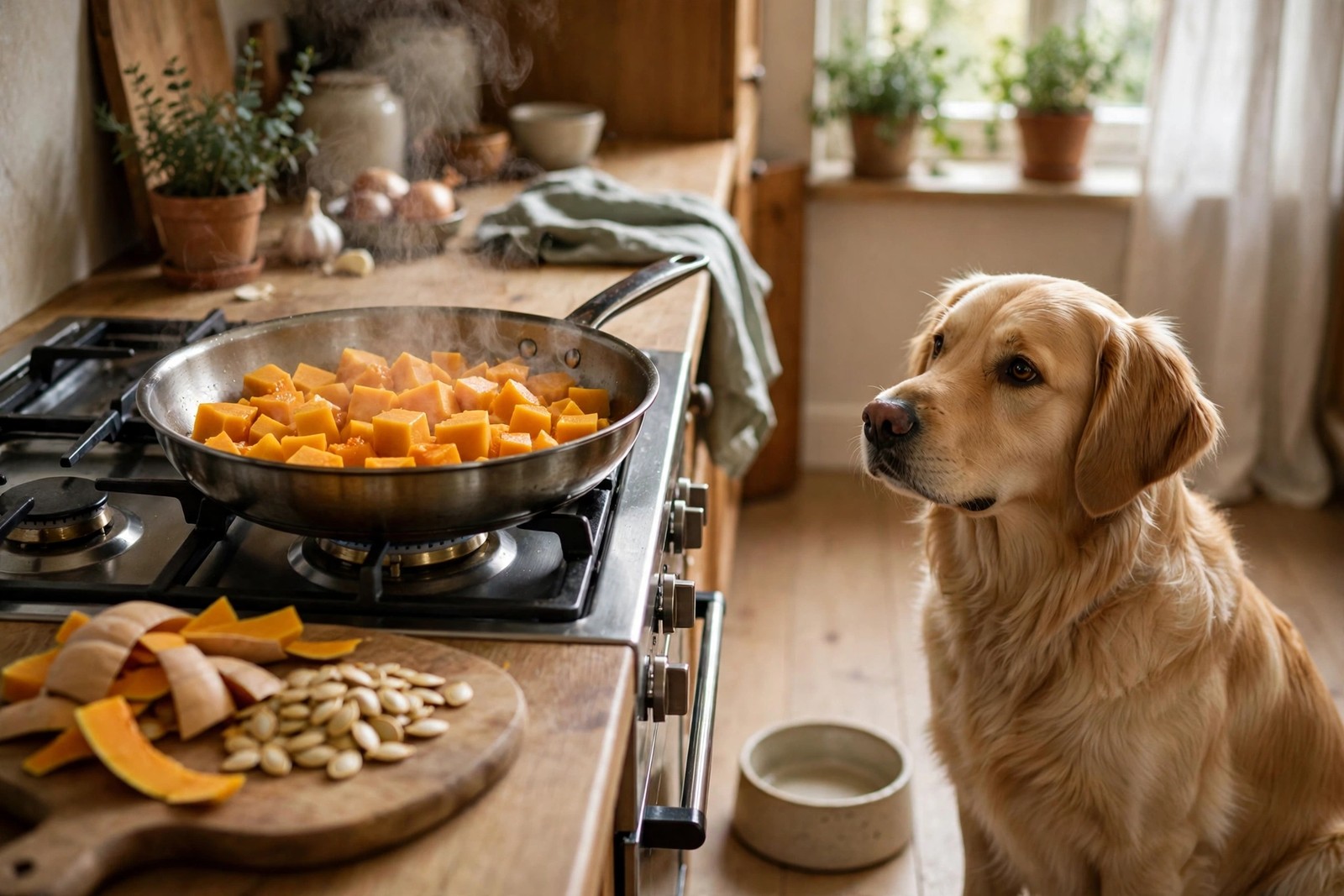
Yes, butternut squash is a good extra for dogs, provided it arrives in the bowl peeled, deseeded and cooked soft. The orange flesh is mild, naturally sweet and rich in fibre, and its soft texture suits puppies meeting vegetables for the first time and older dogs that no longer enjoy hard chewing. Almost everything that can go wrong with squash sits outside the flesh — in the rind, the seeds and the raw state — so preparation is the whole story.
Preparing Squash in the Right Order
Peel the squash completely, because the rind is tough, bitter and hard for a dog to digest even after cooking. Halve the squash, scoop out the seed cavity with a spoon, and check the hollow carefully, since a few seeds always hide in the fibres. Cut the flesh into even cubes and steam, boil or roast it with nothing added — no oil, salt, spices or sweet glazes — until a fork slides through easily. Mash it for small dogs or leave soft cubes for larger ones, let it cool to lukewarm, and store the rest in the fridge for the next couple of days. Roasted leftovers from a family meal only qualify for the dog if they were cooked entirely plain before any seasoning reached the tray.
Why Raw Squash Is Off the Menu
Raw butternut squash is a dense, hard vegetable, and a dog's digestion is not built to break down chunks of it. A raw cube swallowed whole is a choking shape, and raw pieces that do go down often come through barely digested, sometimes with stomach discomfort on the way. The seeds are a separate issue: unlike the soft seeds in some fruits, squash seeds in quantity can irritate the gut, and the stringy cavity material they sit in is no better. Cooking solves every one of these problems at once, softening the flesh, making its fibre useful rather than obstructive, and giving you the moment to remove rind and seeds as a matter of routine.
Portions and What the Fibre Does
A few spoonfuls of cooked squash stirred through a normal meal is a full serving for most dogs — a tablespoon or two for a small dog, up to a modest handful of cubes for a large one. The fibre absorbs water in the gut and adds bulk to the stool, which is why owners often reach for squash when a dog's stool needs firming, though persistent looseness or constipation is a vet conversation, not a vegetable prescription. Introduce squash over two or three meals rather than in one generous debut, because a sudden fibre increase can loosen the stool it was meant to steady. Squash also carries natural sugars, so daily large servings work against a dog that is managing its weight.
Freezing and Planning Ahead
Cooked squash freezes well, and a freezer tray of squash cubes or a container of mash turns a whole vegetable, which is far more than one dog needs in a week, into weeks of measured extras. Freeze in small portions so you defrost only what a meal needs, and label the container as plain and dog-ready so nobody seasons the batch midweek for a human soup. That small bit of kitchen organisation is what makes a wholesome extra sustainable instead of a one-off. KinsLe's Care Teams fits the same pattern, letting you schedule the squash serving as an assigned feeding duty with a timestamped completion, so the dog's fibre extra appears on the planned days and only on those days.