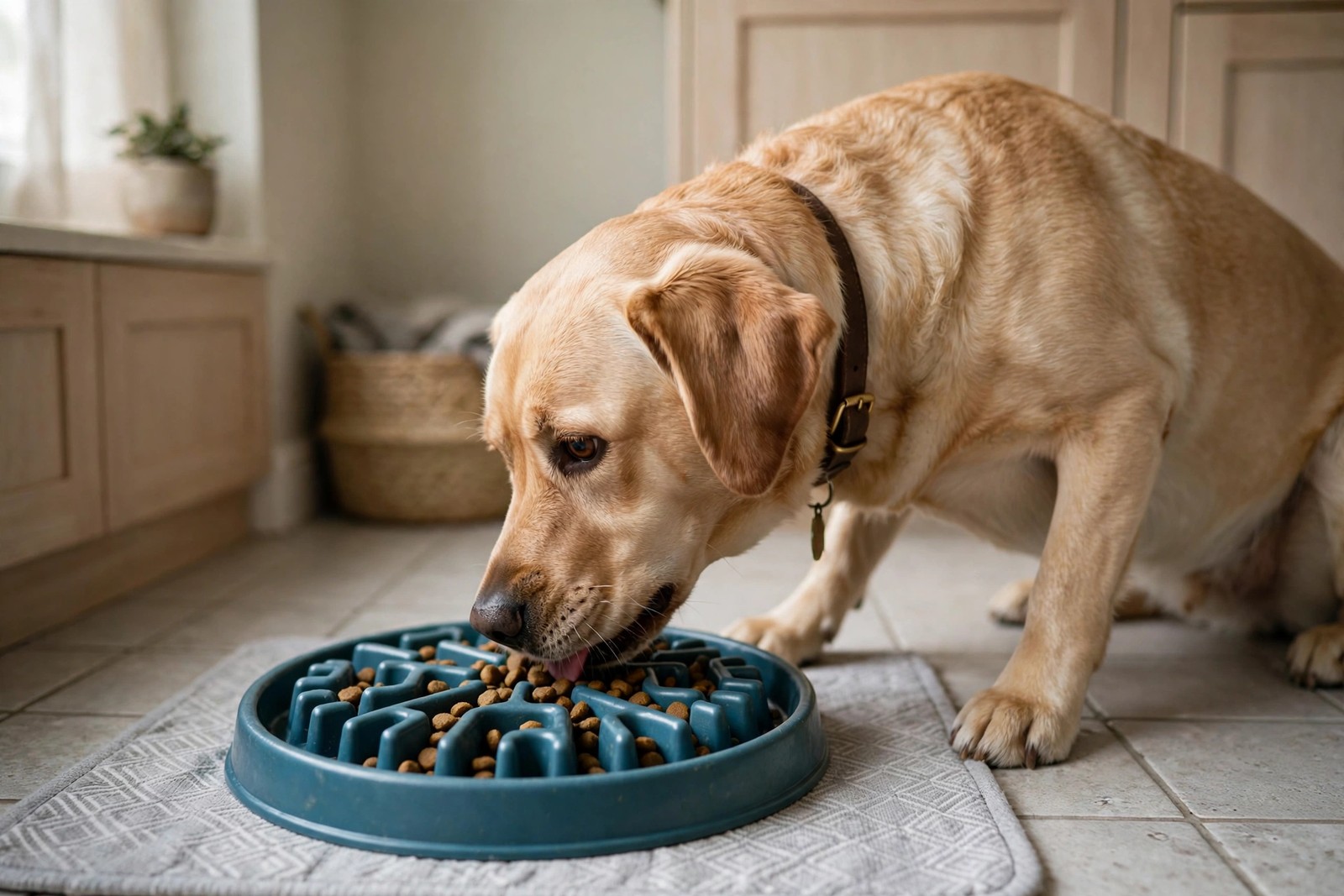
When a dog gulps his food and is then sick, the meal itself is usually moving too fast for his stomach to handle. He takes in a large volume of food in seconds, swallows a great deal of air along with it, and the overloaded stomach rejects the lot shortly afterward. The fix is mechanical before it is anything else: slow the eating itself down so that food arrives in a stream his stomach can accept. You do not need a different food to start with, and you should not assume a sensitive stomach or an illness until you have seen what a genuinely slow meal does. Most gulping dogs improve dramatically within days once speed, portion size, and the minutes after eating are all handled together.
Build an Obstacle Course for the Food
Give the food a shape that cannot be inhaled. A slow-feeder bowl, with its raised ridges and channels, forces a dog to work food out with his tongue a mouthful at a time instead of scooping the bowl empty in three gulps. You can build the same effect from what you already own: spread the meal across the cups of a muffin tin, or scatter it over a large baking tray, so he has to move from pocket to pocket and pick food up piece by piece. Kibble scattered on a clean patch of floor or lawn works too and turns the meal into a search. Whichever you use, watch the first meals: the goal is a dog who takes minutes over his food, chewing at least some of it, finishing calm rather than frantic. If he tips the muffin tin over in frustration, weight it, hold it, or go back to the slow-feeder bowl — the obstacle should slow him, not defeat him.
Smaller Meals, More Often, Then Rest
Portion is the second lever. Split the same total daily food into smaller meals given more often, so no single load overwhelms his stomach: three or four modest meals suit a gulping dog far better than one or two large ones while the habit resets. Feed him in a quiet feeding spot with no competition — another dog eating nearby, children moving around the bowl, or a door he feels he must watch all keep the gulp reflex switched on. Keep water available at mealtimes and afterward, since a dog who has eaten slowly still drinks better in sips than in one huge session. After each meal, enforce rest rather than play: no ball games, no roughhousing, no stairs charged at speed for a good while after eating. A calm walk later is fine; excitement on a full stomach is how a slow meal still ends in sickness.
When Sickness Means the Vet, Promptly
Slow feeding fixes gulping, but it does not fix everything, and two signs change the conversation entirely. If the sickness continues despite genuinely slow, small, quiet meals, talk to your vet rather than cycling through more bowls — persistent vomiting has causes beyond speed that only an examination can sort out. And if your dog retches without bringing anything up — straining, restless, perhaps with a swollen or tight belly — treat that as an emergency and go to a vet immediately, because unproductive retching is an emergency sign that should never be watched at home overnight. One related question belongs in that vet conversation too: if your dog is a deep-chested breed, ask the vet about feeding height rather than experimenting with a raised bowl on your own, since the right answer depends on the individual dog. Everyone in the household has to run the slow routine the same way, which is why the feeding plan held in the Care Teams feature in KinsLe matters here — the slow-feeder setup, the smaller portions, and the rest period assigned by name, so no one helpfully serves a fast full bowl on their shift. Meal after meal, the feeding record in the Care Teams log within KinsLe shows who fed him, which obstacle setup was used, and whether he kept the meal down.