
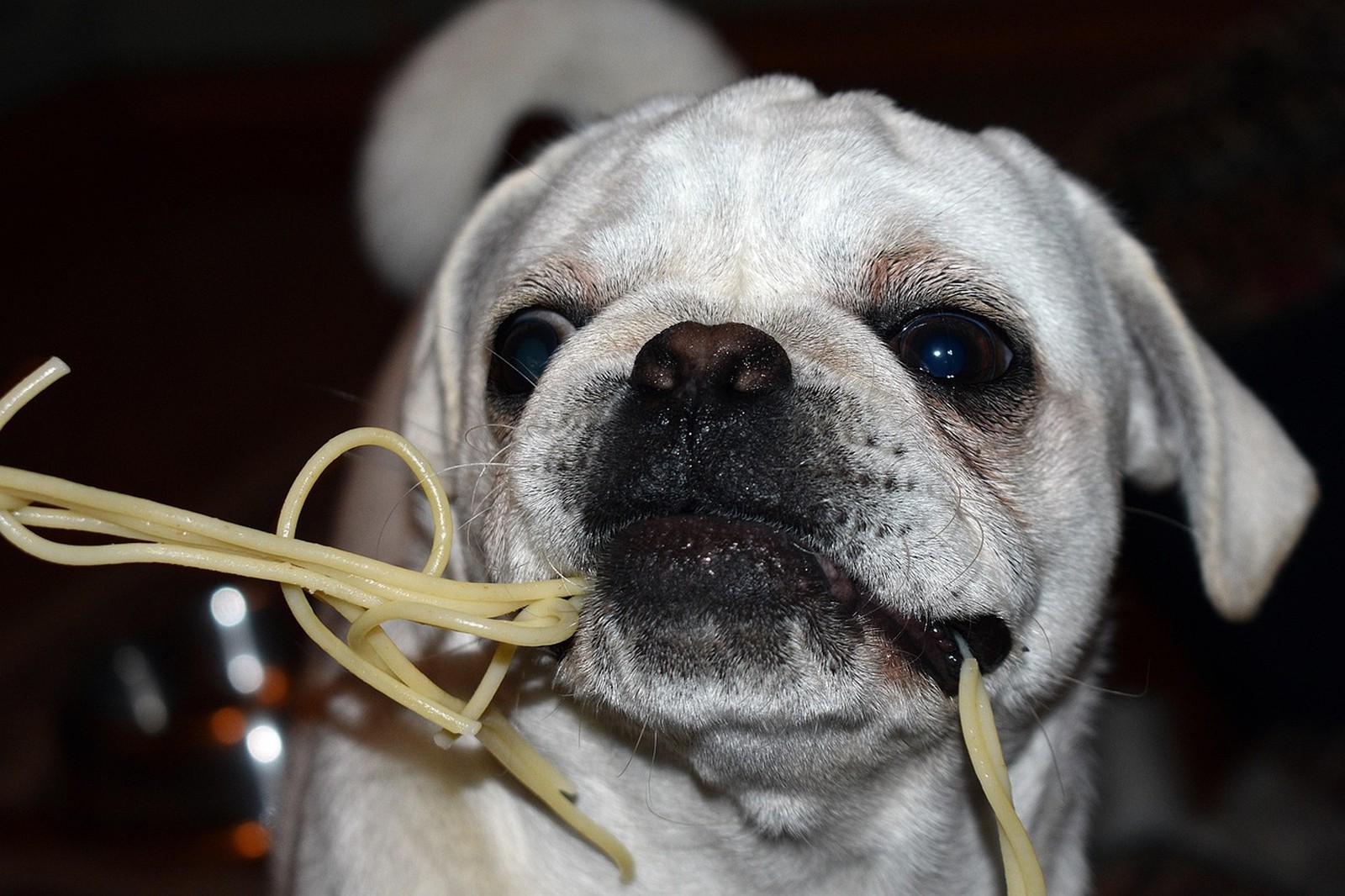
A few strands of plain, well-cooked pasta will do a healthy dog no harm, and as an occasional change from shop-bought treats it is a reasonable extra to offer. The important words in that sentence are plain, cooked and occasional: pasta earns its place as a minor treat inside a diet built on complete dog food, never as a meal in its own right and never wearing the sauce it was cooked to carry.
What Pasta Gives a Dog — and What It Does Not
Cooked pasta is mostly starch, so what it gives a dog is energy and very little else: small amounts of protein, minimal fibre, and none of the balanced vitamins and minerals a complete food is formulated to provide. That is not a reason to ban it; it is a reason to keep its share of the day small, especially for dogs watching their weight, because starchy extras add calories quietly while feeling like nothing. A few pieces after a meal, or a small handful as a training-session novelty, sit comfortably inside a sensible treat allowance. A bowlful served instead of dinner does not, however hopeful the audience.
Why the Sauce Changes Everything
Plain pasta and pasta sauce are different foods as far as a dog is concerned. Jarred and restaurant sauces commonly bring onion and garlic — both toxic to dogs in quantity, and most concentrated in powder form — along with salt, oils, cheese and sometimes chilli or sweeteners. Even a homemade sauce is rarely just tomato once it has been seasoned for human tastes. Scraping sauce off a few strands does not solve the problem either, since the pasta has cooked and sat in it. Keep the dog's portion separate from the start: set aside a little plain pasta before the pan meets the sauce, and the question never has to be negotiated at the table.
Serving Pasta Sensibly
A short routine keeps a harmless treat harmless:
- Cook the dog's portion in plain water, with no salt, oil or stock
- Let it cool and cut long strands into pieces a dog can manage
- Offer a few pieces at a time, counted inside the day's treat allowance
- Serve it plain — never tossed through sauce, butter or grated cheese
- Start with a small amount the first time and watch the next day's stools
Followed in that order, those five habits cover the whole pasta question for most households: the right food, in the right form, in the right amount, with an eye on the result.
Reading Your Own Dog's Response
Dogs differ in how they handle a starchy extra. Some digest a little pasta without comment; others answer with gas, loose stools or itchy discomfort that says wheat-based foods do not suit them, and a dog who gains weight easily will show regular pasta handouts on the scales before anywhere else. Introduce it once, in a small amount, on an otherwise ordinary day, so that any change that follows has an obvious explanation. If stools stay formed, energy stays normal and weight stays steady over a couple of weeks, the occasional plain piece has earned its place; if not, pasta joins the list of foods your particular dog does better without.
With Care Teams in KinsLe, the household can agree the treat allowance once and stick to it: feeding duties go to named people, extras are written into the day's jobs, and each task is logged as done with the time beside it, so pasta stays an occasional pleasure rather than a daily habit nobody remembers approving.