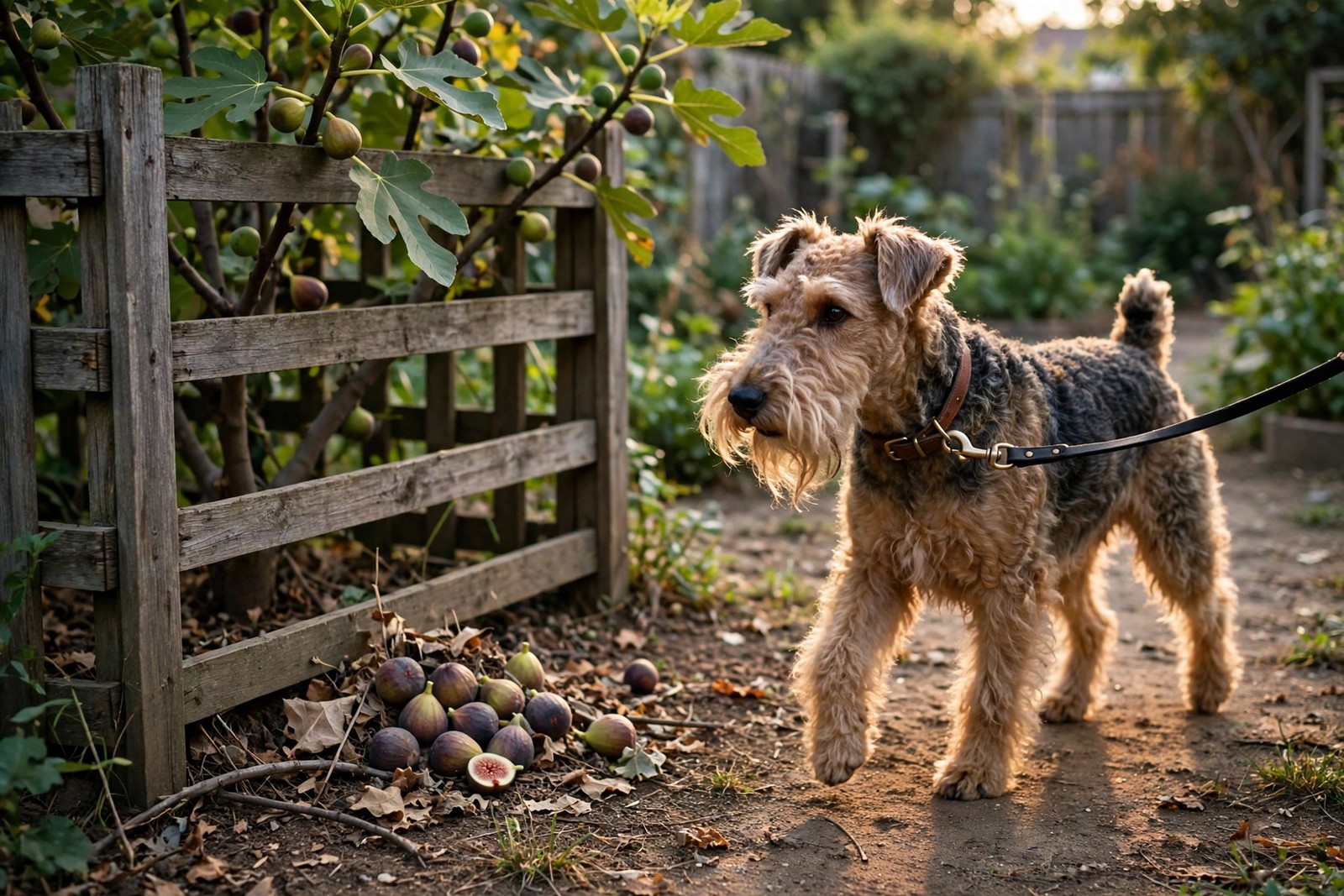
A ripe fig is best treated as an occasional tiny taste for dogs, never a standing treat. The flesh is soft, sweet, and rich in natural sugars and fibre, which is exactly why portion discipline matters: a small cube satisfies curiosity, while several whole figs commonly produce loose stool, gas, and a dog who feels thoroughly sorry for themselves by evening.
Fresh flesh, dried fruit, and the sugar question
If you share fig at all, peel or scoop the flesh from the skin, cut it small, and offer one modest piece to a medium or large dog, less to a small one. Fig jam, fig-filled biscuits, and similar baked goods are not a loophole — they deliver the fig's sugar alongside flour, butter, and sometimes other dried fruits, in a form owners are tempted to share repeatedly because it feels like a small corner. The corner is the treat budget for the day, not a preview of a second one. Dogs who are overweight or managing blood-sugar problems should skip figs entirely and get their treat moment from something leaner. Dried figs are a step further in the wrong direction — drying concentrates the sugar into a dense, sticky chew that clings to teeth and delivers a large sugar load in a mouthful, so they are not a sensible dog treat even though they look harmless in a baking cupboard.
The plant is the real hazard
Fig trees and the popular houseplant figs are a separate matter from the ripe fruit. Their leaves and the milky sap inside stems and unripe fruit contain ficin, an irritating compound that can make skin red and sore and upset the mouth and stomach of a dog who chews them. Fallen fruit rotting under a garden tree adds fermentation and mould to the problem, plus wasps in late summer. Sweep drops regularly during fig season, fence or gate the tree if your dog grazes underneath it, and move houseplant figs onto shelves a determined puppy cannot reach by climbing the furniture.
Signs that mean a call, not a wait
A dog who has chewed fig leaves or eaten unripe fruit may drool, paw at the mouth, vomit, lose interest in food, or develop sore, itchy skin where sap touched the coat. Rinse visible sap from the coat with plain water, stop access to the plant, and call your veterinarian for advice rather than waiting it out — mention exactly what was eaten, fruit, leaf, or sap. Repeated vomiting, weakness, or a puppy who has eaten a lot of plant material deserves prompt, same-day care.
Write the fig rule into KinsLe's Care Pass before a trip, so the temporary link your house sitter opens spells out the garden-gate habit and the plant warning alongside the normal feeding routine.