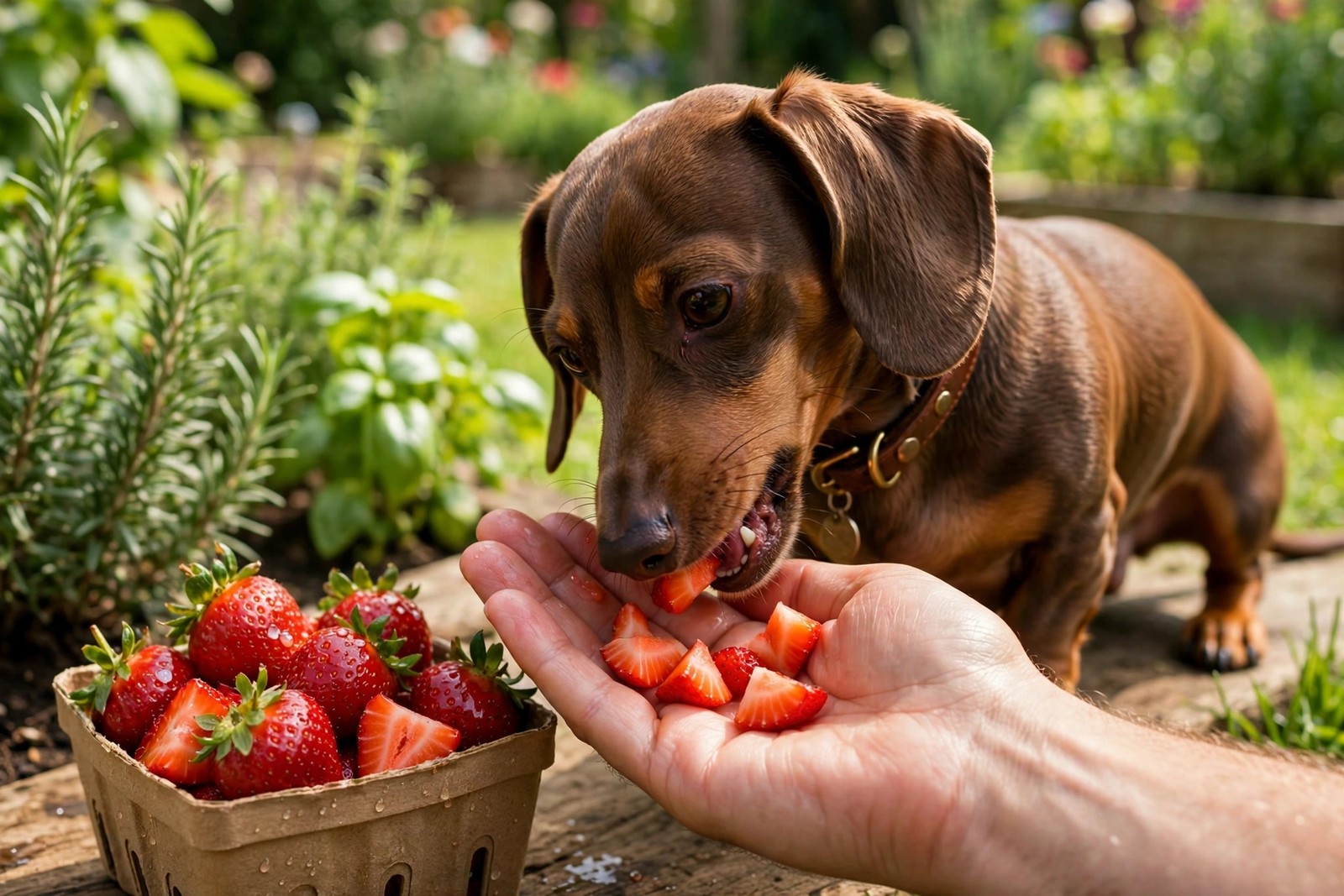
Yes, dogs can eat strawberries in small amounts, and a ripe berry is one of the most appealing treats you can offer: sweet, juicy, scented and soft. Strawberries provide vitamin C, fibre and water, and they contain an enzyme sometimes said to help whiten teeth, though the honest reason to feed them is that dogs enjoy them. The controls on this fruit are sugar and size. Strawberries are naturally sugary enough that portions stay small, and a whole berry is exactly the wrong shape for a small dog or a dog who swallows first and chews later.
Prepping Berries by Dog Size
Wash strawberries well and discard any that are mouldy, fermented or badly bruised, since soft fruit turns quickly and the berries at the bottom of the punnet are the ones that get tipped into a bowl. Pull or cut off the green hull and stem, which are tough and unpleasant to digest. Then cut to the dog in front of you: quarter a berry lengthways for a medium or large dog, and dice it into pea-size pieces for a small dog, a puppy or any dog who gulps. Frozen strawberries are a popular summer treat, but serve them partially thawed rather than rock hard, and cut them before freezing so a frozen whole berry never becomes a hard, round mouthful.
Tinned strawberries in syrup, strawberry jam, sweetened strawberry yoghurt and strawberry ice cream are sugar products wearing fruit colours. None of them should be shared. Fresh or plain frozen berries are the whole answer.
Portions, Sugar and Teeth
One strawberry, cut up, is a full treat for a small dog. A medium dog can have two, and a large dog two or three, offered a few times a week rather than daily. For training, a single berry sliced into slivers gives several scented rewards for very little sugar, which is a good trade. Dogs who are diabetic or carrying extra weight should have strawberries kept rare, and owners should remember the sugar is also a dental consideration: fruit offered regularly is another reason the teeth-cleaning routine matters. Brush the punnet arithmetic too, because a dog helping itself to half a punnet from a low table has eaten a dessert, not a treat, and loose stool is the likely receipt.
Garden Plants and Upset Signs
Strawberry plants in the garden are not a hazard in the way some fruit plants are, but a foraging dog will eat unripe berries, leaves and a great deal of fruit at once if the patch is open. Unripe berries are tart and firm and more likely to cause griping, so use a low fence or supervise during fruiting if your dog grazes. After any berry feast, expect possible loose, red-tinged stool for a day; the colour alarms owners but simply reflects the fruit. Veterinary advice is warranted if vomiting repeats, the dog seems painful or bloated, blood appears in quantity, or a small dog is gagging or struggling to swallow after taking a whole berry.
Strawberries are the treat children most love to share, and the sharing is sweet when the prep is right. KinsLe Care Teams lets you write 'hulled, quartered, two berries max' into your dog's care notes, so every generous hand offers the berry the safe way.