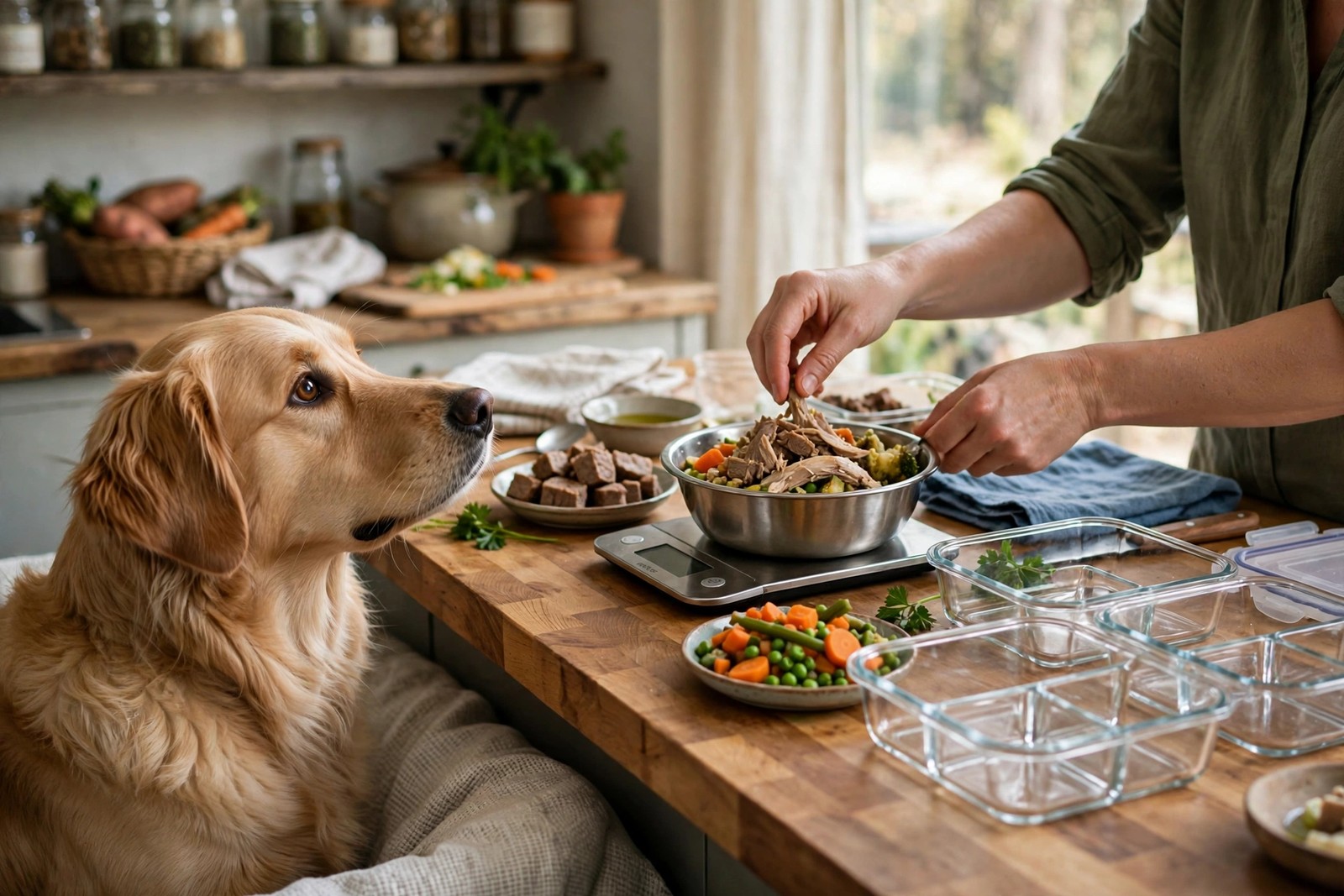
Cooking for your dog can work well, but the decision is bigger than choosing tasty ingredients. A bowl of chicken, rice and carrots looks wholesome yet is quietly short on calcium, essential fatty acids, iodine, zinc, copper and vitamins D and E. Before the first batch, think through balance, safety, time and cost — and decide honestly whether you can hold that standard every week, not just on an enthusiastic first weekend.
Balance Is the Hard Part
Dogs need calcium in a proper relationship to phosphorus, and meat alone supplies plenty of phosphorus with almost no calcium. Over weeks and months, a homemade diet that is not deliberately balanced can leave growing puppies, especially large-breed youngsters, short of what their skeletons need, and can shortchange adults on trace minerals that are invisible in the bowl. That is why a recipe should come from your veterinarian or a veterinary nutritionist who formulates for your dog's weight, age and health, rather than from a generic internet list scaled up or down.
Follow a formulated recipe exactly. Swapping oils, skipping the specified mineral balancer, or replacing one meat with another changes the nutrient profile the recipe was built around. Weigh ingredients with a kitchen scale instead of estimating by volume, cook each batch the same way, and resist adding extras such as liver, oily fish or table scraps on top — frequent additions quietly unbalance a recipe that was correct on paper.
Food Safety in a Home Kitchen
Treat dog food preparation with the same discipline as cooking for children. Cook meats thoroughly, keep raw meat separate from vegetables and cooked food, wash boards, knives and hands between steps, and cool cooked food promptly in shallow containers before refrigerating or freezing it. Freeze portions in the amounts you will actually use, thaw them in the refrigerator rather than on the counter, and discard refrigerated portions after a few days rather than stretching a batch all week.
Never build a recipe around cooked bones, which can splinter, and never include onion, garlic, grapes, raisins or sweeteners containing xylitol, which are dangerous for dogs. Raw feeding carries additional bacterial risks for the dog and the household, so raise it specifically with your veterinarian rather than drifting into it because raw ingredients were convenient.
Time, Cost and Consistency
Price a recipe before committing. Quality meat, a proper balancer, containers and freezer space often make a balanced homemade diet cost more, not less, than a good ready-made food, and batch cooking a month of food for a large dog is a real block of kitchen time. Work out where batches will be stored, who cooks when you travel, and whether a sitter can follow the recipe without your supervision.
Transition gradually over five to seven days, mixing increasing amounts of the new food into the old, and then watch the dog in front of you: weight, stool quality, coat, appetite and energy. Book a veterinary review after the first months on the diet so weight trends and any concerns are caught early, and tell your veterinarian plainly that the diet is homemade so the conversation can be specific. With KinsLe Care Teams, you can hand the set recipe, portion size and feeding times to everyone who feeds your dog, and each completed meal is timestamped so a second helping never happens by mistake.