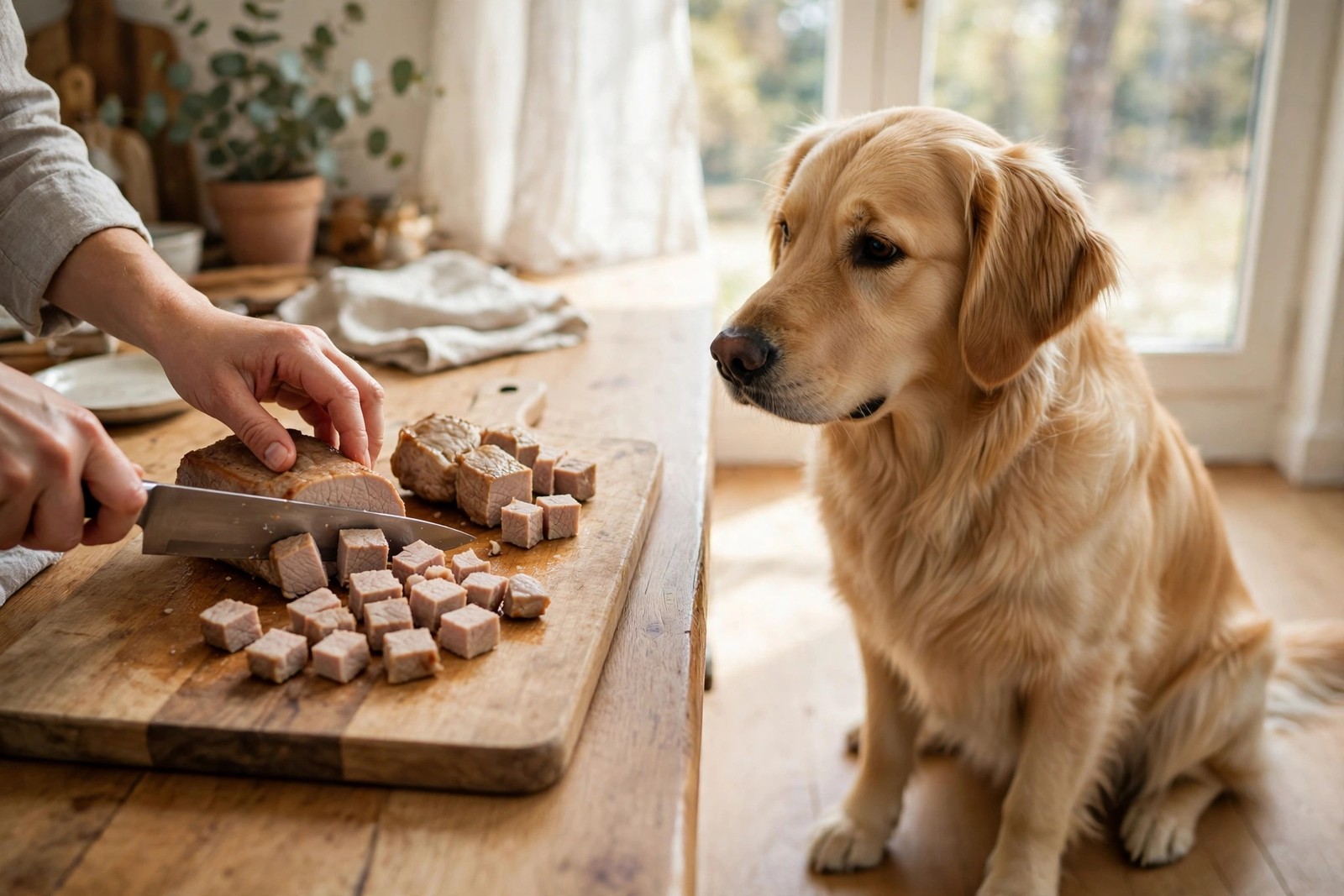
Yes, plain cooked pork is a safe protein for dogs when it is lean, thoroughly cooked and completely unseasoned. Serve a few small cubes as a treat and trim every visible piece of fat before the meat reaches the bowl. Pork suits many dogs that react to more common proteins, which makes a plain cooked portion genuinely useful rather than merely permissible. The conditions around the meat decide whether the meal helps or harms.
Choosing and Cooking the Right Cut
Pick a lean cut such as loin, and avoid belly and other fatty cuts for the dog's share. Cook the meat thoroughly until no pink remains, using no marinade, rub, sauce, glaze or added salt. Roasting, boiling and grilling all work when the meat stays plain. Cut a portion for the dog before the family seasoning goes on the rest, and store that portion separately so the two never mix in the fridge. Let the meat cool, trim the fat cap and any crisp edges, then cut the flesh into cubes sized for the dog in front of you. Keep the cooking juices out of the bowl. Pan juices concentrate fat and salt even when the meat itself was plain.
The Pork Products That Never Reach the Bowl
Cooked pork bones are an absolute no. Cooking makes bone brittle, and brittle bone splinters into sharp pieces that can injure the mouth, throat and gut. Raw pork also stays off the menu, because raw meat carries bacterial risks for the dog and for the people handling the bowl. Processed pork fails on salt and fat together. Ham, bacon, sausages and salami are all far too salty, and their curing and smoking add nothing a dog needs. Crackling and fatty trimmings belong in the bin for the same reason, since a rich fatty portion can trigger vomiting, diarrhoea or a painful flare in a dog prone to pancreatitis. Flavoured pulled pork, barbecue sauces and gravy-coated leftovers carry onion and garlic often enough that they should never be scraped into the bowl either.
Pork as a Rotation Protein, Done Carefully
Some owners rotate pork into the week because their dog tolerates it well, and rotation can work when each serving stays plain and small. Rotate the protein, not the rules. The pork day still excludes bones, crackling, processed cuts and sauces, and it still ends with the stool check the next morning. A dog that itches after several different meats may not be reacting to pork at all, and that pattern belongs in a conversation with your veterinarian rather than in a longer home experiment. Keep a simple note of which protein the dog ate on which day for a few weeks if you rotate, because memory blurs quickly and a clear record turns a vague suspicion into usable information at the next appointment.
Portions, Storage and Watching the Response
Treat pork as an occasional extra rather than a daily protein unless your veterinarian has built it into the dog's plan. A few cubes after a training session is the right scale, and a dog trying pork for the first time gets one cube and a day of observation. Watch for loose stool, gas or itching that was not there before, and stop the meat if the pattern repeats. Refrigerate cooked plain pork in a sealed container and use it within 3 days, or freeze small portions and thaw them one at a time. Label the dog's container clearly in a shared fridge. Post the cut name and the cooking date to the household thread in KinsLe Messenger, so the next person feeding can confirm that the plain pork is still fresh and truly plain.