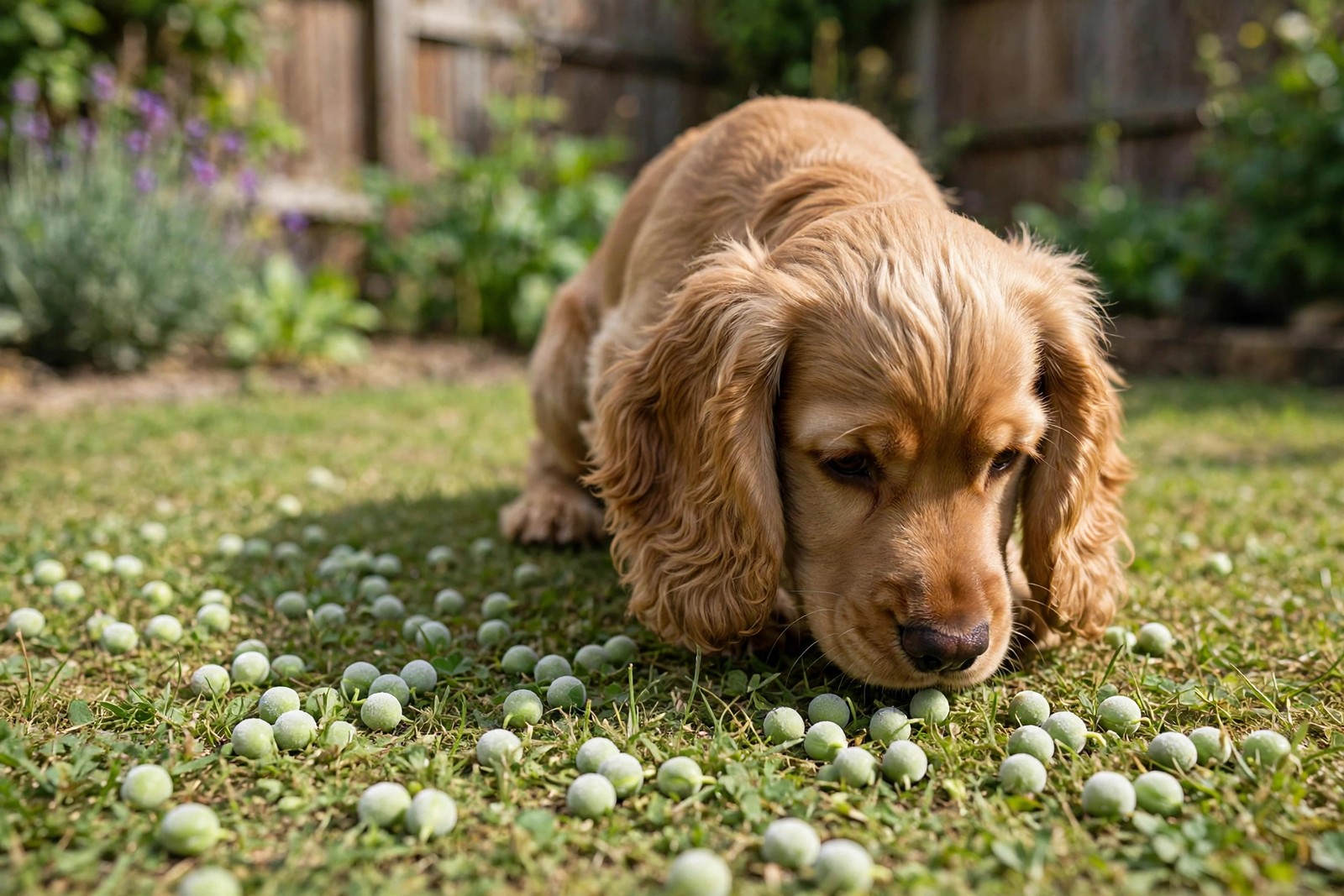
Yes — frozen peas are a genuinely useful dog treat, the rare extra that is sweet, portion-friendly, and low in calories all at once. Serve them frozen straight from the bag or thawed until soft, a few at a time, and keep a training session's total to a small handful of about 10 peas for a medium dog. They are an extra, not a vegetable serving in any nutritional sense, and a handful is the unit that keeps them that way.
Frozen or Thawed, and Why It Matters
A frozen pea is firm, cold, and slow to eat, which stretches each reward and adds a satisfying crunch that many dogs love, especially in warm weather. Thawed peas are softer and better suited to older dogs and puppies, and to any dog with worn or missing teeth, all of whom do better without a hard little sphere to manage. Either way, the pea should be plain: frozen peas sold for people are usually just peas, but check the bag for added salt or sauce, and never serve peas that were cooked for the table in butter, mint butter, or a seasoned glaze. Peas thawed for a session and then left sitting in a warm pouch should be thrown away at the end of it rather than returned to the bag, where they would spoil the rest.
Small Dogs, Gulpers, and the Split-Pea Fix
A whole pea is a smooth, round object just small enough for a small dog to swallow whole, and dogs that inhale treats can take one down whole before any chewing happens. For very small dogs, and for enthusiastic gulpers of any size, press each pea flat between finger and thumb or split it in half before offering it, which removes the sphere and slows the eating. Hand peas over one at a time during training instead of tipping them into a pile, and skip frozen peas entirely for a dog that has already shown it will try to swallow treats whole under pressure. Watch the first few servings of any new treat anyway, because a dog working hard for rewards is a dog eating faster than it does at dinner.
Peas as Training Fuel and Enrichment
Peas earn their freezer space in training, where a low-calorie reward given up to ten times in a session matters more than a rich one given twice. Ten peas across a session add texture and sweetness for very few calories, which suits dogs on weight plans whose training cannot simply stop. Scattered through short grass, the same handful becomes a sniffing game that occupies a dog far longer than a bowl does, and a few peas frozen into a block of plain water make a warm-afternoon puzzle for a dog that enjoys working at ice. Keep the count honest across formats: peas in the grass, peas in the ice, and peas from the pouch all come out of the same handful.
Canned Peas, Pods, and Dogs Who Should Ask First
Canned peas are the version to skip, because they are packed in salted water and arrive soft, salty, and pointless next to the frozen bag. Sugarsnap and snow pea pods are different foods from loose peas and are not covered by this answer; serve the loose peas this question asks about. One group should check with a veterinarian first: Dalmatians and other dogs with a history of urate stones, because peas contain natural compounds called purines that those dogs process poorly, and a vet who knows the dog's history can judge whether an occasional handful matters. For the general dog population, peas are a safe choice, provided the handful stays a handful. KinsLe's Care Pass lets you name frozen peas as the approved treat in a sitter's instructions, handful limit and split-for-small-dogs rule included, so training rewards stay consistent while you are out.