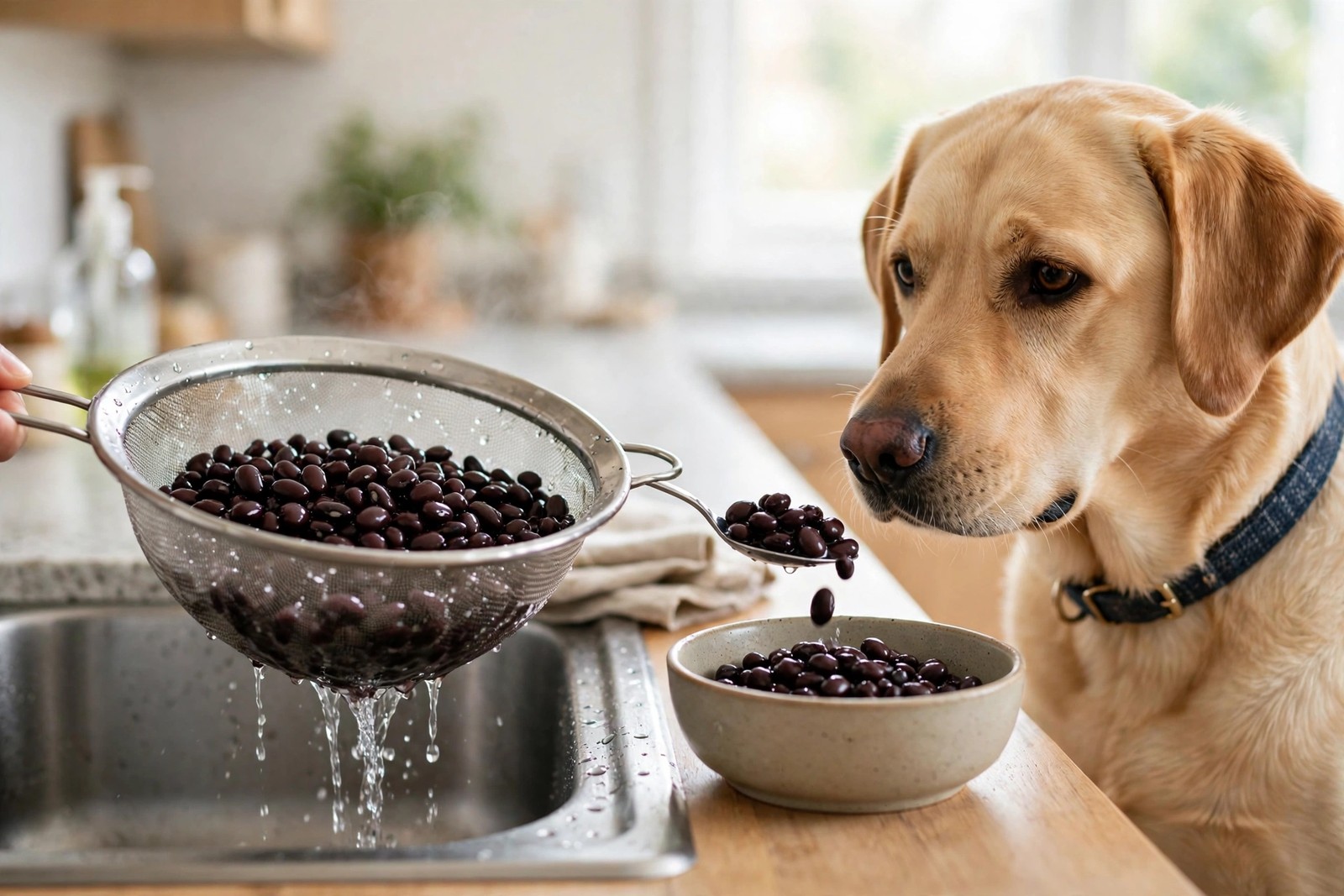
Yes, black beans are safe for dogs when they are cooked until soft, served plain and kept to spoonful-sized portions. They bring fibre, plant protein and a texture many dogs enjoy stirred through a normal meal. The bean itself is not the problem in any of the usual failure cases; the failures come from salt in the can, seasoning in the pot, or beans that never got cooked properly in the first place.
Canned Beans: the Rinse Is the Recipe
Canned black beans are the convenient route, and one step makes them dog-appropriate. Tip them into a sieve and rinse under running water until the foam and dark canning liquid are gone, because that liquid carries most of the added salt, and a dog's portion of human-level salt adds up quickly across a week of extras. Check the label for beans packed with nothing beyond water and salt where you can, and avoid cans with flavourings already added. Rinsed canned beans need no further cooking; mash a few with a fork for a small dog so whole beans are not gulped down dry.
Dried Beans: Fully Cooked or Not at All
Dried black beans must be soaked and then boiled until completely soft before a dog eats them. Raw and undercooked beans are genuinely hard to digest — they carry natural compounds that cooking largely neutralises — and a hard bean is also an unappealing mouthful a dog may try to swallow whole. Cook the dog's beans in plain water only: no stock, no salt, and absolutely no onion or garlic simmered alongside, since both are toxic to dogs and their flavour compounds move into the cooking liquid. If the family pot of beans is seasoned, the dog's spoonful needs to come from a separate small batch cooked plain, not from a hopeful rinse of the finished dish.
Portions, Gas and Honest Expectations
Black beans are fibrous, and fibre ferments. Start with a teaspoon for a small dog or a tablespoon for a large one, mixed into food, and step up slowly over several servings if the response is good. Even a tolerant dog will likely produce some wind on bean days, and a dog new to beans may produce a softer stool for a day; both are reasons to keep portions small, not signs of poisoning. A few spoonfuls a couple of times a week is a sensible ceiling for an extra that is there for variety, because beans are an addition to a complete diet, not a protein replacement for meat-based meals. Dogs on vet-directed diets should get any new legume cleared with the vet first.
Bean Dishes That Stay Human Food
Most ways humans serve black beans are unsuitable for dogs. Refried beans are cooked with fat and usually garlic and salt. Chilli adds onion, spices and heat. Baked bean sauces bring sugar and sometimes sweeteners, and bean salads are dressed with onion and vinegar-heavy dressings. None of these is rescued by picking the beans out, because the coatings carry the problem ingredients. Keep the dog's beans boring — plain, soft and rinsed — and note the first few servings so the whole household knows beans are already in today's plan. KinsLe's Care Teams makes that note part of the routine, with feeding duties assigned to named helpers and each completion timestamped, so a gassy experiment is never accidentally run twice in one day.