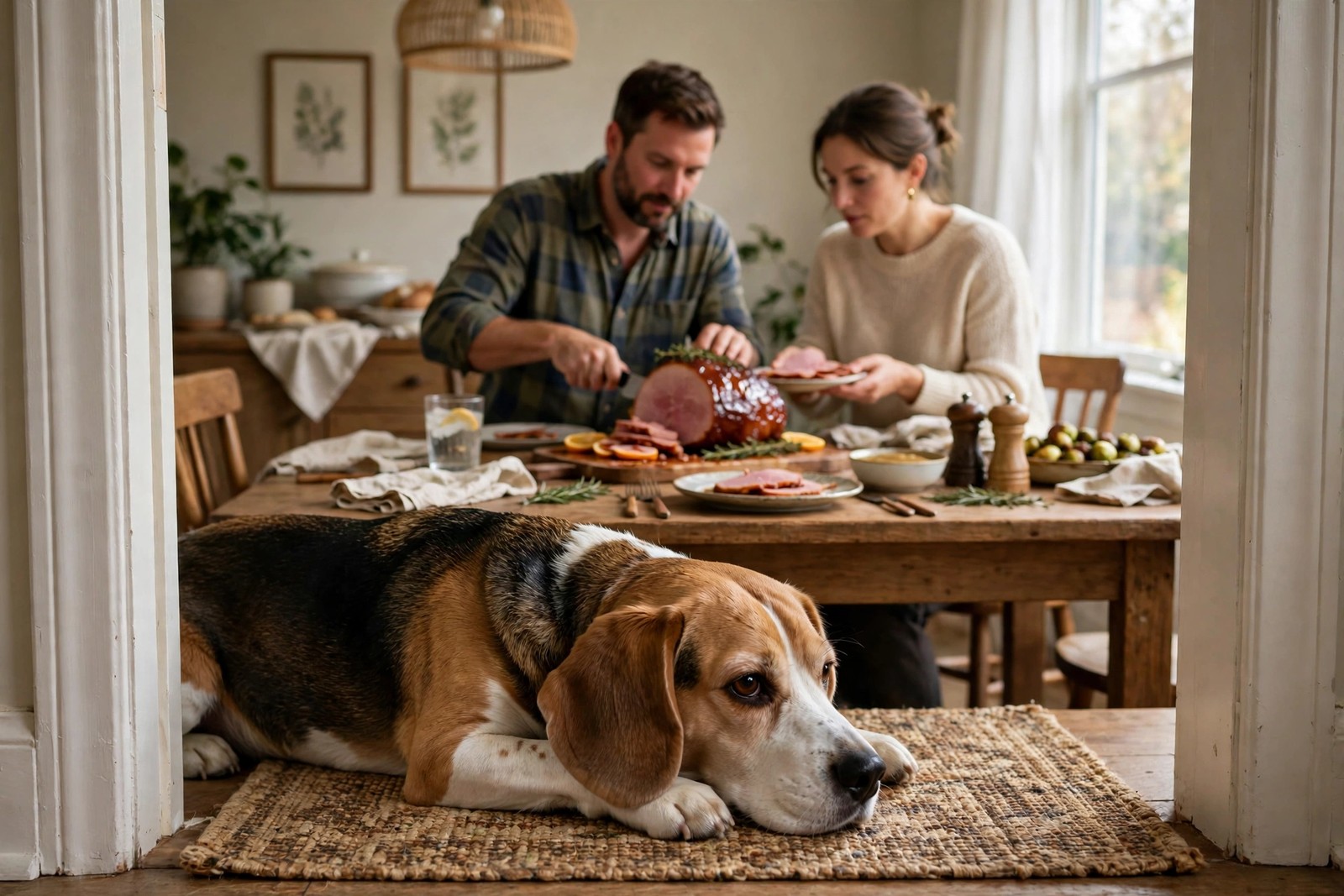
Ham is best avoided for dogs. One small accidental bite of plain ham will not harm most healthy dogs, but as a deliberate treat it fails on several counts at once — salt, fat, processing, and frequently a sweet or seasoned coating — when leaner meaty options are sitting in the same fridge.
What curing and glazing add
Ham starts as pork and then gets cured, which loads it with salt. A dog who eats a generous amount may drink heavily, develop loose stool, or vomit, and salty processed meat is a particularly poor idea for dogs whose kidneys or heart already need careful management — for those dogs, ask your veterinarian before any salty table food appears at all. Holiday hams add another layer: honey and sugar glazes, mustard rubs, cloves, and spice mixes, sometimes including garlic or onion powder. None of that seasoning is visible once the meat is sliced, which is why 'just a plain piece' from a glazed joint is rarely as plain as it looks.
Fat, bones, and the scavenged joint
Ham is fatty, and rich fatty scraps are a classic trigger for stomach upsets ranging from a day of diarrhoea to a painful, serious bout of pancreatic inflammation. Signs that move a case from watchful waiting to a prompt veterinary call include repeated vomiting, a hunched or tender belly, refusal of food, and marked tiredness. The bone deserves its own warning: cooked ham bones are brittle, splinter into sharp fragments, and are also a choking and blockage hazard, so the leftover joint goes into a secured bin, never the dog's bowl and never an unsupervised kitchen floor. Raw ham products are not a workaround either, since they carry salt and preservation that dogs do not need. Trimming the visible fat does not rescue a slice, because the salt runs through the cured meat itself rather than sitting on its surface. Thin deli ham deserves a specific mention: it is a popular improvised training treat and pill-hiding wrap precisely because dogs love it, but that daily usefulness is how a salty, processed meat quietly becomes a habit — plain cooked chicken tears into training pieces just as well and wraps a pill without the salt load.
Handling the holiday table
Most ham incidents are social, not nutritional — a dog parked hopefully beside a carving board, guests slipping scraps, plates left on low tables. Decide the rule before the meal, brief the table cheerfully, and give the dog a job elsewhere: a stuffed chew toy or a few pieces of plain cooked turkey in another room beats an afternoon of successful begging. If your dog does raid a platter, note roughly how much went missing and call your veterinarian for advice if it was a large or fatty amount.
Record that decision in KinsLe's Care Teams as a standing holiday duty — ham off the menu, bones straight into the secured bin — and the timestamped confirmations show the rule held even while the table was at its busiest.