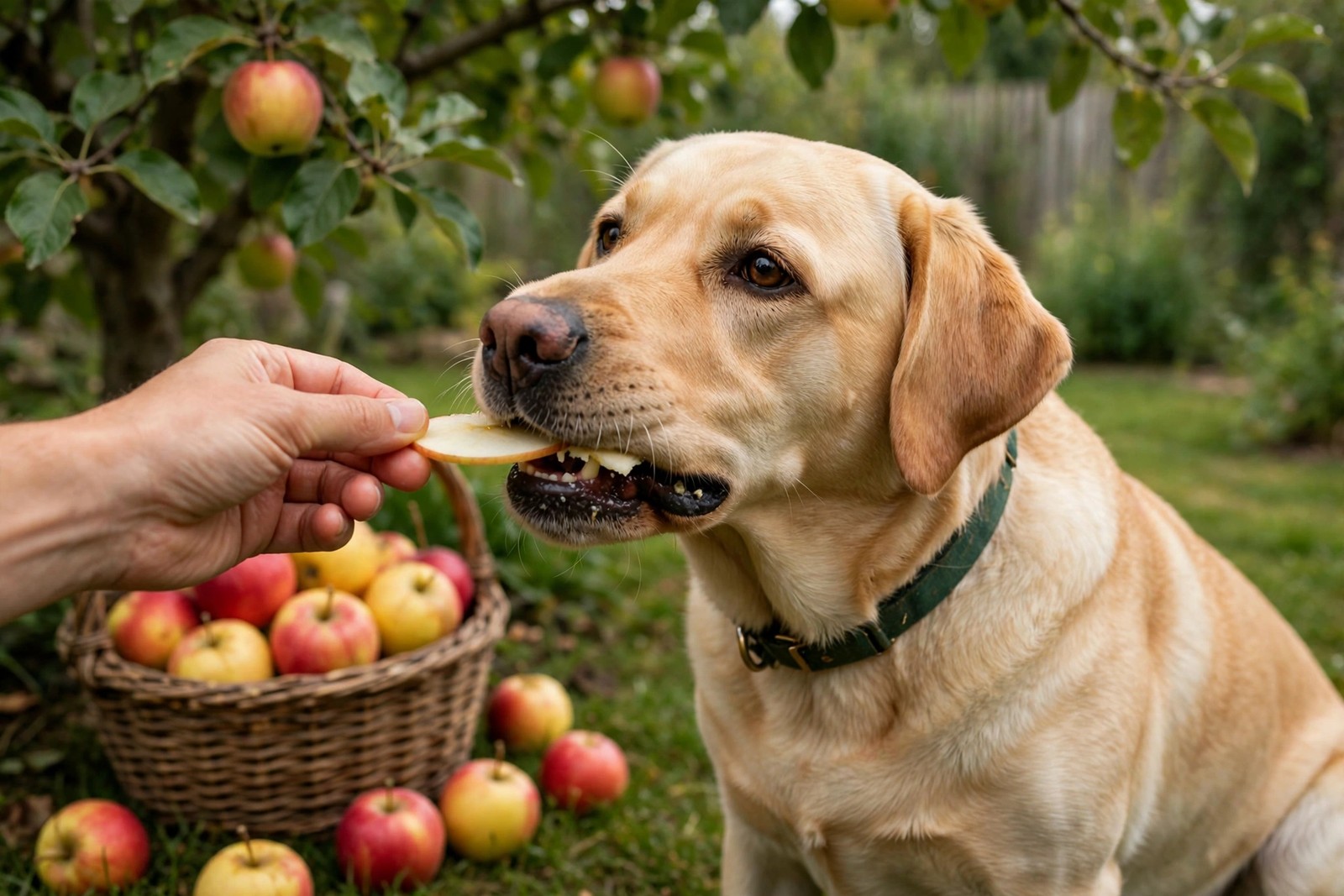
Yes, dogs can eat apple flesh as an occasional treat when it is washed, cored, and sliced, with every seed removed. Apple earns its popularity honestly: it is crunchy, sweet, hydrating, and easy to share from a fruit bowl. The preparation, as with most safe people foods, is where safety actually lives.
Core and Seeds, Removed Every Time
Wash the apple to clear surface residue, then cut the flesh away from the core in slices and check that no seeds travel with them. Apple seeds contain a compound that can release cyanide when chewed and digested, and while a dog would need to eat and thoroughly chew a large quantity of seeds for poisoning to be a realistic concern, seeds have no business in the bowl, and removing them costs nothing. The core itself is the more everyday hazard: it is firm, awkwardly shaped, and a genuine choking and blockage risk for a dog who is handed a whole apple or a core to finish, especially a smaller dog or a determined gulper. Never toss a core for a dog to catch, and put cores straight into a lidded bin, because a core fished from an open kitchen bin carries the same risk plus whatever else was in there.
Portions by Dog, Not by Apple
Think in slices, not fruit. A few thin slices make a full treat for a medium dog, one or two smaller pieces suit a small dog, and even a large dog does not need a whole apple, whose sugar and fibre together can produce gas and loose stools by evening. Introduce apple gradually, a slice today and a check of the stool tomorrow, particularly for puppies, whose pieces should be smaller, thinner, and supervised while they learn to chew rather than inhale. Count apple inside the day's treat allowance rather than on top of it, and remember that treats arriving from several family members add up invisibly unless someone is keeping track. A dog who has eaten one stolen apple from the floor will very likely be fine apart from possible digestive grumbling; a dog who raids a windfall pile in the garden is a different story.
Dogs Who Need a Careful Yes
Diabetic dogs live on consistency, and apple's natural sugar means it should only be given if the veterinarian managing the diabetes agrees, in an amount that fits the feeding plan. Overweight dogs can actually do well with apple as a swap for richer, calorie-dense treats, since a slice is light and satisfying, but the swap only works if it replaces something rather than joining it. Dogs with sensitive stomachs may find raw apple too much and do better with a small spoon of plain, unsweetened cooked apple, while pie filling, sweetened sauces, and spiced apple desserts are for people only, bringing sugar, spices, and sometimes sweeteners a dog must never have. Dried apple sits in between: leathery, concentrated in sugar, and easy to overfeed, so offer a smaller piece than you would of fresh fruit, or skip it.
The Garden and Orchard Problem
Fallen apples deserve their own warning. Windfalls ferment on the ground, attract wasps, and are eaten core, seeds, and all by a dog with unsupervised garden access, sometimes in quantities no owner would ever serve. A dog who has eaten many rotting apples may seem wobbly or unwell, and that dog needs a veterinarian's advice the same day. Pick up windfalls regularly during apple season, fence off a heavy-fruit corner if your dog is a determined forager, and check the garden after storms, when a whole crop can arrive overnight.
A Treat Worth Logging
Apple works best as a deliberate treat: sliced during food preparation, offered as a training reward in small pieces, or shared on a walk instead of a second biscuit. KinsLe's Care Teams keeps that deliberateness intact across a household, because the person who served the slices can record the treat as done, and the next person tempted by a hopeful face at the fruit bowl can see the apple has already happened today.