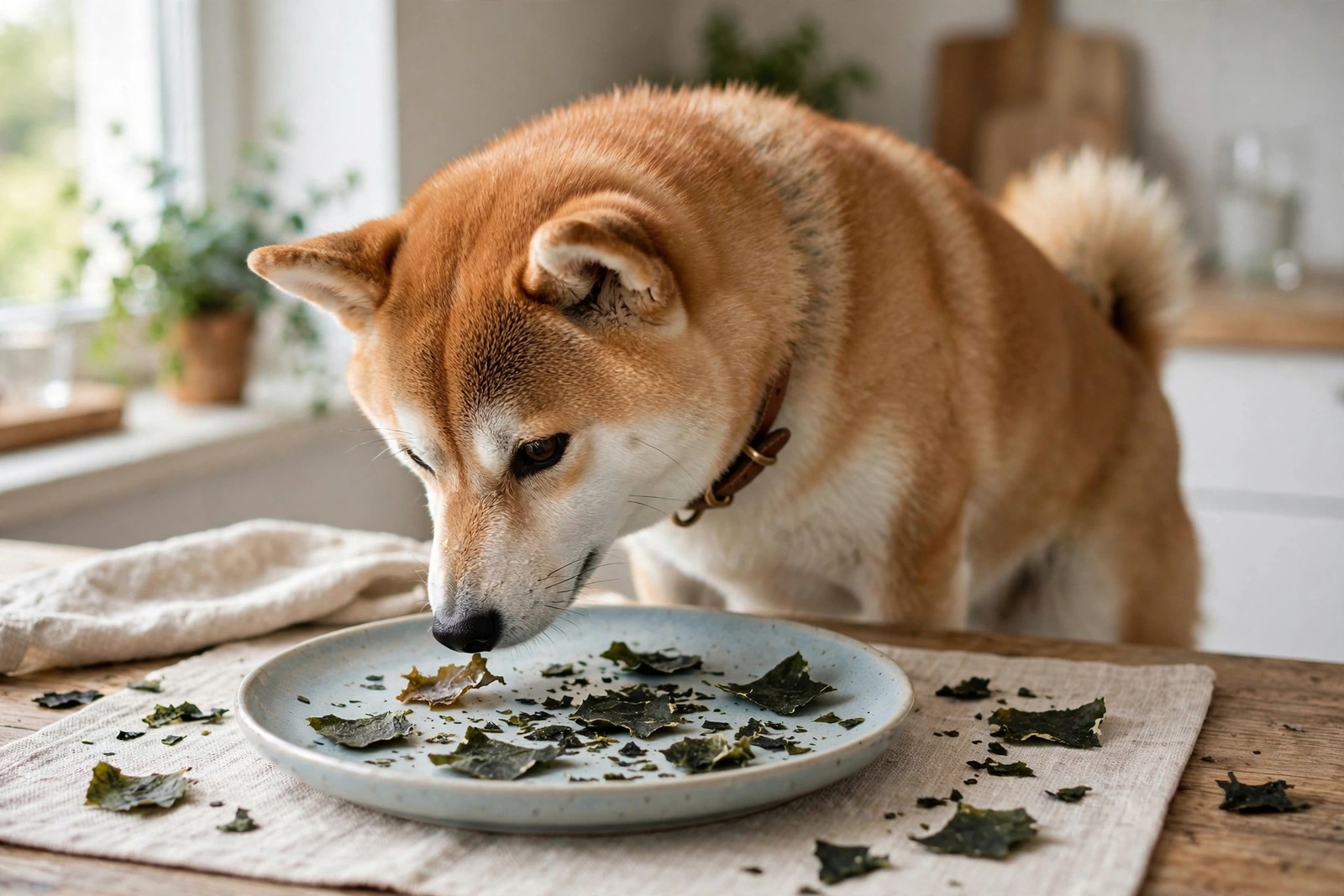
Only a plain, unsalted version of seaweed, and only a little, suits a dog. Serve 1 small piece of a plain dried sheet for a small dog or 2 small pieces for a large dog, torn up rather than handed over whole. Plain dried seaweed is not toxic, and some dogs genuinely enjoy the savoury taste. The snack format is where the problems gather, because the sheets sold for people are usually prepared for human taste rather than for a dog's smaller margin on salt and iodine.
The Iodine Scale Owners Miss
Seaweed concentrates iodine from seawater, and different seaweeds carry very different amounts. A whole packet of snack sheets is a human portion, and a dog that eats several sheets receives an iodine load scaled for nobody in particular. Occasional small pieces sit comfortably within a normal diet, because a complete dog food already supplies the iodine the dog needs and the snack adds a modest extra. Daily handfuls are a different pattern. Too much iodine over time can interfere with thyroid function, so seaweed belongs in the occasional column, never in the daily treat jar. Kelp-heavy products deserve extra caution because kelp sits at the rich end of the iodine range. If your dog takes thyroid medication or has a thyroid condition, ask your veterinarian before offering seaweed in any regular amount.
The Snack Packet Traps
Read the packet as carefully as you would read a label for yourself. Roasted snack seaweed is commonly brushed with oil and salt, and flavoured versions add wasabi, chilli, sugar or sesame seasoning. Each addition moves the product away from the plain sheet this answer allows. Salt is the most common failure, and a dog that eats a salted packet will drink heavily and may vomit. Choose the plainest dried sheet you can find, check the ingredient list for salt and oil, and store the dog's sheet separately from the flavoured family packets so nobody grabs the wrong one. Dried seaweed also expands as it absorbs moisture. A large dry sheet gulped in one mouthful can swell and stick, so tear the allowance into small pieces and offer them one at a time with water available.
Seaweed Supplements Are a Separate Question
Powdered kelp and seaweed supplements sold for dogs are measured products with a stated serving on the tub, and they should not be confused with snack sheets torn by eye. If your veterinarian suggests a seaweed supplement for a specific reason, use that product at its stated serving and tell the veterinarian about any snack sheets the dog also receives, because the two sources add together on iodine. Never stack a supplement, snack sheets and a kelp-heavy dental chew into the same week without that conversation. The snack question answered here stays narrow. A plain sheet, torn small, offered occasionally, is a treat with a strict ceiling, not a health programme.
Beach Seaweed Is a Different Matter
Wild seaweed on a beach should never be eaten, and that rule is absolute. Beach seaweed can carry pollutants, bacteria and debris, and dried strands on the sand can expand again in the stomach after a dog swallows them. A dog that eats a large amount of beach seaweed, then vomits, strains or shows stomach pain, needs a prompt call to the veterinarian. Train a leave response for washed-up seaweed on walks, and keep puppies on a lead near the tideline until the habit sticks. Back at home, seal the opened packet and use the sheets while they stay crisp, because stale seaweed turns leathery and harder to tear into safe pieces. Write the plain-sheet rule and the piece count into a KinsLe Care Pass before a sitter's first evening, so the dog's seaweed limit survives your night out.