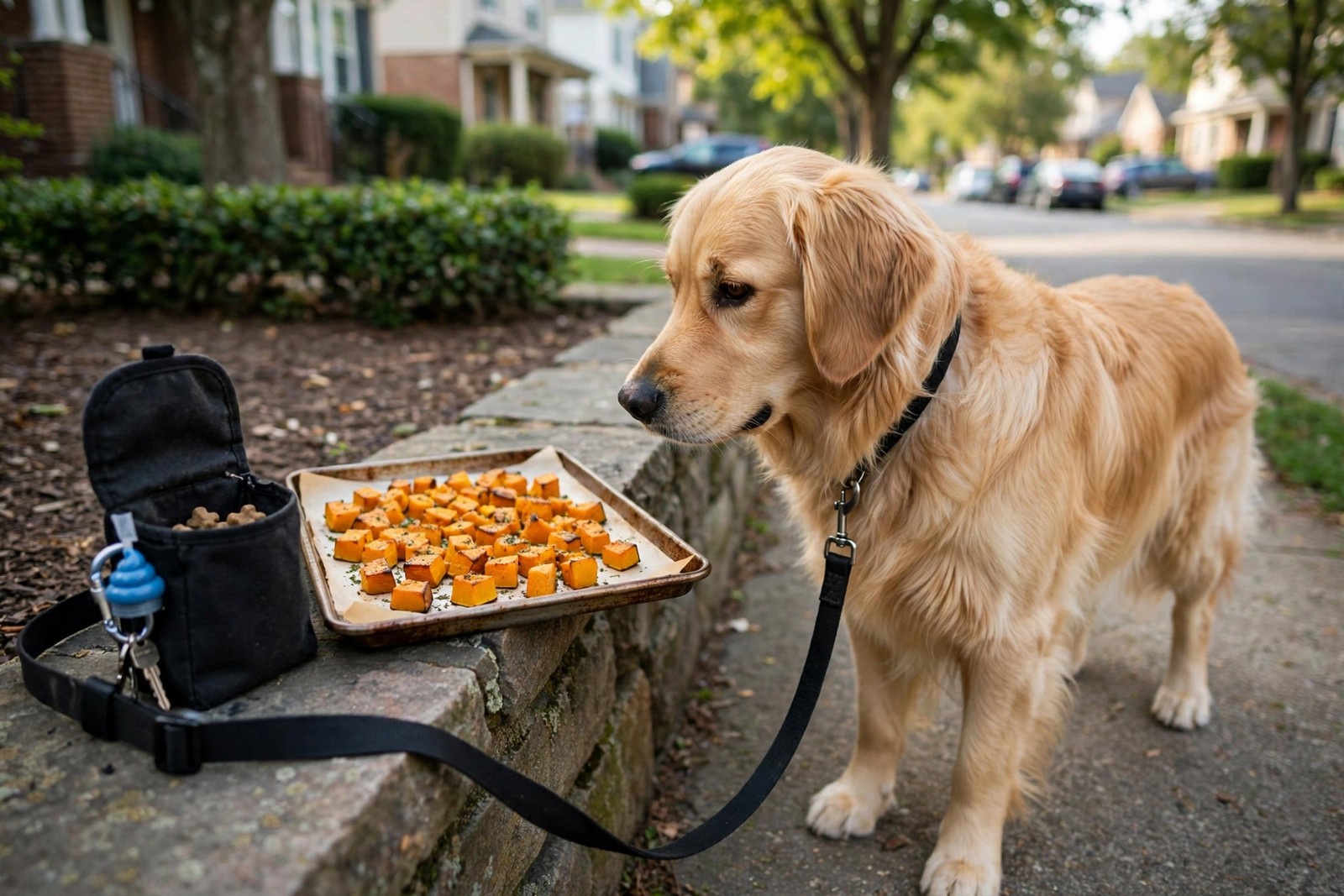
Yes, butternut squash can be a gentle extra for your dog, and roasted cubes cooling on a tray are close to ready. Two jobs come before any cube reaches the bowl. The skin must come off, and the seed cavity must be scraped clean. After that, the deciding question is what went onto the tray before roasting. Plain flesh cooked with nothing added is the food this answer covers. Cubes tossed in oil, butter, salt, warm spices, or a sweet glaze belong to the human menu.
Preparing Squash a Dog Can Handle
Cut the squash, scoop out the seeds and the stringy fibres around them, and roast or steam the flesh until it gives easily under a fork. Peel the skin away once the flesh has cooled enough to handle. Serve the flesh mashed with a fork or cut into soft cubes sized for your dog's mouth. A cube for a small dog should be small enough to chew without effort. Warm is fine, hot from the tray is not, because soft squash holds heat and a keen dog will gulp before noticing. Raw chunks are a different food entirely: firm, resistant, and a poor choice in pieces a dog might swallow unchewed.
Portions in Spoonfuls
Offer one to two tablespoons for a small dog. Offer three to four tablespoons for a medium or larger dog. Stir the squash through regular food or place it on top as an extra, a few times a week at most. Squash is filling and fibrous, so a large serving can crowd out the balanced meal your dog actually needs. Dogs who are new to squash should start with a single spoonful while you watch how the next day's stools look. Soft orange flesh passes through in a predictable way, and a modest portion keeps that outcome tidy.
Skin, Seeds, and the Tray Itself
Squash skin turns leathery as it roasts and resists chewing, and large pieces can be swallowed in a way that risks choking or gut irritation. Seeds are not a treat either. Remove both without debate. The cooling tray in this scenario deserves a second thought as well. A tray within reach invites a dog to help himself to a quantity nobody measured, including pieces still carrying skin. Move the tray back on the counter or cover it while it cools. Prevention here takes two seconds and removes the guesswork about how much your dog actually ate.
When Squash Upsets the Plan
A dog who eats a large amount of any fibrous vegetable may produce loose stools or skip a later meal through simple fullness. Repeated vomiting, straining, or signs of pain after eating squash, skin, or seeds call for veterinary advice the same day. Dogs with diabetes or weight concerns should meet new extras slowly, because squash carries natural sugars alongside its fibre. Your vet can place squash within your dog's wider feeding plan if those conditions apply.
A Household Note That Travels
Squash often appears in shared meals where one person cooks and another feeds the dog. The cook knows whether the tray was dressed. The feeder may only see golden cubes that look harmless. Closing that gap takes one clear note stating plain flesh only, skin and seeds out, and the spoonful count for your dog. KinsLe Care Teams keeps that note attached to the feeding task itself, with the person responsible named, so the detail moves with the job rather than relying on who remembers the recipe.