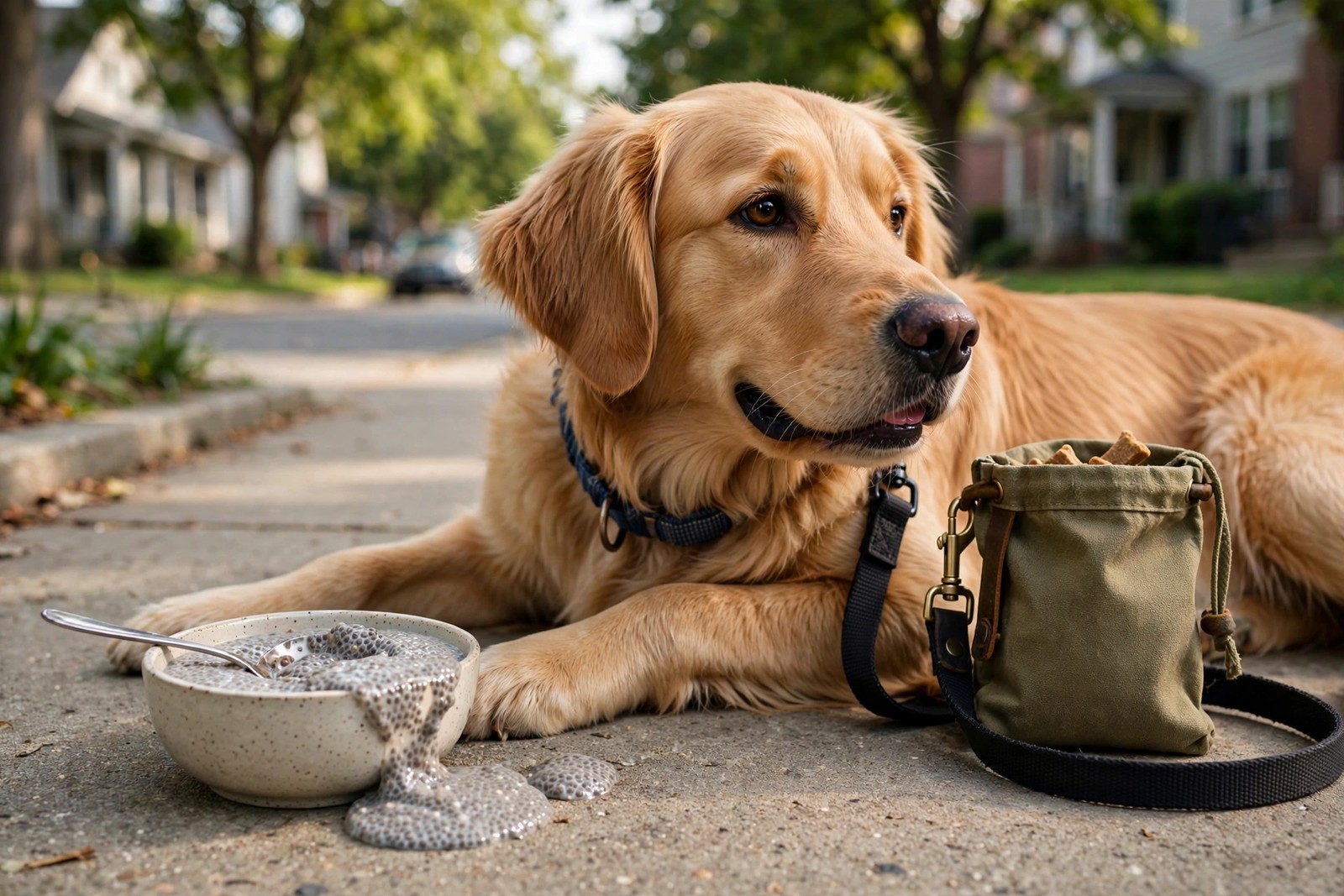
Yes, chia seeds can be shared with your dog, and the spoonful of pudding in this scenario shows why preparation matters more than the seed itself. Chia absorbs many times its weight in liquid and swells into a soft gel. Served already swollen, a small amount sits comfortably in a meal. Served dry by the spoonful, the same seeds begin that swelling after your dog swallows them, which is a far less comfortable arrangement.
Soaked, Sprinkled, or Served as Pudding
For a prepared serving, stir the seeds into water and leave them until the mixture turns thick and even, with no dry seeds floating on top. Spoon that gel over regular food. For a sprinkle, scatter a measured amount of dry seeds across a moist meal, where liquid in the food starts the softening at once. A chia pudding made only from chia and water or plain milk counts as a soaked serving. Puddings built for human breakfasts often add honey, syrups, cocoa, or sweeteners. Any sweetened pudding is out, and owners should read labels on bought products as a general rule, because xylitol in an ingredient list makes any food an absolute no for a dog.
Measures Scaled to the Dog
A small dog needs about a quarter teaspoon. A medium dog needs about a teaspoon. A larger dog can have up to two teaspoons. Those amounts, offered a few times a week at most, deliver the fibre and plant oils people value in chia without turning an extra into a serving. More is not better here. Generous amounts of chia can loosen stools, and the seeds are energy dense for their size. Dogs who are new to chia should meet half the listed measure first while you watch digestion over the following day.
The Dry Spoonful Problem
The scene to avoid is a dog licking dry seeds straight from a jar, a spilled pile, or a heaped spoon. Dry seeds clump as they meet saliva and stomach fluid, and a dog who gulps them quickly takes in a mass that expands in the gut. If your dog raids a spilled pile, remove what remains, offer fresh drinking water, and watch for retching, drooling, a tight belly, or a dog who cannot settle. Call your vet for guidance if those signs appear or if the amount eaten was clearly large for your dog's size.
Storage and Freshness
Keep chia in a sealed container in a cool cupboard, away from a curious nose at counter height. Check stored seeds for a stale or sharp smell before use, and discard seeds that smell off rather than serving them to finish the bag. Keep the measuring spoon with the container. A household that measures from habit makes fewer portion mistakes than a household that shakes seeds from the bag by eye.
Watching the First Serving Closely
Introduce chia on a morning when you will be home for the rest of the day. Serve the measured amount with breakfast, keep fresh water available, and look at the next two stools before you serve it again. Firm stools and a normal appetite mean the measure suits your dog. Soft stools mean the next serving should be smaller, and a dog who vomits or refuses food after chia should not be offered it again until you have spoken with your vet.
Recording a Fiddly Rule
Chia has more conditions than many kitchen extras: soaked or sprinkled, never heaped dry, never sweetened, measured by size. Conditions get lost when they live in one person's head. Writing them beside your dog's feeding duties means a partner, a sitter, or an older child follows the same version you settled on. When breakfast duty rotates, putting those preparation limits and size-based measures inside KinsLe Care Teams means the person serving that morning follows the soaked-or-sprinkled version you chose, instead of tipping seeds straight from storage.