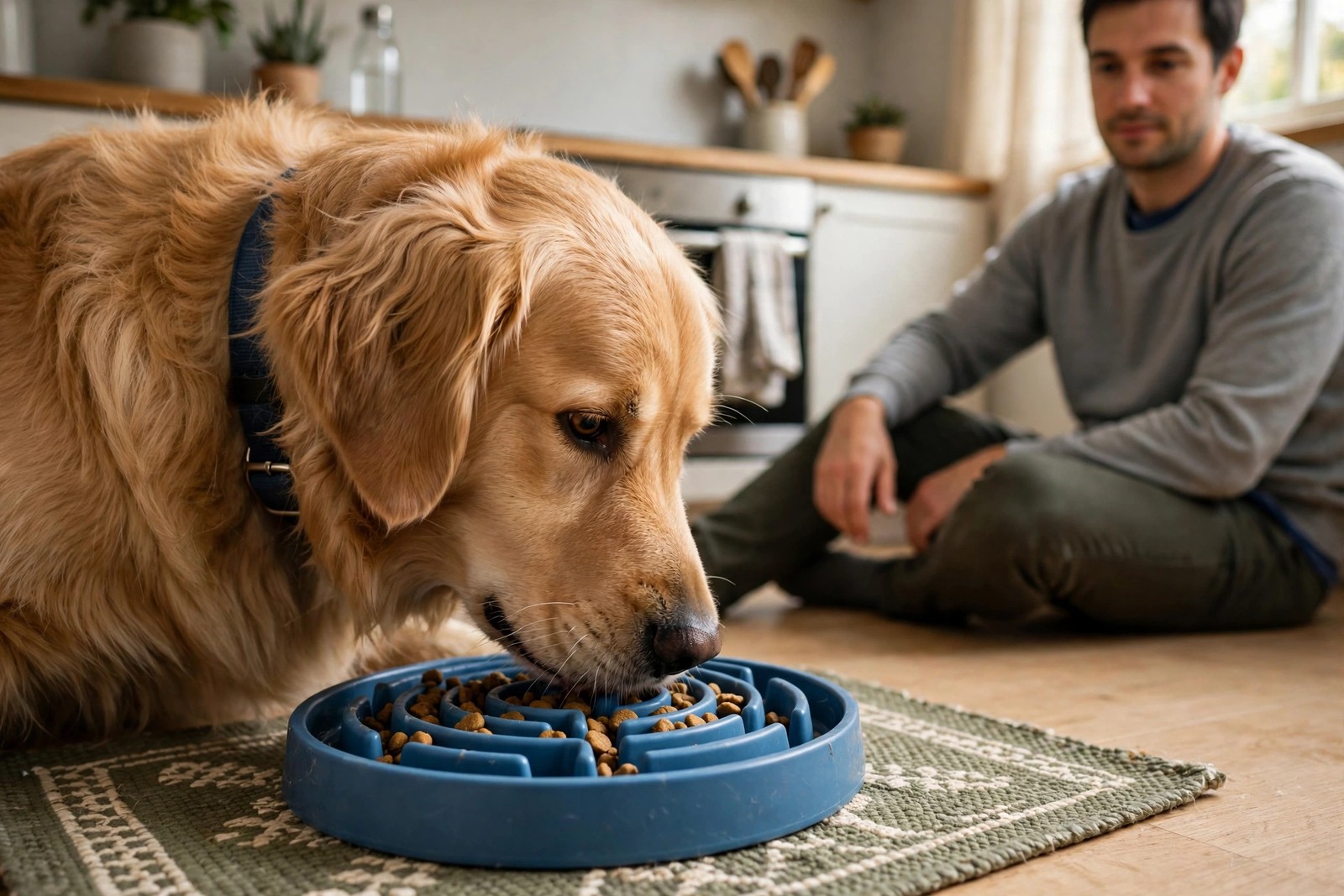
A dog who inhales a full bowl in forty seconds is not being greedy by human standards; he is following a script written early and reinforced daily. Puppies eat in a scrum of littermates, where the slow eater genuinely gets less, and that first lesson, eat fast or lose out, can last a lifetime. Rescue dogs add another chapter: a dog who has known empty bowls, street scavenging, or feeding in a crowded kennel has learned that food disappears, and the speed is a sensible insurance policy in his mind. Layer on top the simple fact that many dogs, especially famously food-driven breeds and adolescents, just find eating thrilling, and the race explains itself.
Why Slowing Down Is Worth It
Gulped food arrives in the stomach barely chewed, along with a lot of swallowed air. The common consequences are mild but unpleasant: regurgitation of whole kibble minutes later, vomiting, gas, and discomfort. Choking is the sharper risk, particularly for dogs who take huge mouthfuls or eat while excited and panting. The serious one is gastric dilatation-volvulus, commonly called bloat, in which the stomach fills with gas and can twist. It is most associated with large, deep-chested breeds, and eating very fast is one of the patterns vets ask about. A dog who retches without producing anything, paces restlessly, drools, or develops a tight, swollen-looking belly needs an emergency veterinarian immediately.
Slowing meals also buys you information. A dog forced by his bowl to take three minutes instead of one will show you clearly if his appetite changes, and a sudden shift to frantic eating paired with weight loss, increased thirst, or scavenging everything in sight deserves a vet check rather than a bigger bowl.
Methods That Actually Slow a Dog
Start with the social fix, because competition is the most common driver. Feed dogs separately, behind a door if needed, and pick bowls up when meals end, so nobody eats under an audience. Then change the geometry of eating itself. A slow-feeder bowl, with ridges and channels the tongue must work around, turns a gulp into a series of small retrieves. Puzzle feeders and food scattered across a patch of grass or a snuffle mat extend the job further and add welcome mental effort.
Portion structure helps as much as equipment. Splitting the same daily amount into three or four smaller meals lowers the stakes of each one, and hand-feeding part of the ration as training rewards converts the fastest eater into a dog working for every piece. Keep the half hour after meals calm, with no vigorous play, and always have water available. Give a new method a week before judging it; most dogs protest briefly, then settle into the new pace.
Keeping Every Feeder on the Same Plan
Slow feeding fails when one person uses the puzzle bowl and another, in a hurry, dumps the ration into a plain dish. Agree the method, the portions, and the separate feeding spot as household policy, and write it where the food lives. KinsLe's Care Teams backs that agreement up by letting you assign each of your dog's meals to a named person, with the slow-feeding method in the task notes and a timestamp when it is done, so his pace stays steady whoever feeds him.