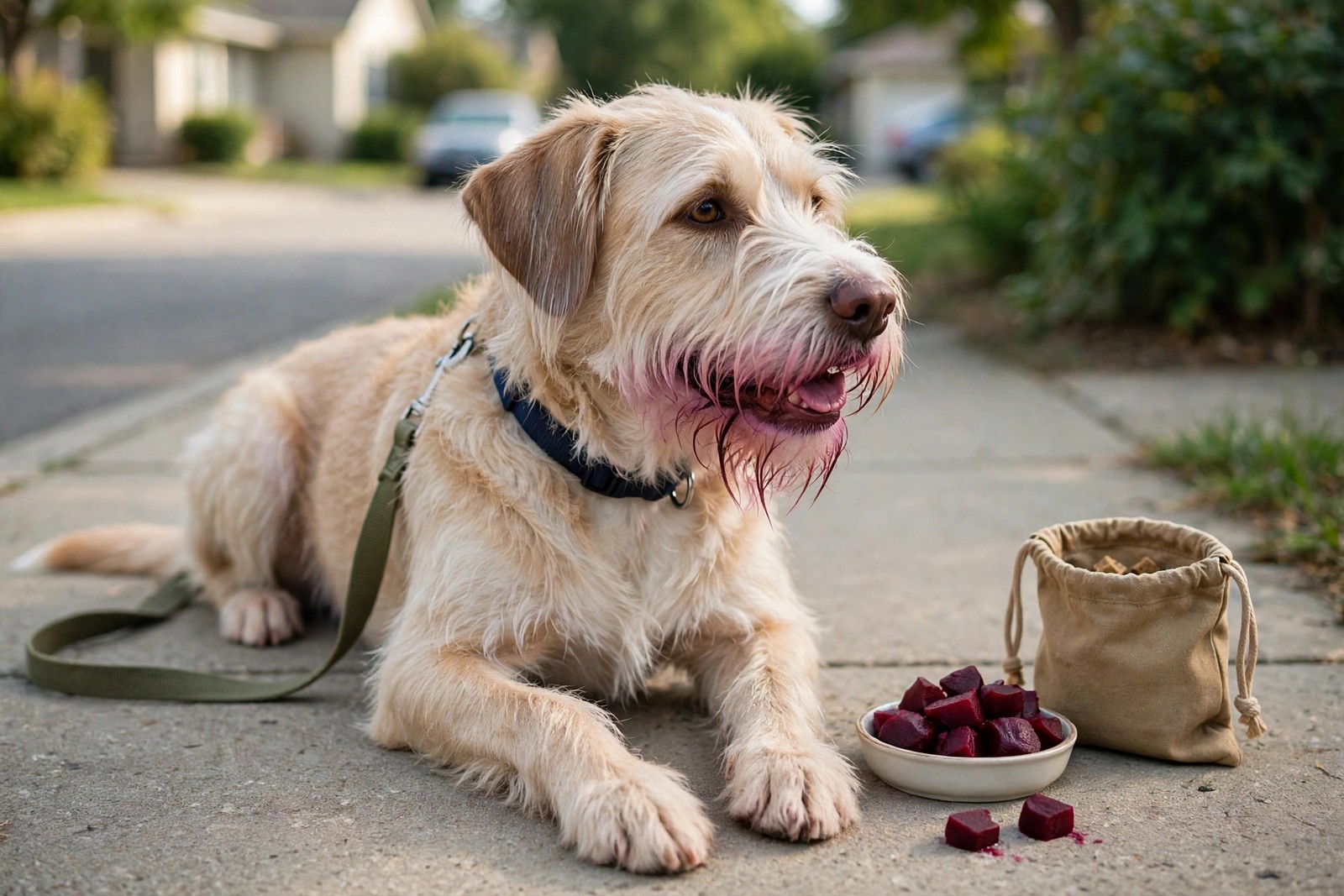
Yes, you can share plain cooked beets with your dog in small amounts, and the pink beard at that summer salad lunch was the vegetable's pigment doing what it does to everyone who eats it. Beetroot carries a strong red pigment that passes through digestion largely intact, stains fur, hands and chopping boards, and then appears in urine and stool. Knowing that sequence in advance saves a frightening moment at the next garden visit, since pink urine after beets looks alarming until you remember lunch.
Preparing Beets a Dog Can Handle
Cook beetroot until tender by boiling or roasting it plainly, with no oil, salt, seasoning or marinade. Peel away the skin, which is tough and earthy, and cut the flesh into bite-sized pieces matched to your dog. Small dogs need pea-to-thumbnail pieces, and larger dogs can manage bigger chunks that still require chewing rather than swallowing whole. Raw beet is hard and difficult for many dogs to digest, and cooking softens the texture and makes a modest portion a reasonable treat.
Serve beets plain and separate from dressed salads. Salad beetroot often arrives pickled in vinegar, sweetened, salted or mixed with onion and dressing, and that version stays off the dog menu entirely. Canned beets frequently carry added salt or sugar, and pickled beets add vinegar and spices a dog does not need. Cook a plain portion alongside your own preparation, and the dog gets the vegetable rather than the recipe.
Portions, Sugar and Sensible Frequency
Beets contain more natural sugar than many vegetables, and moderation is the honest rule. Offer a few pieces as an occasional treat or stir a small spoonful through a normal meal for interest, and count those pieces inside the day's treat allowance rather than adding them on top. Dogs managing weight and dogs whose vets monitor sugar intake need extra restraint, and you should ask your vet before making beets a habit for such a dog.
Introduce any new food in a small first portion and watch the following day. Soft stool, gas or a reduced appetite tells you the portion was too generous or the food disagrees with the dog, and either answer means smaller amounts or none. Stop the experiment and call your vet if vomiting, marked diarrhoea, blood that you cannot attribute to beet pigment, or lethargy appears, since a vet can separate a food reaction from other possible causes.
The Pink Aftermath, Explained Calmly
Expect urine with a pink tinge and stool with a red or dark pink cast for roughly a day after a beet portion. The pigment can also stain light fur around the mouth, exactly as it stained that beard, and a gentle wipe with a damp cloth after eating limits the decoration. Warn anyone else who walks or cleans up after the dog that beets were served, and the household avoids a needless scare at the sight of a pink puddle.
Beets also contain natural oxalates, and dogs with a history of urinary stones or kidney trouble sit in a different category from healthy dogs trying a salad extra. Ask your vet before serving beets at all to such a dog, and treat a general yes for healthy dogs as exactly that and nothing broader. The same caution applies to any dog on a prescribed diet, where even a wholesome vegetable can disturb a careful nutritional plan.
Keep a note of beet days for the first few trials so cause and effect stay linked in a busy household. With KinsLe Care Teams, the person who serves a new treat can record it against the dog's day, and the timestamped entry lets every carer connect a colourful stool or a soft one to the right lunch.