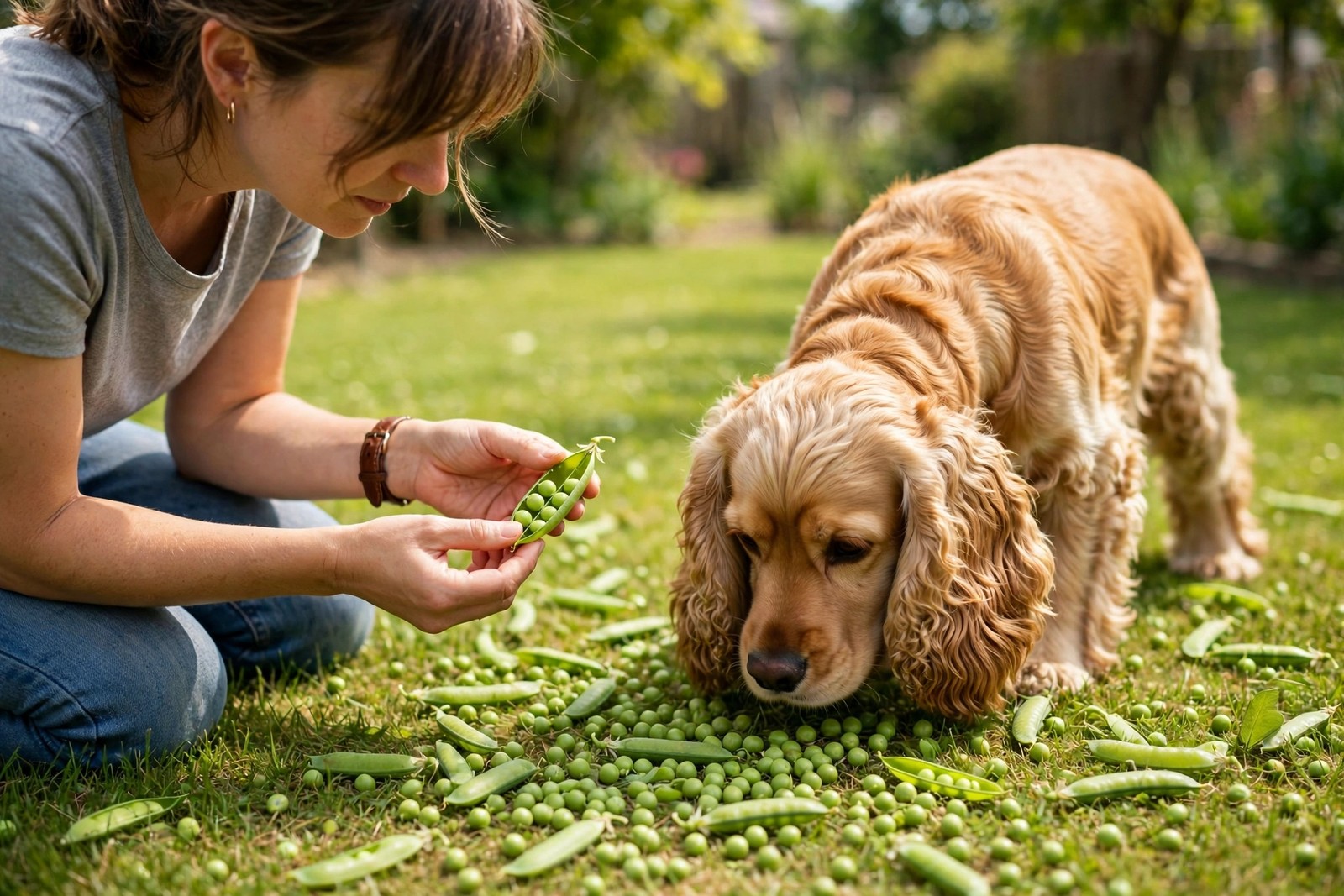
Yes — green peas are one of the friendlier extras a dog can have: a few peas for a small dog and up to a small handful for a large dog, served fresh from the pod, frozen, or cooked plainly. Peas bring fibre, plant protein and a natural sweetness dogs tend to enjoy, in a package that is far lighter than most biscuit treats. They work scattered through grass as a sniffing game, stirred through a meal as a topper, or fed one at a time as training rewards, which is where their small size and low calorie load really earn their place.
Preparing Peas So They Are Easy to Eat
Shell peas before serving, because the pod of an ordinary garden pea is fibrous and unappealing, and serve them plain. For small dogs, and for any dog that bolts food, split each pea or press it lightly with a fork so it cannot be gulped down whole and round. Frozen peas straight from the bag make a popular warm-weather treat, but they are at their hardest in that state, so let them soften for a few minutes, split them for small mouths, and stay nearby while your dog crunches them. Cooked peas should be just tender, with nothing added: no butter, no salt, and no sauce. Thawed frozen peas are the easiest everyday option, because they keep their shape, travel well in a treat pouch without going sticky, and can be counted out exactly.
The Versions to Leave in the Shop
Canned peas are the common trap, because they are usually packed in salted water, and rinsing only partly fixes a sodium load a dog never needed. Peas from your own plate are the second trap: peas finished in butter, or cooked alongside garlic and onion in a sauce or a stew, are not dog food, and the seasoning matters more than the pea. Dried snack peas with wasabi or chilli coatings are a human snack and should stay one, because the coatings bring heat, salt and flavourings that upset stomachs. Mushy peas from a fish-and-chip supper sit in between: the peas themselves are fine, but the salt and vinegar they carry make them a poor share. When in doubt, serve peas from the plain bag or the pod, not from a finished dish.
How Peas Fit the Wider Diet
A handful of peas is a treat, not a vegetable portion in any nutritional sense, and peas cannot balance a meal or fix a diet that is short on anything. Dogs fed a complete food already get the vitamins peas are praised for, so think of peas as a swap: every pea used in training is a biscuit treat not used, and that swap is where the benefit lives, especially for dogs watching their weight. Introduce peas gradually like any new food, because a sudden bowlful of fibre-rich legumes can produce gas and a loose stool even though each pea is harmless. Dogs watching their weight do well on peas precisely because the swap cuts calories without cutting the number of rewards. Keep a small bag of peas in the freezer door and the portion stays visible and countable, which is a quiet guard against slow creep from a few peas to a mugful nobody measured. Recording peas as the designated training treat in KinsLe Care Teams keeps portions honest across the household, so the dog earns the same few peas in practice rather than a handful from every person it charms.