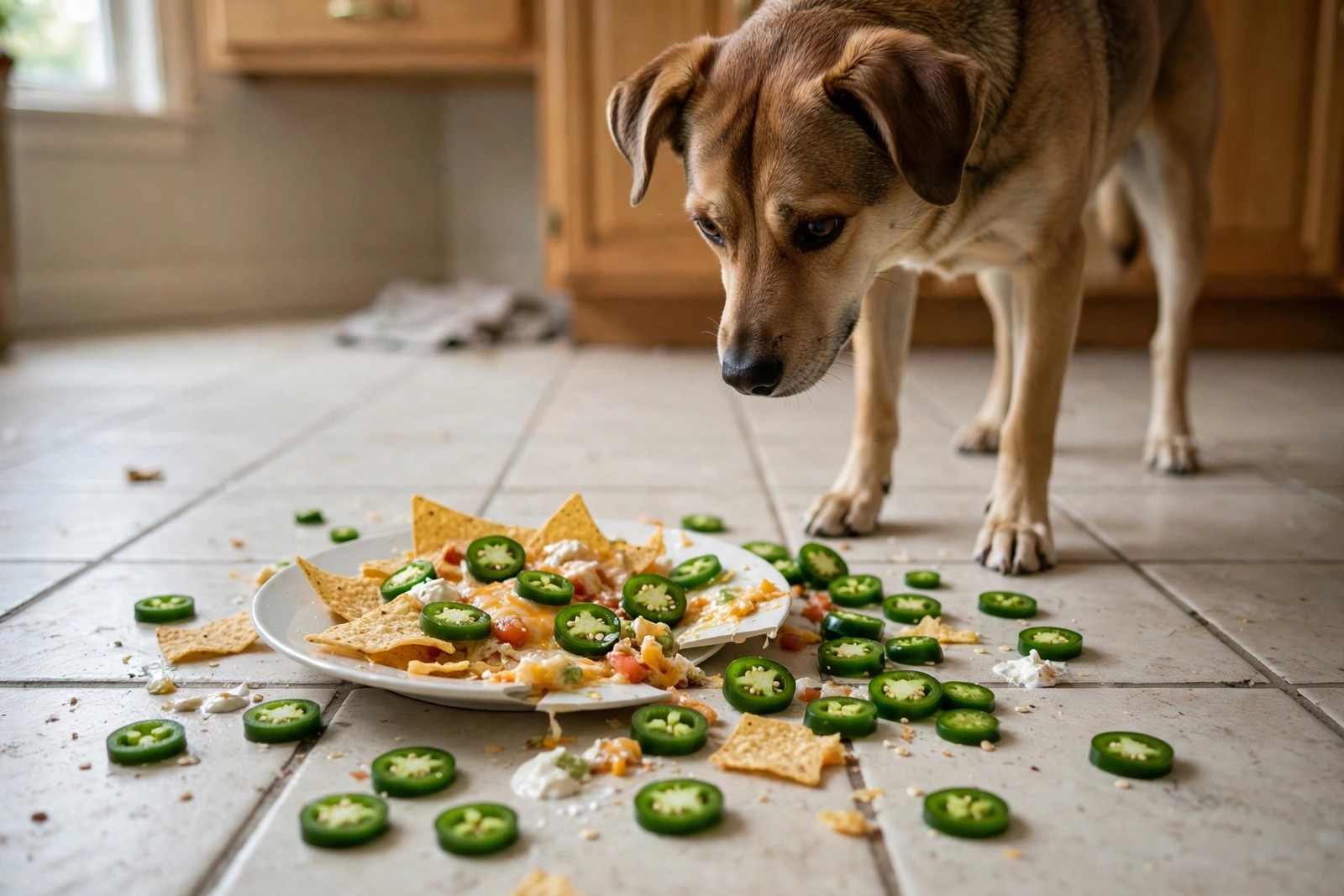
A jalapeño slice stolen from a dropped nacho plate is a different problem from an allium or a toxic plant. Its heat comes from capsaicin, a compound that irritates sensitive tissue in the mouth, throat, stomach, and bowel. One slice will leave many dogs uncomfortable for a few hours without causing lasting harm, yet the amount was not the only thing on that plate. Cheese, salt, sour cream, pickled peppers, and any onion or garlic in a dip all travelled with the slice, so think about the whole plate when you describe what your dog ate. Your job at home is to ease irritation, protect the eyes, and notice promptly if the picture stops looking like simple irritation.
The first half hour after the slice
Offer plain water in a clean bowl and let your dog drink at a natural pace. Check the mouth for a piece of pepper still stuck against the gum or under the tongue, and remove a visible fragment only if your dog lets you lift a lip calmly. Juice carried on a paw becomes an eye problem the moment a dog rubs a stinging face, so wipe paws and the outside of the muzzle with a damp cloth, then watch for repeated face rubbing on carpet or bedding. Keep the room calm, skip the next meal if the stomach seems unsettled, and do not offer spicy food, rich treats, or human remedies in an attempt to neutralise the heat.
Signs that fit capsaicin irritation
Drooling and lip licking often start within minutes. Many dogs smack their lips, shake their heads, paw at the muzzle, gulp, or ask to go out and eat grass. Stomach signs can follow later, including gurgling, reduced appetite, one episode of vomiting, or loose stools as the pepper moves through. Watery or squinting eyes, a held-shut eye, or persistent pawing at one side of the face suggest juice reached the eye and deserve a prompt call for advice.
When to phone the practice instead of waiting
Call your veterinarian if vomiting repeats, if diarrhoea continues through several outings, or if you see blood in vomit or stool. Call sooner for a puppy, a tiny dog, an elderly dog, or a dog with an existing stomach, kidney, or breathing condition, because dehydration and discomfort weigh heavier on those dogs. Laboured breathing, swollen lips or face, repeated retching without bringing anything up, collapse, or signs that are still strong the next day all need prompt professional advice. Mention the nacho plate in full when you call, naming the cheese, dips, and any other toppings you served, since a topping other than pepper may change the advice you receive.
Watching overnight without overreacting
Settle your dog where you can hear retching and reach the door quickly, and take each toilet trip as a chance to check stool consistency. Avoid vigorous play while the stomach is unsettled, and keep dropped party food out of reach during the tidy-up, when a second raid on a bin or a plate left on a low table can restart the whole episode. If signs fade steadily, return to the normal feeding routine at the next regular meal and keep an eye on stools for another day. If the pattern stalls or reverses, that change, rather than the original slice alone, is your reason to phone.
Plates, parties, and the drop zone
Parties scatter food at dog height. Give your dog a settled place away from the snack table, tell guests plainly that people food is off the menu tonight, and clear dropped items as they fall rather than during a big clean-up later. The party log above can sit inside KinsLe, where Care Teams turns water checks, toilet trips, and next-morning stool notes into named duties instead of vague intentions shared by nobody in particular.