Why the Last Weeks Change Her Appetite
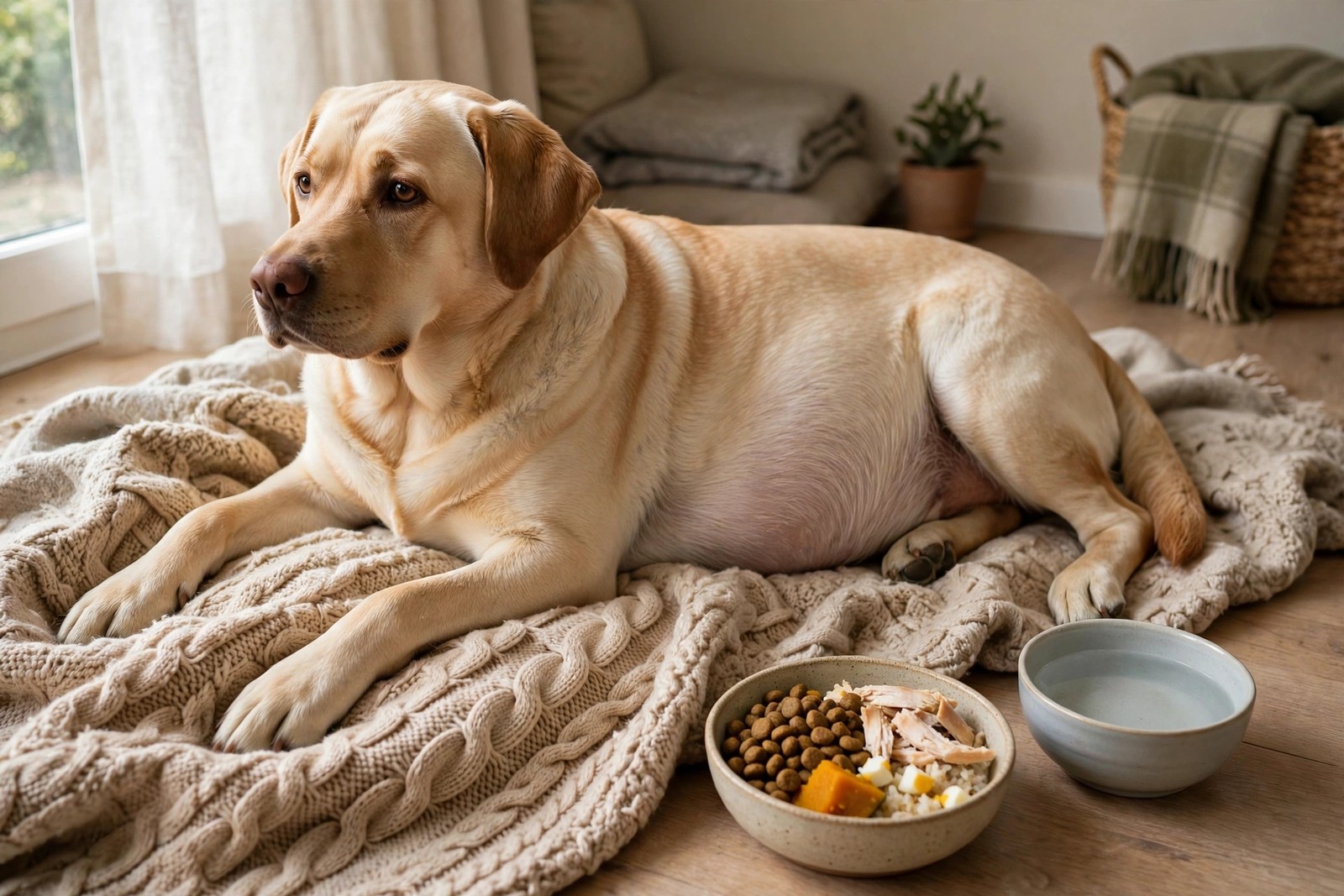
Late pregnancy is a squeeze in both directions. The puppies do most of their growing in the final stretch, so your dog's need for energy and protein climbs steeply, yet the litter itself takes up room that her stomach used to occupy. She may approach a normal-sized meal, eat half, and walk away not from fussiness but from simple physical fullness. Feeding has to adapt to that squeeze: more nutrition in each bite, offered more often, so her total intake rises even as each individual meal gets smaller. Weight gain should look steady and rounded, not sudden or extreme, and her condition is something your vet will be tracking alongside you.
Puppy Food Is the Usual Answer at This Stage
The food most often recommended for late pregnancy is a good-quality puppy food, chosen not because she is young but because of how it is built. Puppy formulations pack more energy, protein, and fat into a small volume and carry the mineral balance that growing bodies need, which serves both the puppies being built and the milk production about to begin. Make the switch gradually across a week or so, mixing increasing amounts of the new food into her current meals, because a sudden change now risks loose stools at exactly the stage when comfort matters most. Continue the same food through nursing, when her demands peak even higher than in pregnancy.
Small Meals, Offered Often, Without Pressure
Divide her daily food into three or four smaller meals, and leave a modest portion available if she prefers to graze as the litter grows heavier. Fresh water should be constantly within reach, since intake rises with food and with the work her body is doing. Skip the temptation to add supplements, extra calcium, or home remedies on guesswork: balanced food already contains what she needs in proportion, and well-meant extras can upset that balance in ways that matter during whelping and nursing. If she is fussy on a given day, offer a smaller, smellier warmed portion rather than an entirely new food.
The Appetite Dip That Often Comes Before Whelping
Many dogs eat less, or refuse food altogether, in the final day or so before labour begins, and they may become restless, seek a quiet nest, or want company constantly. That dip, close to her due window and paired with nesting behaviour, is a familiar part of the pattern rather than a feeding failure. What should not be ignored is appetite loss earlier in the pregnancy, repeated vomiting, discharge, straining without progress once labour starts, or a dog who seems unwell in herself. Those signs mean a prompt call to your vet, who will want her history and timing in front of them when you ring.
Keeping Her Records Ready for the Busy Weeks
Late pregnancy generates a trail of details worth keeping in one place: mating and scan details, vet check notes, her current food and portions, and the feeding changes planned for nursing. When whelping begins at an inconvenient hour, nobody should be reconstructing that history from memory. In KinsLe, her Pet Passport holds those scan results, vet notes, and feeding plans as one portable packet, ready for the vet visit or the middle-of-the-night call.