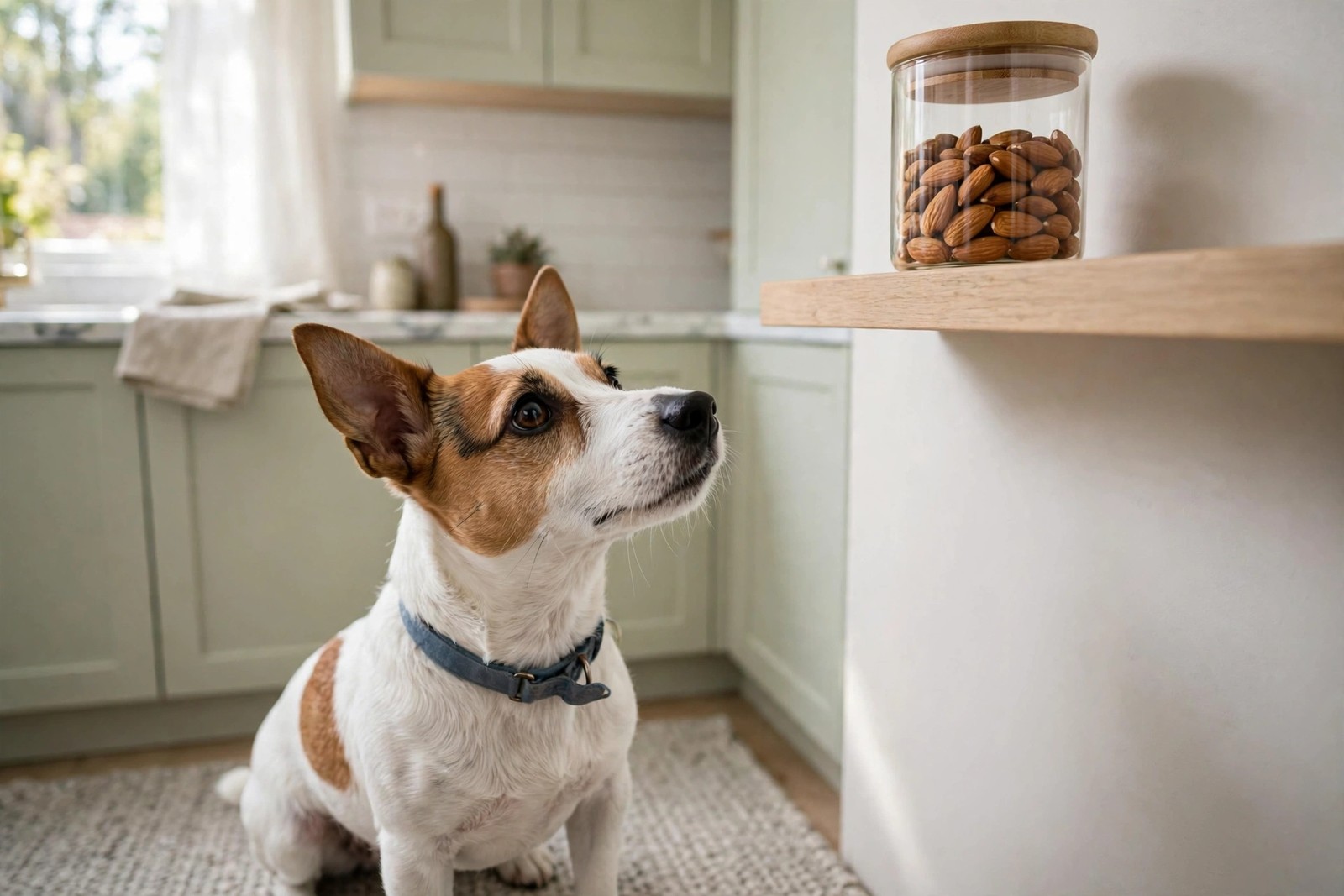
No, almonds are best kept off a dog's menu entirely. They are not famous as a poison in the way some foods are, and precision matters here: a plain almond is not considered toxic to dogs. The case against almonds is mechanical and digestive, and it is strong enough that no owner needs to find the exception.
Choking and Blockage Come First
A dog does not chew like a person. Many dogs, especially eager eaters and breeds with broad heads, crunch once or twice and swallow, and a whole almond is a smooth, hard, oval object shaped almost perfectly to lodge in a throat or, having been swallowed, to stick where the intestine narrows. Small dogs face the highest risk, but any dog who gulps can choke. A blockage further down is quieter and more dangerous: signs include repeated vomiting, drooling, refusing food, a hunched or painful belly, restlessness, and little or no stool. Those signs after any nut raid mean a veterinarian the same day, urgently, because an obstruction does not resolve with waiting and a dog cannot tell you where it hurts. Puppies add curiosity to the risk, since a bowl of nuts on a low table is, to them, a bowl of interesting-smelling chew objects.
Fat, Pancreas, and the Aftermath
Almonds are rich in fat in a very small package, which is the second problem. A handful of stolen almonds can deliver a fat load that upsets a dog's stomach with vomiting and diarrhoea, and in susceptible dogs it can help trigger pancreatitis, an inflamed pancreas that causes belly pain, appetite loss, drooling, and a dog who stands hunched or stretches into a prayer position to get comfortable. Pancreatitis can be serious and sometimes needs hospital care, and dogs who have had it once are often managed carefully for life. A single almond stolen by a large, healthy dog will usually pass without drama, and the sensible response is monitoring rather than panic, but the line between one almond and a double handful from an open bag is a line dogs cross in seconds when nobody is watching.
Salted, Flavoured, and Coated Almonds
Everything above describes the plain nut. Most almonds in a home are not plain. Roasted and salted almonds bring salt a dog does not need, smoked and seasoned varieties may carry garlic or onion powder, which are harmful to dogs, sweetened almonds add sugar, and chocolate-coated almonds introduce a genuinely dangerous ingredient. Almonds ground into sweetened spreads and baking can bring further problems, including sweeteners unsafe for dogs. There is no preparation step that turns an almond into a sensible dog treat, so the household rule can stay beautifully simple: nuts in human food stay in human food, served from closed containers, stored in cupboards a counter-surfing dog cannot reach, and never offered as a training reward.
Better Treats From the Same Kitchen
A dog begging while you snack wants inclusion more than it wants an almond, and safer swaps are easy. A few thin slices of apple with core and seeds removed, a piece of carrot, a blueberry or two, or a small cube of plain cooked meat all satisfy the ritual without the risk profile, and a portion of the dog's own dinner ration, hand-fed piece by piece, often delights a dog most of all. Keep new treats small, introduce one at a time, and let a dog with a history of pancreatitis, digestive trouble, or weight management skip kitchen extras unless the veterinarian agrees.
Making Never Mean Never
Dogs learn which humans are soft targets, and nut bowls appear exactly when houses fill with guests. Say the rule early, move the bowls high, and write it down where feeding instructions live. KinsLe's Care Teams gives that rule a durable place, letting you attach a clear never-feed note about almonds and other nuts to your dog's feeding duties, so family, sitters, and guests all protect the same dog the same way.