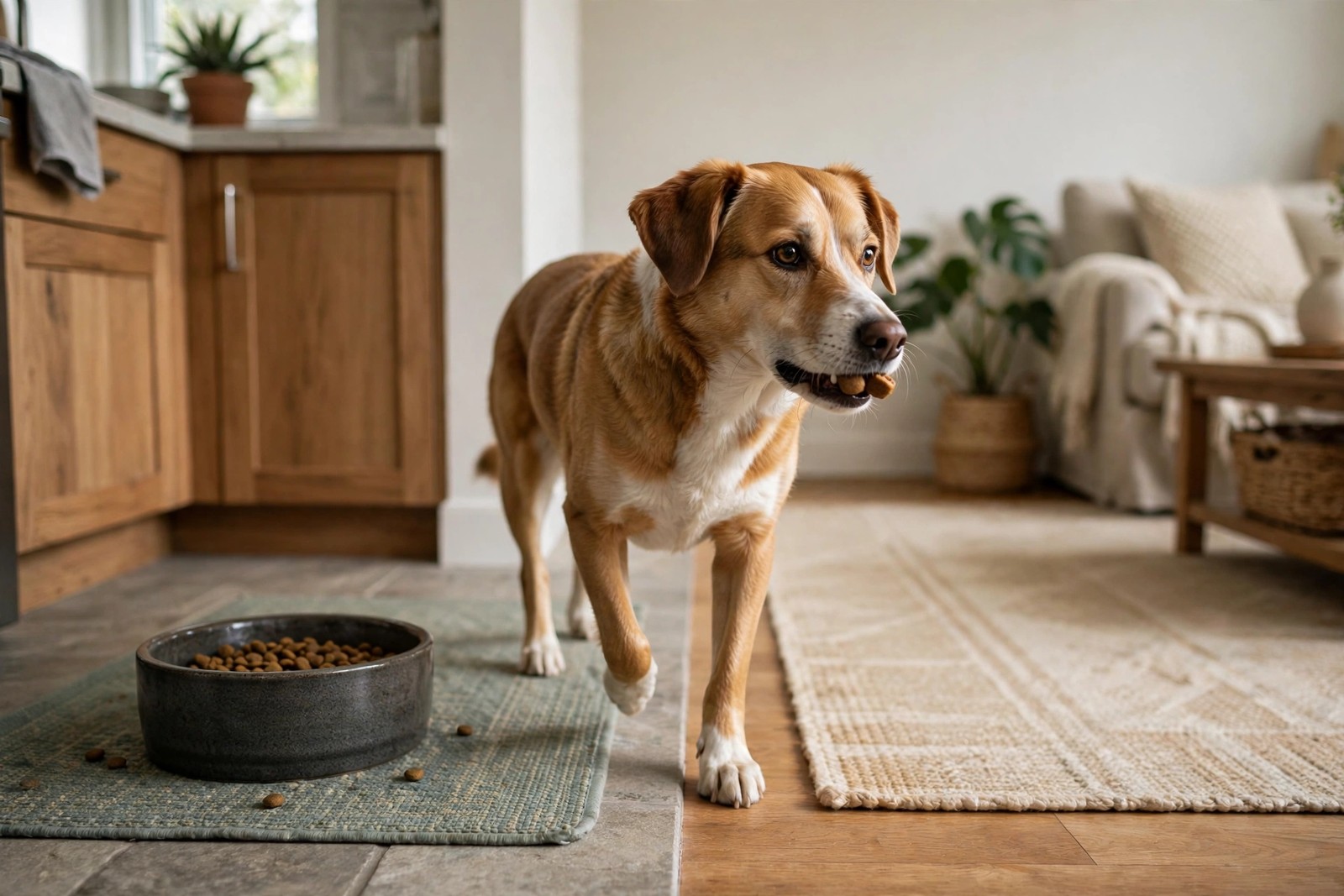
Mouthful by mouthful, the meal migrates from a bowl in the kitchen to a patch of carpet, and the dog settles there to eat in peace. For the dog, the arrangement works. Understanding which part of it works, the quiet, the surface, the distance from rivals, or the bowl itself, tells you what to change if the travelling food bothers you, and what to leave alone if it does not.
The Ordinary Roots, One by One
Carrying valued food away from where it was found is an old canine habit, and a bowl of food counts as valued. Some dogs move a few pieces to eat undisturbed, and dogs who grew up competing at a shared feeding station, in a litter or a busy rescue kennel, often keep the habit for life. The destination is rarely random. Carpet holds a piece still while the dog chews, where a hard floor lets it skitter away, and a rug in another room is usually quieter than a kitchen with opening doors, running appliances, and people passing the bowl. The bowl can be part of the story too. A light metal bowl that rings against teeth, slides across tiles, or tips as the dog eats gives the dog a reason to take the food somewhere more comfortable and eat it there instead.
Change the Setup, Not the Dog
Start by giving the chosen spot official status. Put a washable mat where your dog already carries food, and feed there, so the meal happens on a surface you can clean rather than on your carpet. Prepare the area before the bowl goes down: close the door if other pets wander through, and feed dogs in the home in separate places so nobody needs to relocate to feel secure. Try a heavier, wider, low-sided bowl with a non-slip base if the current bowl moves or clatters, because a stable bowl removes one reason to leave it. Smaller pieces help in a different way, since a piece eaten in two bites at the bowl is a piece that never gets carried. Stay nearby and calm during meals at first, without hovering over the dog, and let the new arrangement run for a couple of weeks before judging it.
What Not to Do, and the Guarding Watch
Do not scold a carrying dog, chase the dog to retrieve dropped pieces, or take food from its mouth to prove a point. Those responses attach conflict to mealtimes, and conflict around food is how a mild carrying habit can grow into guarding. Watch for the early shape of that change instead: a dog who freezes over the bowl, eats faster when people approach, hovers low over food, or growls when a person or another dog comes near. Occasional mild tension that fades as feeding becomes separate and predictable is common. Guarding that is growing in frequency or intensity deserves help from a qualified behaviour professional, arranged promptly rather than after an incident forces the issue.
When the Habit Warrants a Vet Mention
A lifelong carrier who is otherwise eating well rarely needs anything beyond a mat. A change in pattern is different. Mention carrying at a vet visit if it starts suddenly alongside a reduced appetite, if your dog begins dropping food, chewing on one side only, pawing at the mouth, or showing a change in breath or in weight. Those signs can point to discomfort in the mouth or elsewhere, and they need an examination rather than a new bowl. Keep the report factual when you go: when the change began, which foods get dropped, and whether hard pieces are refused while soft food is eaten. That detail helps the vet decide where to look first, and it costs you nothing but a note made at the time.
Consistency gets easier with KinsLe, since Care Teams can assign the feeding slot and record where each meal ended up being eaten.