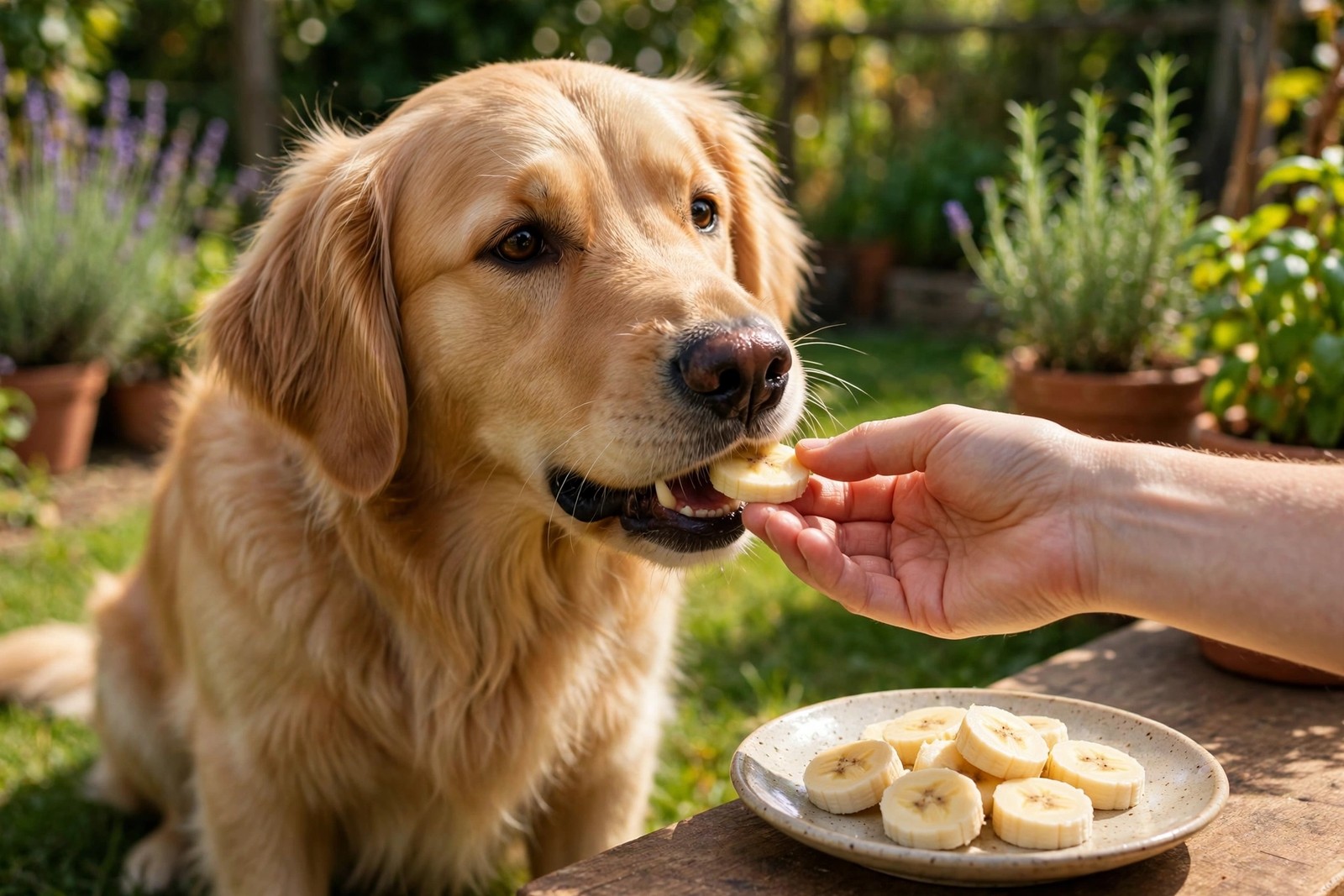
Yes, dogs can eat banana in small amounts as an occasional treat. It is one of the friendlier fruits for dogs: soft, easy to portion, and widely liked. The limits come from its sugar and density, not from any toxin, so this is a question of how much and how, rather than whether.
Portion by the Dog in Front of You
Banana contains considerably more sugar and starch than berries or green beans, so it should stay a treat, not a daily bowl addition. A sensible scale is two or three thin coins for a small dog, several slices for a medium dog, and up to half a banana for a large dog, a few times a week at most. Dogs that are overweight, diabetic, or on a strict feeding plan should skip it or get a single coin on rare occasions, and if your veterinarian has set a weight target, count banana within the day's treat allowance rather than on top of it. A whole banana handed over as a novelty can mean loose stool and a very full, uncomfortable dog.
Peel, Texture, and Serving
Always peel banana first. The peel is not toxic, but it is fibrous, hard to digest, and can cause a blockage if a dog swallows a large piece, so peels belong in a closed bin, not the compost corner a dog can raid. Serve slices or mash a little ripe banana into regular food for a dog that needs encouragement at mealtimes. Frozen slices change the texture completely and slow most dogs down, which makes them useful on hot days and for puppies that are teething, provided the pieces are sized so they cannot be swallowed whole as they soften. Dried banana chips are a different product: they concentrate the sugar and are often cooked in oil or sweetened, so fresh or frozen fruit is the better choice.
When Banana Helps, and When It Does Not
The soft texture makes banana genuinely useful in a few situations. A small slice can hide a tablet for a dog that takes medication willingly from food, if your veterinarian is happy with that method for that medicine. Mashed banana can tempt a convalescing dog to lick a little food, though persistent refusal to eat is a reason to call your veterinarian, not to keep offering sweeter foods. Banana is sometimes suggested for loose stool because of its fiber, but it is not a treatment: diarrhea that lasts beyond a day, contains blood, or comes with vomiting or lethargy needs veterinary advice. Likewise, a dog that has never had banana should get one slice first, with a day to watch the stool before it becomes a regular treat.
Crowd Control in a Multi-Dog Home
Banana is high-value enough to cause guarding in some dogs, so hand slices out separately rather than tossing them into a group, and teach children to offer one flat-handed slice at a time instead of holding a whole fruit at dog height. Note which dog in a multi-dog household actually tolerates it well, since tolerance varies. Logging banana, its portion, and which dogs get it in KinsLe through Care Teams keeps treat-giving consistent across the household, so one person's few slices do not quietly become three people's whole bananas.