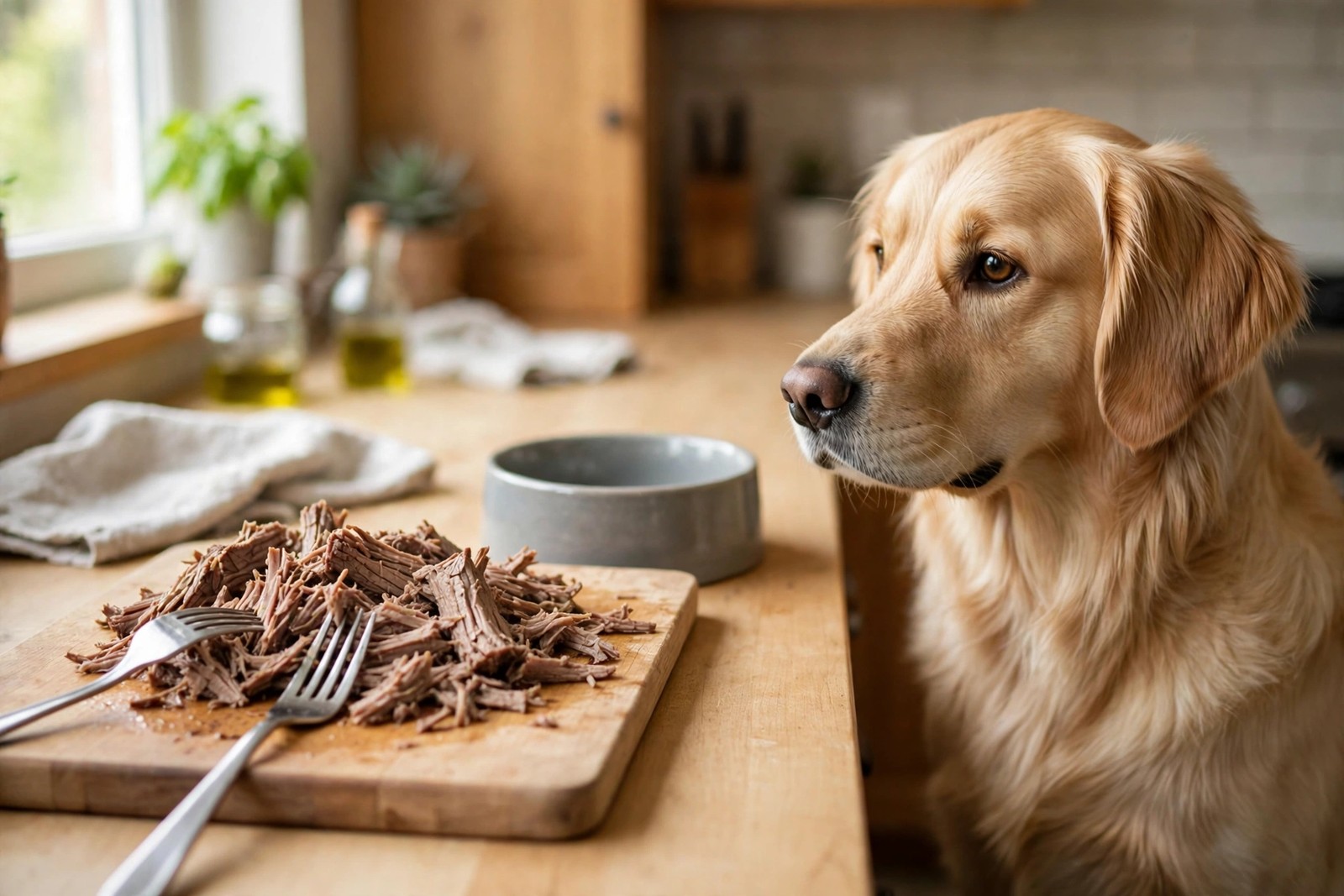
Yes, dogs can eat beef, and plainly cooked beef is a sound protein that many complete dog foods are built around. The dog-safe version is specific, though: lean meat, cooked through, with nothing added and no bones attached. Most beef trouble in dogs comes not from the meat itself but from what cooking for humans adds to it — fat, salt, sauces, spice rubs and the brittle bones left over from a roast.
Choosing and Cooking Beef for a Dog
Lean cuts and lean ground beef are the sensible starting point, with visible fat and gristle trimmed before cooking. Boiling, baking or grilling without oil-heavy marinades all work, provided the meat is cooked through and served plain. Drain cooking juices rather than pouring them over the bowl, because the pan liquid is where much of the fat collects. Cut or shred the meat into pieces your dog chews comfortably, and let it cool before serving. Raw beef is a different risk picture: raw meat can carry bacteria that affect dogs and the people handling their bowls, so cooked is the household standard this article assumes. Seasoned dishes stay off the menu entirely — garlic and onion in any form are toxic to dogs, and barbecue sauces, gravies and stock-heavy stews typically contain both, plus salt levels a dog does not need.
Fat, Bones and the Two Real Hazards
Fat is the first hazard. A modest amount of beef fat in a meal is unremarkable, but a rich helping of fatty trimmings, dripping or skin-heavy leftovers can trigger serious stomach upset, and in susceptible dogs a fatty binge is one of the routes vets investigate when pancreatitis is suspected. If your dog vomits repeatedly, loses interest in food or seems sore in the belly after a rich meal, call your vet rather than waiting it out. Bones are the second hazard, and the rule is simple: cooked bones never. Cooking makes bone brittle, so it splinters into sharp fragments that can cut the mouth, throat or gut. Raw bones carry their own risks of tooth fractures and bacterial contamination, so the cleanest household rule is beef without bones in any form.
Portion and Place in the Diet
Beef works best as a topper or an occasional partial meal, not as an improvised whole diet. A few spoonfuls of shredded beef over a normal meal, or a small handful as the protein in a vet-discussed home-prepared plan, keeps the nutrition balanced, because beef alone lacks the calcium and micronutrient spread a complete food provides. Dogs that eat beef daily as a major share of the bowl can drift into imbalance over time even though every individual meal looked wholesome. Introduce beef gradually over a few days if your dog has not eaten it before, and watch the stool; a dog that consistently produces loose stool after beef may simply be one that does not tolerate it well, and another protein will suit better.
Making Leftovers Safe in a Busy Kitchen
The risky moment for beef is the unstructured one: roast ends on a chopping board, a child's plate cleared at dog height, a helper who assumes the gravy boat is fair game. Agree the plain-portion rule once, keep the dog's share aside before human seasoning goes on, and refrigerate cooked beef promptly rather than leaving it in a cooling pan. KinsLe's Care Teams helps by letting you record the dog's prepared portion as an assigned feeding duty, marked complete with a timestamp, so the seasoned leftovers are never quietly recycled into a second dinner.