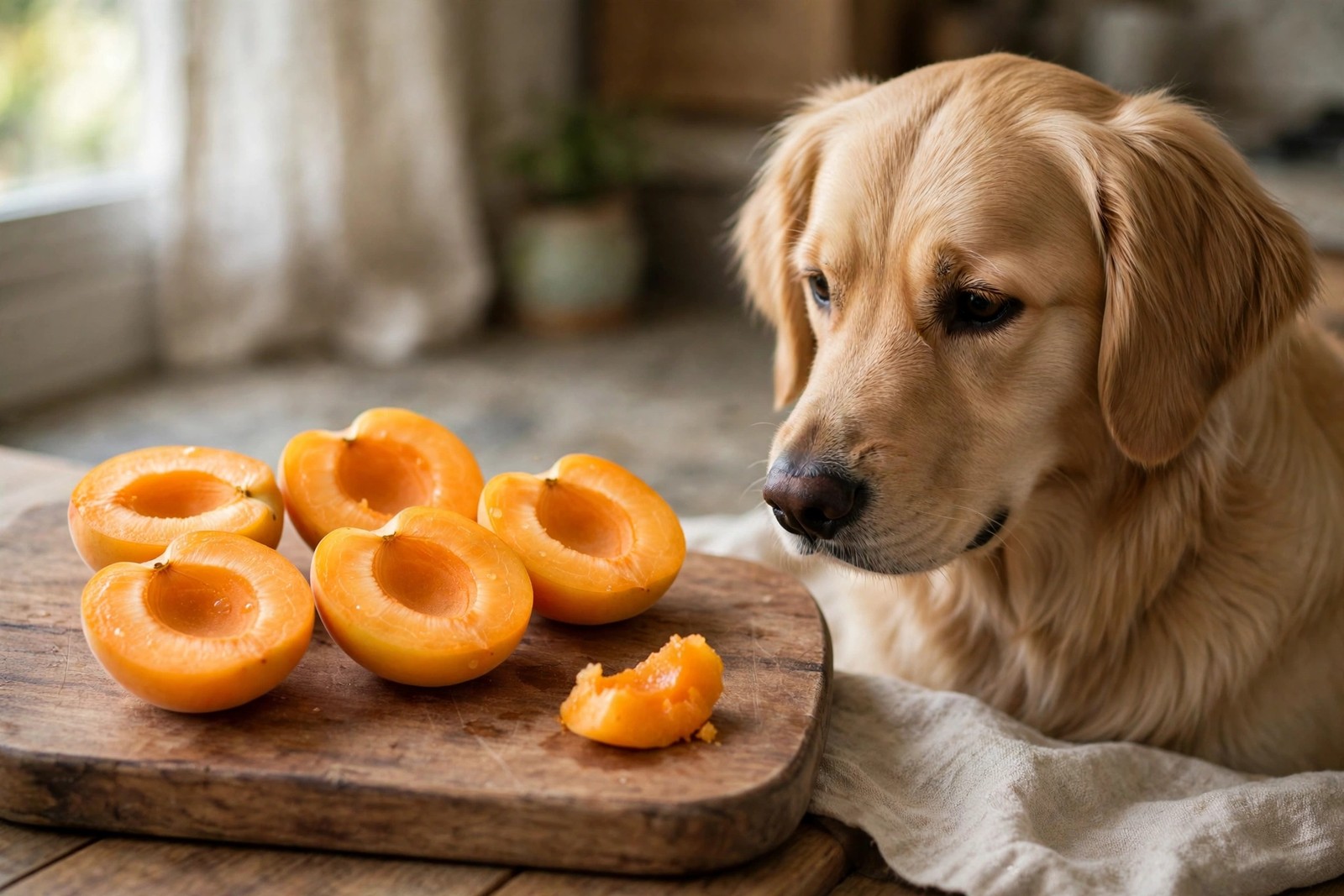
Yes, apricot flesh with the pit fully removed is safe for dogs in small amounts, and its soft texture and gentle sweetness suit dogs that find crunchier fruit treats uninteresting. The whole question turns on the pit, though, and this is a food where the preparation step is not a nicety but the entire safety case. An apricot that still holds its pit should never reach your dog, even for a supervised nibble, because a dog takes the whole fruit in one bite, pit and all.
Why the Pit Is Three Risks in One
An apricot pit is a hard central stone that concentrates several hazards. Inside the kernel sit cyanide compounds, so a dog that cracks and chews pits is exposed to a toxin the flesh never presents. The stone's size and hardness also crack teeth when a dog crunches down expecting soft fruit, and dental fractures from hard pits and bones are painful injuries that usually need veterinary treatment. Finally, a pit swallowed whole can lodge in the throat or further down the gut, and an intestinal blockage is an emergency that shows up as repeated vomiting, a tender belly and a dog that stops eating. The stems and leaves of the tree carry the same cyanide compounds in smaller measure, so windfall fruit gathered from under a garden tree should be checked and cleared rather than left for scavenging.
Preparing an Apricot for a Dog
Wash the fruit, halve it with a knife, and lift the pit straight into a lidded bin before the flesh goes anywhere near the dog. Run a thumb over both halves to confirm no pit fragment remains, then cut the flesh into pieces matched to your dog: thin strips for a small dog, modest chunks for a large dog. One apricot's flesh is a full treat portion for a medium dog, and half is enough for a small dog. Serve it fresh and plain. If your dog is new to stone fruit, offer a couple of pieces first and watch the stool over the following day, because rich fruit on an unprepared stomach often loosens it.
Dried Apricots and Other Forms
Dried apricot is a different proposition from fresh. Drying concentrates the sugar and calories into a small, dense piece, and some dried fruit is treated or sweetened further, so a piece or two is a rare treat rather than a handful from the snack bag. Apricot jam, preserves and baked goods bring added sugar and sometimes sweeteners a dog should never have, so they stay human food. Canned apricots in syrup fail on the syrup alone. If you garden, net or clear windfalls during the season, because the dog that helps itself under the tree gets the pits you carefully removed in the kitchen.
If a Pit Gets Eaten Anyway
Prevention fails sometimes, so know the response in advance. A single pit swallowed whole by a large dog may pass, but call your vet promptly for guidance rather than waiting for symptoms, and never induce vomiting at home unless a vet directs it. Watch closely for the next day or two for vomiting, drooling, appetite loss or straining, and seek urgent care if any appear. Keeping everyone in the household on the same prepare-first rule is what makes accidents rare. KinsLe's Care Teams lets you write that rule into the feeding routine as an assigned, timestamped duty, so a visiting helper prepares apricots exactly the way you do.