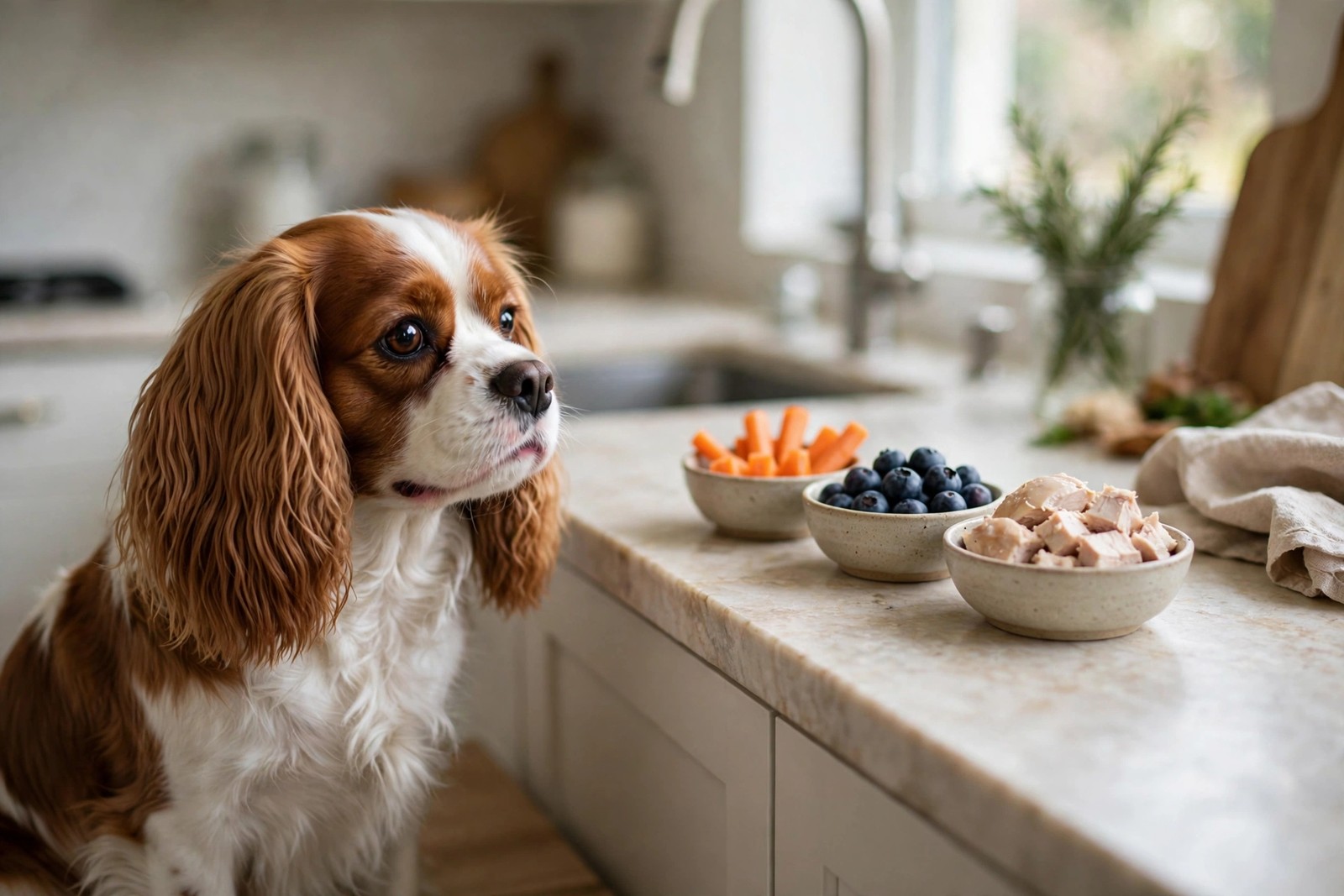
Many foods already in your kitchen are safe for dogs, as long as they are plain, unseasoned, and served in small amounts alongside a complete dog food. The safe list below covers the foods vets most commonly approve as occasional extras.
Safe Foods Worth Sharing
Plain cooked meats top the list: chicken, turkey, and lean beef, all boneless, skinless, and cooked without salt, garlic, onion, butter sauces, or marinades. Cooked eggs are another easy option, scrambled or boiled with nothing added. Among vegetables, carrots, green beans, cucumber, courgette, cooked sweet potato, and plain cooked pumpkin all work well, and pumpkin's fibre is a classic help for mildly unsettled digestion. For fruit, offer apple slices with the core and seeds removed, blueberries, banana, seedless watermelon flesh, and pear without the core. Plain cooked rice and pasta are bland fillers that suit a dog recovering appetite, though they add calories without much nutrition.
Foods That Must Never Reach the Bowl
Some people foods are genuinely dangerous to dogs and belong on a household never list. Grapes, raisins, currants, and sultanas can cause serious kidney harm even in small amounts. Onions, garlic, leeks, and chives damage red blood cells, cooked or raw. Chocolate, coffee, and anything sweetened with xylitol are toxic, and macadamia nuts, alcohol, cooked bones, and raw yeast dough are all unsafe too. Rich, fatty scraps can trigger painful digestive upsets, so gravy, skin, and dripping are out even though the meat underneath them is fine.
How Much, and How Often
Treat people food as seasoning on the day, not a second diet. A sensible ceiling keeps all treats and extras together to a small share of daily calories, roughly a few bites for a small dog and a small handful for a large one. A chunky dog, a puppy, and a senior with a delicate stomach each need less, not more, and any dog with kidney, liver, pancreas, or allergy issues should only get extras its own vet has approved. Cut everything into pieces sized to the dog, because an enthusiastic gulp of a large carrot chunk is a choking risk, and wash fruit and vegetables just as you would for yourself.
Introducing a New Food Sensibly
Offer one new food at a time, in a teaspoon-sized first portion, then wait a day. Soft stools, vomiting, itching, ear scratching, or unusual wind afterwards tell you that food does not suit your dog, however safe it is for dogs generally. Keep a short note of what was tried and how it went, since patterns across three or four foods are far easier to spot in writing than from memory. If a dog eats something from the never list, or shows drooling, trembling, collapse, or repeated vomiting after any food, contact a vet promptly rather than waiting to see. Back at home, the fridge-door rule matters most: everyone in the house needs the same approved list, and KinsLe's Care Teams keeps that list attached to your dog's care duties, so whoever feeds or treats your dog works from the same notes instead of improvising.